




Table of Contents
- 2026 Streetwear Colour Trends: What's Defining Urban Fashion Now
- Key Colour Palettes for 2026
- Gender-Neutral and High-Contrast Colour-Blocking
- Seasonal Colour Transitions: Spring/Summer vs Autumn/Winter
- How to Style Oversized Streetwear with 2026 Colour Palettes
- Minimalist Streetwear Aesthetic 2026: Less Saturation, More Versatility
- From Runway Forecast to Street Style Reality
- Frequently Asked Questions
Last Updated: September 27, 2026
2026 Streetwear Colour Trends: What's Defining Urban Fashion Now
Current streetwear color trends show 2026 shifting from neon maximalism to earth tones, muted neutrals, and strategic high-contrast blocking. At Cali Studios, we've tracked these shifts closely: colour is becoming more intentional, restrained, and versatile.
This guide covers the colour palettes that matter, how to apply them to oversized silhouettes, and why trending colours only work when they align with how you actually want to dress.
Key Colour Palettes for 2026
The 2026 streetwear colour palette breaks into three distinct territories. Understanding when to use each is the difference between looking intentional and following a checklist.
Washed and Muted Neutrals
Washed blacks, greyed-out whites, and desaturated browns dominate minimalist streetwear. These deliberately dulled neutrals have a worn-in quality that reads intentional rather than boring.
Saturation control signals taste: bright, pure blacks and whites feel dated, while muted versions feel considered. Many streetwear enthusiasts now favour tonal dressing where everything sits in the same saturation range.
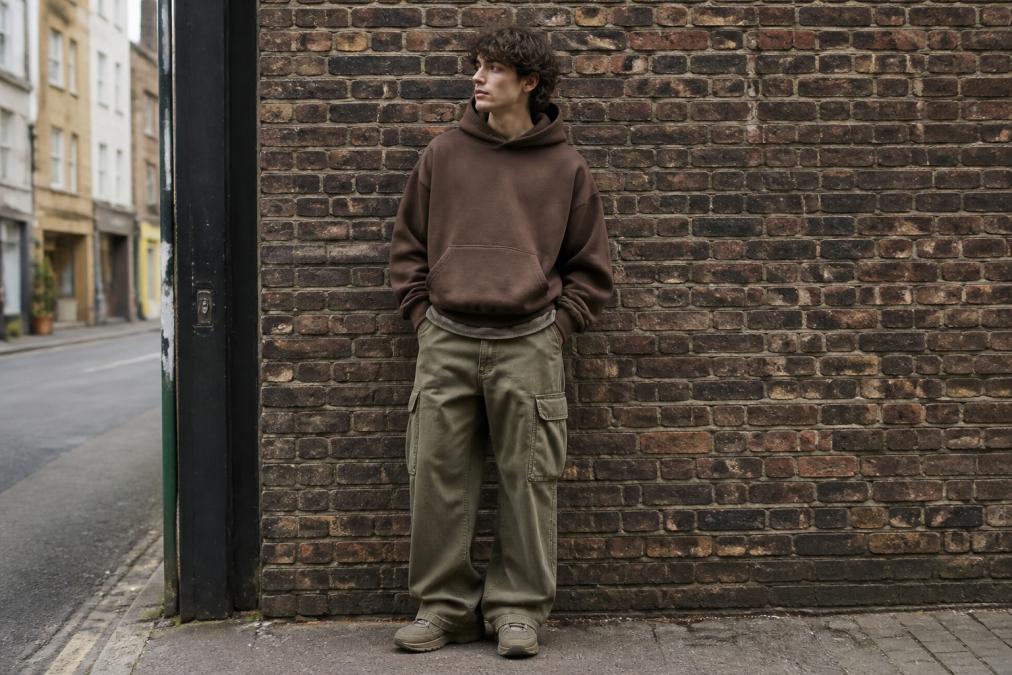
Cali Studios's Heavy Hoodie in brown exemplifies this trend with its washed, lived-in quality. Pair it with washed olive cargo pants and you're working within a single, cohesive saturation band.

Earthy Undertones and Sustainable Influences
Earthy undertones, ochres, terracottas, muted greens, and dust-coloured browns, form the second major palette shift, reflecting interest in sustainable fashion and a less synthetic visual language.
Undertone hierarchy matters: a warm brown reads differently from a cool brown, and a muted sage green differs from military green. Undertone is now the deciding factor in whether a piece works in your rotation.
The Saint Cargo Pants in washed olive carry earthy undertones without feeling costume-like. Layer with a neutral top to build a capsule wardrobe around undertone consistency.
Vibrant Saturated Accent Colours
While the base palette is muted, accent colours are encouraged. The rule: one saturated accent per outfit, everything else restrained.
A single saturated piece against muted foundations creates visual hierarchy without chaos. A vibrant graphic tee under a washed hoodie or a high-saturation accent on one garment gives versatility, the accent works across outfits because the base stays consistent.
The Tiger Shirt in brown or the Tiger Hoodie in green work as accent pieces precisely because you'd build the rest of your outfit in muted tones. That creates the high-contrast colour-blocking that's actually trending, rather than competing saturation levels that just feel loud.
Gender-Neutral and High-Contrast Colour-Blocking
Gender-neutral colour palettes have moved beyond marketing into design reality by removing gendered colour associations.
Muted earth tones, blacks, greys, and greens work across all bodies because they carry no gender coding. The 2026 streetwear colour palette is more flexible and forgiving than previous years.
High-contrast colour-blocking, pairing opposing values or saturations, creates visual interest. Pair a washed neutral with a saturated piece or a light base with a dark accent. The blocking creates movement without competing colours.
Seasonal Colour Transitions: Spring/Summer vs Autumn/Winter
Seasonal colour transitions involve saturation shifts and undertone adjustments within the same base palette. The skill is understanding which shades work in each season and how to transition existing pieces rather than buying new ones quarterly.
Spring/Summer 2026: Lightness and Cooler Undertones
Spring and summer 2026 favour lighter saturation and cooler undertones: washed whites, pale greens, and desaturated blues. The effect is airy without being bright, colours that feel open and breathable.
The specific palette: washed cream, pale sage, soft grey-blue, and desaturated khaki. These work because cooler undertones feel less heavy in warm weather and photograph well in bright daylight. A washed cream hoodie reads seasonal in spring but summery in winter.
Undertone shift matters more than saturation. A warm brown reads heavy in summer; the same brown with cooler undertones reads lighter and seasonal. Many practitioners buy the same silhouette in different seasonal shades, brown cargo pants in winter become khaki or taupe in summer.

Autumn/Winter 2026: Depth and Warmer Undertones
Autumn and winter shift toward warmer, deeper earth tones: ochres, rust-influenced browns, and muted forest greens. Saturation stays controlled while undertone warmth increases. A washed olive from summer becomes a deeper forest tone in winter.
The specific palette: muted rust-brown, deep olive-green, warm grey, and ochre. Warmer undertones feel grounding in colder months and hold depth better in grey daylight, while cool-undertone colours wash out.
Transitioning Existing Pieces Between Seasons
You don't need to buy new pieces every season if you understand undertone families.
A washed brown hoodie can transition from winter to spring by pairing it with lighter, cooler-undertone pieces (pale grey trousers, cream t-shirt). The hoodie becomes a neutral anchor through recontextualisation rather than replacement.
A pale khaki from summer works in early autumn layered with deeper, warmer pieces underneath, becoming a mid-layer rather than a statement piece.
Pieces with neutral undertones (true greys, blacks, whites) transition across seasons easily. Pieces with strong warm or cool undertones need seasonal recontextualisation through layering and pairing.
Regional Seasonal Variations
Seasonal colour shifts vary by region and climate. Temperate climates see dramatic cool-to-warm undertone shifts; milder climates see subtler transitions.
Urban streetwear centres have regional colour preferences. Tokyo favours cooler, desaturated palettes year-round; Berlin prefers warmer earth tones with grey; New York shifts dramatically between seasons. Understanding your local culture's preferences helps you choose pieces that feel current in your context.
A colour trending in spring in one region might not feel seasonal in another. Pay attention to what's worn in your local streetwear community, not just global forecasts.
How to Style Oversized Streetwear with 2026 Colour Palettes
Oversized silhouettes require intentional colour strategy to feel confident rather than shapeless. Use colour-blocking and tonal dressing to create visual structure, understanding how specific fabrics behave with these colours.
Colour-Blocking Formulas for Oversized Fits
Colour-blocking creates visual anchors that prevent oversized pieces from swallowing your frame. The effective 2026 formula uses three zones: muted base (60%), secondary neutral (30%), and saturated accent (10%).
Example: washed olive cargo pants (base), cream or grey t-shirt (secondary), brown hoodie, and a vibrant graphic tee or coloured beanie (accent). This creates visual hierarchy without chaos, preventing the oversized silhouette from overwhelming your proportions.
Reverse the formula: start with a saturated piece (forest-green shirt or rust hoodie) and build everything else in muted tones. The eye anchors to the saturated piece first, making the silhouette feel intentional.
Keep consistency within each zone: don't mix saturated colours or scatter muted tones randomly. Group by undertone to prevent visual fragmentation.
Fabric-Specific Colour Behaviour in Streetwear
How a colour reads depends heavily on fabric. Most guides list colours without acknowledging that the same shade behaves differently across materials.
Cotton and natural fibres absorb light and show colour saturation accurately. A muted brown on 100% cotton reads as intended. These fabrics work well with the 2026 earth-tone palette because natural texture adds depth without high saturation.
Technical fabrics reflect light differently, making muted colours read slightly brighter than on cotton. A washed olive perfect on cotton cargo pants might read too vibrant on a nylon jacket. Compensate by choosing a cooler or more desaturated shade for technical pieces.
Wool and heavier knits (oversized sweaters, chunky hoodies) add texture that breaks up colour perception. A solid muted brown reads richer and more dimensional on wool than on smooth cotton because the fibres create micro-shadows. This is why wool pieces often feel more "intentional" in streetwear, the texture does visual work for you.
Practical implication: when building a 2026 streetwear rotation, test colours across different fabric types. A washed brown hoodie in cotton and a washed brown shell in nylon will sit slightly differently in your outfit.
Layering and Colour Harmony
Layering in 2026 streetwear isn't about visible contrast, it's about building depth within a restricted colour palette. Visible layering (showing multiple colours) works only when those colours sit in the same saturation band and undertone family.
Minimalist Streetwear Aesthetic 2026: Less Saturation, More Versatility
The defining characteristic of streetwear color trends in 2026 is restraint. The minimalist aesthetic isn't about owning fewer pieces, it's about building a colour palette so cohesive that every piece works with every other piece.
From Runway Forecast to Street Style Reality
The gap between runway colour forecasts and what actually works in streetwear is significant. Runway shows present colour in isolation, under controlled lighting, on specific body types. Street style requires colour to function across body types, lighting conditions, and real-world contexts.
Frequently Asked Questions
What are the main 2026 streetwear colour trends?
2026 streetwear colour trends centre on washed blacks and muted neutrals, earthy undertones influenced by sustainable fashion, and strategic vibrant accent colours. The palette emphasises colour harmony and versatility over high saturation. Monochromatic and tonal dressing dominates, with gender-neutral shades like khaki, sage green, and cream forming the foundation of most streetwear outfits. High-contrast colour-blocking remains a key styling technique for adding visual interest without abandoning the minimalist aesthetic.
How do I style oversized streetwear with 2026 colour palettes?
Start with a neutral base in washed black, cream, or muted olive, then layer complementary earth tones. Oversized pieces work best in monochromatic or tonal combinations, pairing the Heavy Hoodie in brown with the Saint Cargo Pants in washed olive creates a cohesive, effortless look. Add a single vibrant accent through a graphic tee or smaller piece. Keep proportions balanced by anchoring oversized tops with fitted or tapered bottoms, and use colour blocking strategically to define different sections of your outfit without overwhelming the minimalist aesthetic.
Are vibrant colours or muted tones more popular for 2026 streetwear?
Muted tones dominate 2026 streetwear as the foundation, but vibrant colours serve as deliberate accent pieces. The trend favours restraint, a capsule wardrobe built on washed neutrals and earthy undertones, with saturated shades introduced sparingly through graphics, prints, or smaller accessories. This approach reflects the minimalist streetwear aesthetic gaining momentum across urban fashion. The balance creates visual interest without sacrificing the versatility that streetwear enthusiasts demand for everyday wear.
What neutral tones should I focus on for 2026 streetwear?
Focus on washed blacks, creams, soft browns, and sage greens, colours that sit between pure neutrality and subtle earth tones. These shades offer chromatic intensity without saturation, making them ideal for building a durable capsule wardrobe. Products like the Tiger Hoodie in khaki green and the Saint Cargo Pants in washed olive exemplify this palette. These neutrals layer seamlessly, maintain visual identity through subtle shade variation, and remain relevant across seasonal transitions, making them essential for any streetwear collection.
