




Table of Contents
- What Counts as Affordable UK Streetwear Essentials for Men
- Men's Streetwear Wardrobe Essentials: The 7 Pieces That Do the Work
- How to Style Oversized Hoodies Without Looking Sloppy
- Sizing and Fit: Buying Streetwear Online Without Guessing
- Cost per Wear: Why a £100 Hoodie Can Beat a £35 One
- Care and Maintenance: Making Affordable Pieces Last Longer
- Second-Hand and Resale: Stretching Your Streetwear Budget Further
- Frequently Asked Questions
Last Updated: September 12, 2026
What Counts as Affordable UK Streetwear Essentials for Men
Affordable UK streetwear essentials for men are the core pieces that deliver fit, fabric weight and durability without a designer price tag: heavyweight hoodies, boxy tees, relaxed denim and cargos that work together across a full week. This guide from Cali Studios breaks down which pieces earn their place, a small, well-chosen rotation beats a wardrobe stuffed with cheap filler.

Most shopping guides push volume and constant newness, which is how you end up with a rail full of clothes and nothing to wear. A better approach is a capsule wardrobe built on wardrobe staples you actually reach for: fewer pieces, better construction, more outfits per item.
Below, we'll show you how to build that rotation, what to spend on each piece, and how to make cheap streetwear last.
Men's Streetwear Wardrobe Essentials: The 7 Pieces That Do the Work
Seven items cover almost every casual outfit you'll need: a heavyweight hoodie, a zip hoodie, a graphic tee, a plain or washed base tee, relaxed denim, baggy cargos and shorts. Get the fit and fabric weight right and layering becomes straightforward. Everything else is optional.
The angle here is rotation, not shopping: how to sequence the seven pieces across a week so each garment earns its place. Every item should pair with at least three others, that's what turns seven pieces into twenty-plus outfits.
The rotation logic: how seven pieces become a week
Think in layers, not items. Each day uses one base layer, one mid layer and one bottom, plus footwear. With two hoodies, two tees, two trousers and one pair of shorts, the combinations multiply fast:
- Cold days: heavyweight hoodie + base tee + denim or cargos
- Mild days: zip hoodie worn open + graphic tee + cargos
- Warm days: boxy tee alone + shorts, hoodie carried or tied at the waist
- Layering days: zip hoodie over heavyweight hoodie when the temperature drops
That's a full week from seven garments, with no repeat outfit and no panic buying.
Hoodies and Sweatshirts
Hoodies are the anchor of any streetwear rotation. Fabric weight is the biggest quality signal: 300GSM holds a structured shape, while 600GSM sits heavy and boxy and keeps its silhouette after repeated washes. The Cali Studios Heavy Hoodie - Black uses a 600GSM cotton-poly blend with a three-panel, double-fabric hood and brushed inner fleece, cut to a boxy drop-shoulder fit that runs oversized. The Heavy Zip Hoodie - Black adds a two-way zip and front pockets.

For a lighter option, the Tiger Hoodie - Black at £50 uses a 300GSM blend with a double-lined hood and a front graphic print. The Mount Hoodie - Black at £45 is a cotton-poly fleece cut oversized with dropped shoulders.

How to choose: If you only buy one hoodie, buy the heavyweight, it anchors cold-weather outfits and holds its shape longest, making it the best cost-per-wear item in the rotation. Add the 300GSM only for a lighter spring and autumn layer.
T-Shirts and Base Layers
Base layers carry the fit of everything above them. A boxy cut stops a tee bunching under an oversized hoodie, and heavier cotton resists the collar stretch that ruins cheap tees. The Burnt Out T-shirt at £35 is hand-distressed with a boxy fit in faded black. The Tiger Ringer T-Shirt - Black and its white counterpart sit at £40 in a regular fit; size up for a looser look.
How to choose: One plain or washed tee is your layering workhorse, it goes under everything. One graphic tee is your statement piece. Don't buy three graphics; you'll wear one and the others will sit.
Denim, Cargos and Shorts
Trousers decide the silhouette of the whole outfit. [The Saint Denim Jeans](https://www.calistudios.co.uk/products/saint-denim-jeans) at £90 come in a relaxed washed-black fit with a metal belt clip. The Saint Cargo Pants - Washed Olive at £30 are cotton twill with cargo pockets, a baggy fit and a tie drawcord at the ankle. The Saint Shorts at £40 use 300GSM cotton with a raw-edge open hem.
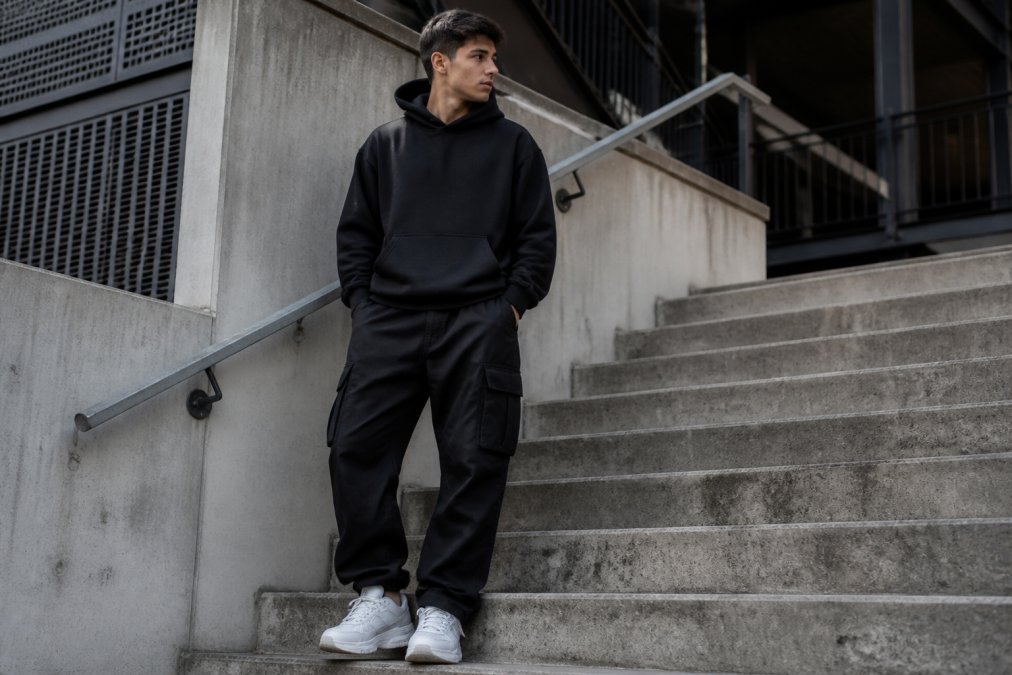
How to choose: Denim is your default. Cargos add texture and utility, the drawcord ankle cinches for a cleaner break over chunky trainers. Buy shorts only if you'll wear them twice a week in summer; otherwise put the money into a second hoodie.
| Piece | Price | Fabric / Fit | Best For |
|---|---|---|---|
| Heavy Hoodie | £100 | 600GSM, boxy drop shoulder | Cold weather, statement layering |
| Tiger Hoodie | £50 | 300GSM, oversized | Everyday wear, lighter layering |
| Burnt Out T-shirt | £35 | Boxy, hand distressed | Base layer under hoodies |
| Saint Denim Jeans | £90 | Relaxed, washed black | Denim-led outfits |
| Saint Cargo Pants | £30 | Cotton twill, baggy | Skate and daily wear |
| Saint Shorts | £40 | 300GSM cotton, relaxed | Summer rotation |
The buy order if you're starting from scratch
If you're building from zero, don't buy all seven at once. Sequence them by how many outfits each unlocks:
- Heavyweight hoodie, anchors the most outfits.
- Relaxed denim, pairs with everything above.
- Plain or washed base tee, makes layering possible.
- Cargos, adds a second silhouette.
- Graphic tee, adds personality once the basics are covered.
- Zip hoodie, enables the open-layer look.
- Shorts, seasonal, buy last.
How to Style Oversized Hoodies Without Looking Sloppy
Oversized hoodies look intentional when one element stays fitted and the rest stays clean: if the top is boxy, keep the bottom structured, and vice versa. Sloppy comes from volume stacked on volume with no anchor. Stop styling by vibe and start styling by formula, pick a silhouette, lock the proportions, then let colour do the rest.
The three proportions that decide everything
Every oversized outfit is judged on three ratios. Get these right and the fit reads deliberate rather than borrowed.
- Shoulder drop. The seam should sit just past your natural shoulder line, roughly 2-4cm. Beyond that the sleeve swallows your arm and the whole top looks like a hand-me-down.
- Body-to-leg ratio. A boxy top needs a relaxed, straight or slightly tapered leg. Skinny bottoms under a 600GSM hoodie exaggerate the wrong proportions and make the top look inflated.
- Hem break. The hoodie hem should land at or just below the hip bone. Any lower and it shortens your legs; any higher and it fights the waistband of your trousers.
Four outfit formulas that work every week
Treat these as templates. Swap colours and pieces within the same silhouette and you get a full week of outfits from seven garments.
- The everyday anchor. Heavyweight hoodie over a plain washed tee, relaxed washed-black denim, clean low-profile trainers. One graphic maximum, usually none.
- The layered skate fit. Zip hoodie worn open over a graphic tee, baggy cargos with the ankle drawcord cinched, chunky trainers. The open zip breaks up the volume and stops the top reading as one solid block.
- The tonal monochrome. Black hoodie, black denim, black trainers, with the only contrast coming from fabric texture, brushed fleece against washed cotton against smooth leather. This is the easiest way to look considered without effort.
- The warm-weather rotation. Boxy tee, relaxed shorts with a raw-edge hem, low-profile trainers, hoodie tied at the waist or carried. The shorts' open hem keeps the leg line clean under a boxy top.
Colour rules that make layering effortless
Stick to a neutral palette: black, washed black, olive, grey, off-white. These five tones layer in any combination without clashing, which is why a capsule built on them produces more outfits per item. Let one graphic print carry the outfit, two prints fight each other.
Seasonal adjustments
Oversized styling changes with the weather, not the trend. In colder months, layer a heavyweight hoodie under an open zip hoodie for warmth without adding bulk. In warmer months, drop to a 300GSM hoodie or a boxy tee and keep the bottom half relaxed so proportions still balance. The formula stays the same; only the fabric weight moves.
Sizing and Fit: Buying Streetwear Online Without Guessing
Buying online without guessing comes down to three numbers: your chest, your preferred shoulder drop and the length you want. Measure a hoodie you already like, then compare those figures against the brand's size chart rather than trusting the label.
A common mistake is sizing down because "oversized runs big", most oversized cuts are designed to run big. Cali Studios lists model references on each product page: the Heavy Hoodie is shown on a model at 5'10 and 70kg wearing size L; the Tiger Hoodie on a model at 5'10 and 65kg in size Large. If you land between sizes and want the intended boxy look, take the larger one.
For tees, the Tiger Ringer is a regular fit, so size up if you want it to sit like the hoodies. The Burnt Out T-shirt is already boxy. The Saint Cargo Pants model wears a 32in waist in size large, so use your actual waist measurement rather than guessing from the fit name.
Cost per Wear: Why a £100 Hoodie Can Beat a £35 One
Cost per wear is the price of a garment divided by how many times you actually wear it. A £100 hoodie worn twice a week for two years works out at roughly £1 per wear. A £35 hoodie that pills, loses shape and gets retired after three months can cost more per outing.
Run the maths before you buy: divide the price by your realistic wears per year, then by the years you expect it to last. Heavyweight cotton and 600GSM construction hold shape and colour longer, which stretches the denominator.
- £100 hoodie, 100 wears a year, 2 years: about 50p per wear
- £35 hoodie, 100 wears a year, 4 months: about £1 per wear
The cheaper item only wins if you genuinely wear it as often and it survives.
Care and Maintenance: Making Affordable Pieces Last Longer
Washing less often and at lower temperatures is the fastest way to extend the life of any piece. Heat and agitation break down cotton fibres, fade prints and shrink heavyweight fleece. Turn garments inside out, wash cold, and skip the tumble dryer.
- Wash hoodies and tees at 30°C or lower, inside out, with similar colours.
- Air dry flat or on a line. High heat is what shrinks and pills fleece.
- Do not iron directly over graphic prints. Turn the garment inside out first.
- Fold knitwear and hoodies rather than hanging them, which stretches shoulders.
- Treat stains immediately with cold water before they set.
Second-Hand and Resale: Stretching Your Streetwear Budget Further
The resale market is where a tight budget goes furthest, provided you know what to check. Streetwear holds value better than most casual clothing, so second-hand buying gets you heavier fabrics and better construction at a lower entry price.
Inspect before you commit:
- Check the inner hood and cuffs for pilling, which signals heavy wear.
- Look at the hem and collar for stretch or thinning.
- Ask for the fabric weight or a photo of the wash label.
- Confirm the print has no cracking, which cannot be repaired.
Selling on what you've outgrown funds the next piece, so treat your wardrobe as a rotation rather than a one-way spend. As WRAP's guidance on textile reuse sets out, extending the life of clothing is one of the most effective ways to cut both cost and waste. For sizing confidence on resale listings, Which?'s advice on shopping rights is a useful reference when a purchase doesn't match its description.
Building a functional streetwear rotation takes more discipline than a spending spree, and most wardrobes fail because they're wide instead of deep. Cali Studios designs around that problem: a focused range of contemporary menswear with heavyweight construction, comfortable fabrics and both oversized and regular fits, so each piece earns its place. Start with a hoodie, a base tee and one pair of relaxed trousers, then build out from there. Browse the Cali Studios range and put together a wardrobe that works every day, not just on drop day.
Frequently Asked Questions
What are the essential items for a men's streetwear wardrobe?
Start with seven pieces: two hoodies (one heavyweight, one lighter), three t-shirts in neutral tones, one pair of relaxed denim jeans, one pair of cargo trousers or joggers, a light jacket or overshirt, and clean trainers. These cover most days without repeating outfits. Stick to a neutral palette of black, grey, washed olive and white so everything mixes together. Cali Studios covers most of this list directly, from £30 cargo pants to £100 heavyweight hoodies, so you can build the base without spreading your budget across ten different labels.
How do I style oversized hoodies without looking scruffy?
Balance the volume. If the hoodie is boxy and drop-shouldered, keep the bottom half closer to your actual size or choose a straight-leg rather than skin-tight cut. A heavyweight fabric like 600GSM holds its shape and hangs properly instead of collapsing, which is the main difference between styled and sloppy. Pair with relaxed denim or cargos, clean trainers, and avoid stacking oversized on oversized across every layer. Tucking the front hem slightly also breaks up the silhouette.
How can I build a streetwear wardrobe on a budget?
Buy fewer pieces and check cost per wear rather than the ticket price. A £50 hoodie worn twice a week for a year works out at roughly 48p per wear, while a £20 fast-fashion version that loses shape after two months costs more per outing. Mix full-price staples with second-hand finds from resale apps, and prioritise pieces that work across seasons. Neutral colours and simple graphics stay wearable longer than trend-led prints, so you replace less often.
What is the difference between oversized and regular fit streetwear?
Oversized fits are cut with extra room through the chest, shoulders and body, often with dropped shoulder seams, and are designed to be worn as-is rather than sized up. Regular fits sit closer to your actual measurements. The trap is buying a regular fit one or two sizes up and expecting an oversized look, which usually just makes sleeves too long and shoulders wrong. Check the model's height and weight in the product photos, and if you want a baggier result from a regular-fit piece, size up once.
