




Table of Contents
- What You Actually Pay For in an Expensive Hoodie
- How to Spot High Quality Hoodies: 6 Checks Before You Buy
- Heavyweight Cotton Hoodie Benefits: Why 500-600GSM Changes Everything
- Cost Per Wear Calculation: The Maths That Settles the Argument
- Fast Fashion vs Premium Hoodies: Where the Money Goes
- Branding, Hype and the Logo Premium
- Caring for Your Hoodie: Making the Investment Last
- Frequently Asked Questions
Last Updated: September 15, 2026
What You Actually Pay For in an Expensive Hoodie
An expensive hoodie is a garment priced well above high-street basics, where the extra cost reflects fabric weight, construction method and how long the item lasts rather than the logo alone. At Cali Studios, we build hoodies from 500-600GSM cotton blends.
A common mistake is assuming price equals quality. It doesn't. Some expensive hoodies are ordinary garments with a hyped name stitched on the chest. Others put the money into the fabric and the build. This guide breaks down exactly what separates the two, using fabric weight, construction checks and cost-per-wear maths rather than marketing talk.
The 600GSM Heavy Hoodie features a three-panel, double-fabric hood, boxy drop shoulders and brushed inner fleece at £100. Below, we'll show you how to run the same checks on any hoodie before you spend a penny.

How to Spot High Quality Hoodies: 6 Checks Before You Buy
You can spot a high quality hoodie by checking six things: fabric weight, composition, stitching, hood construction, hardware and shrinkage risk. Run these checks in order and you'll separate an investment piece from an overpriced basic in under two minutes.
Fabric Weight and Composition
Fabric weight is measured in GSM (grams per square metre), and it's the single best predictor of how a hoodie feels and how long it lasts. Lightweight fleece sits around 250-300GSM and pills quickly. Heavyweight fleece starts around 400GSM and up.
Composition matters just as much. Pure cotton feels natural but can shrink and lose shape. A cotton-poly blend holds its structure through repeated washing. Look for loopback cotton on lighter styles and brushed fleece on heavier ones.
Construction and Hardware
Stitching quality decides whether a hoodie survives a year or five. Check for double-stitched seams at the shoulders and hem, neck taping inside the collar, and a hood built from two or three panels rather than one flat sheet.
Hardware is the tell most buyers miss. Cheap zips snag and fail within months. A two-way zip with a metal pull, like the one on our Heavy Zip Hoodie in Grey, is a sign of quality.

Heavyweight Cotton Hoodie Benefits: Why 500-600GSM Changes Everything
A heavyweight cotton hoodie at 500-600GSM holds its shape, resists pilling and drapes properly instead of clinging. The extra weight also means the garment keeps its structure through repeated washing.
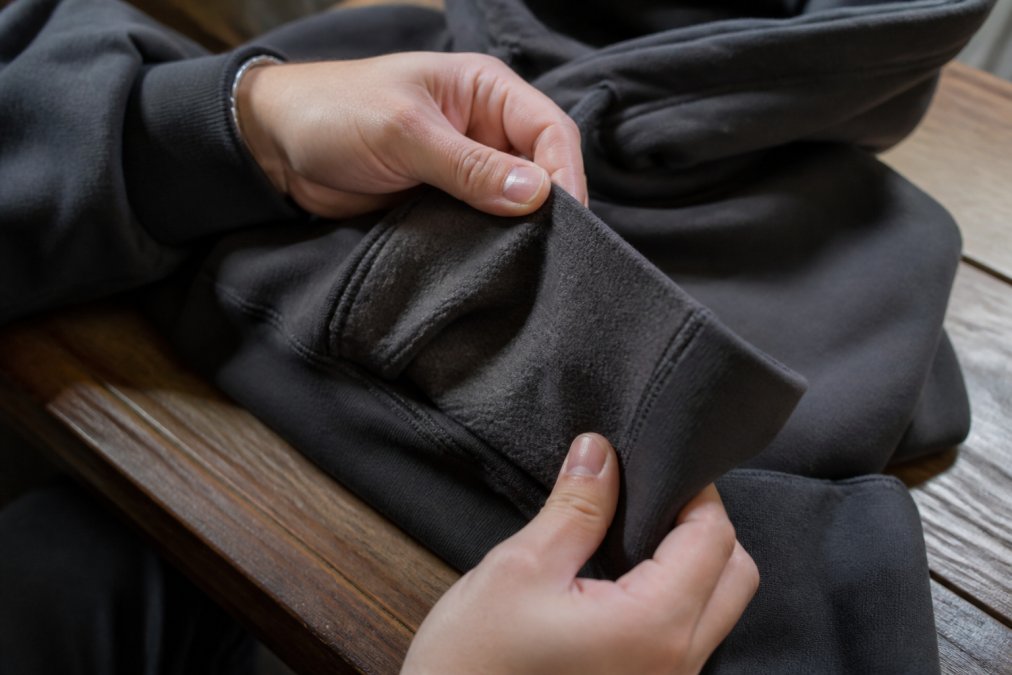
There's a practical side too. Heavier fleece traps more warmth. The brushed inner face stays soft against skin.
Cost Per Wear Calculation: The Maths That Settles the Argument
Cost per wear is the purchase price divided by the number of times you actually wear the garment. It's the only number that fairly compares a £30 hoodie with a £100 one, because it accounts for how long each survives.
How to Run the Numbers
Take a £100 heavyweight hoodie worn twice a week for three years. That's roughly 300 wears, which works out at about 33p per wear. A £30 high-street hoodie worn the same amount but replaced after one year lands at roughly 29p per wear across 100 wears, then you buy another one.
The maths only shifts in the cheap hoodie's favour if it genuinely lasts. Lightweight fleece can lose shape and colour, so the replacement cycle may continue.
| Hoodie Type | Price | Expected Lifespan | Wears (2x weekly) | Cost Per Wear |
|---|---|---|---|---|
| High-street basic | £30 | 1 year | 100 | 30p |
| Mid-range | £60 | 2 years | 200 | 30p |
| Heavyweight 600GSM | £100 | 3 years | 300 | 33p |
The three columns land in the same place.
Fast Fashion vs Premium Hoodies: Where the Money Goes
Fast fashion keeps prices low by using lighter fabric, simpler construction and shorter production runs that prioritise speed over durability. Premium hoodies cost more because the fabric is heavier, the seams are reinforced and the garment is built to a specification rather than a price point. That's the summary version. The useful version is a line-by-line look at where the money actually sits.
The Cost Stack, Roughly
A hoodie's retail price is built from five layers. The proportions below are typical patterns rather than fixed figures, because every brand negotiates differently:
- Fabric and yarn, the single biggest swing factor. Moving from a 280GSM lightweight fleece to a 500-600GSM brushed-back loopback can multiply the raw material cost several times over, because you're buying more cotton per garment and often a longer-staple yarn that resists pilling.
- Cut, make and trim (CMT), the labour of cutting panels, sewing seams, attaching the hood and finishing. Double-stitched shoulders, neck taping and a three-panel hood all add minutes per unit, and minutes are money.
- Hardware and trims, zips, drawcord tips, eyelets, labels. A cheap nylon zip and a metal two-way zip are not the same line item.
- Freight, duty and warehousing, heavier garments cost more to ship and store per unit.
- Brand margin and marketing, what's left after the above, and the layer that varies most wildly between a high-street basic and a hyped drop.
Why Fast Fashion Wins on Price
Fast fashion compresses every layer. Lighter fabric, fewer stitch operations, plastic hardware, sea freight in bulk, minimal marketing spend per unit and enormous order volumes that push the CMT cost down to pennies. The trade-off is that the garment is engineered to a price, not a lifespan. A 280GSM fleece may pill at the cuffs and lose its shape at the shoulders within a season of regular wear.
Why Premium Costs More
Premium inverts the priorities. The fabric is specified first, then the construction, then the price is set to cover it. That's why a 600GSM hoodie with a three-panel hood and a two-way metal zip lands at a higher retail figure, not because the logo costs more to print, but because the garment underneath it costs more to make.
The Instalment Trap
Here's the part the price tag hides. If a £30 hoodie lasts one season and you replace it every year, you've spent £150 over five years, more than a single £100 heavyweight that survives the same period. Fast fashion doesn't remove the cost; it spreads it across repeat purchases. That's the mechanism behind the cost-per-wear argument in the next section.
UK guidance on textile fibre labelling and composition claims
Branding, Hype and the Logo Premium
Part of what you pay for in an expensive hoodie is the name on it. Brand equity and hype culture push prices up independently of fabric or construction, and that's where a lot of expensive hoodies stop being worth it. But 'hype' isn't a single thing, it's several distinct mechanisms, and separating them is what tells you whether the premium is justified.
Three Reasons a Hoodie Costs More Than Its Materials
1. Scarcity engineering. A limited drop with a fixed run creates artificial demand. The garment may be identical to a mainline piece, but the price reflects the queue, not the cotton. This is the clearest case of paying for a logo.
2. Cultural signalling. Some brands function as membership badges. The wearer is buying association with a scene, a sport or a subculture. That's a legitimate purchase, it's just a fashion decision, not a value one, and it should be budgeted as such.
3. Genuine supply-chain cost. This is the one shoppers confuse with the other two.
Sustainability vs Luxury: The Distinction That Matters
The Logo Test, Done Properly
Where This Leaves the Price Question
Caring for Your Hoodie: Making the Investment Last
Frequently Asked Questions
What is considered a good price for a hoodie?
There is no single answer, but a good price depends on what you get for it. A basic high street hoodie might cost £30-£50, while a heavyweight 600GSM hoodie typically sits around £85-£100. The better question is cost per wear. A £100 hoodie worn 100 times costs £1 per wear; a £40 hoodie worn 20 times costs £2 per wear. Expensive hoodies can be better value if you actually wear them.
Do expensive hoodies last longer than cheaper alternatives?
Often, yes, but not automatically. Heavier fabrics like 500-600GSM cotton resist pilling and hold their shape through repeated washing. Reinforced stitching, double-fabric hoods and metal hardware also extend lifespan. A cheap hoodie may fade, shrink or lose its shape. The key is checking construction, not just the price tag, because some expensive hoodies cut corners on materials.
How does fabric weight affect the price of a hoodie?
Fabric weight is measured in GSM (grams per square metre). A 600GSM hoodie uses roughly twice the raw cotton of a 300GSM one, so material costs are higher. Heavier fabrics also take longer to knit, dye and sew, which pushes manufacturing costs up. That said, GSM alone does not guarantee quality. A 600GSM hoodie with poor stitching will not outlast a well-made 400GSM one.
What should I look for when buying a premium oversized hoodie?
Check four things: fabric weight (500GSM or above for a substantial feel), stitching quality (flatlock seams and no loose threads), hardware (metal zips and eyelets, not plastic), and fit consistency. Try before you buy if possible, or check the brand's size guide against your own measurements. A premium oversized hoodie should feel heavy but drape well, not stiff or boxy in the wrong places.
The real challenge isn't finding an expensive hoodie. It's finding one where the price reflects the fabric and construction rather than the logo. That's the gap Cali Studios was built to fill: 500-600GSM cotton blends, double-fabric hoods, boxy drop-shoulder fits and brushed inner fleece across the range, in oversized and regular cuts. Add the Heavy Hoodie in Black to your rotation and see what a hoodie built to last actually feels like.
