




Table of Contents
- What Counts as Essential Streetwear Accessories
- Headwear: Beanies, Caps and Bucket Hats
- Bags That Work: Crossbody, Sling and Technical Packs
- How to Style Streetwear Accessories Without Overdoing It
- Affordable Streetwear Accessories: Where to Spend and Where to Save
- Streetwear Outfit Ideas for Men: Accessories in Context
- Care and Maintenance: Making Your Accessories Last
- Frequently Asked Questions
Last Updated: September 16, 2026
What Counts as Essential Streetwear Accessories
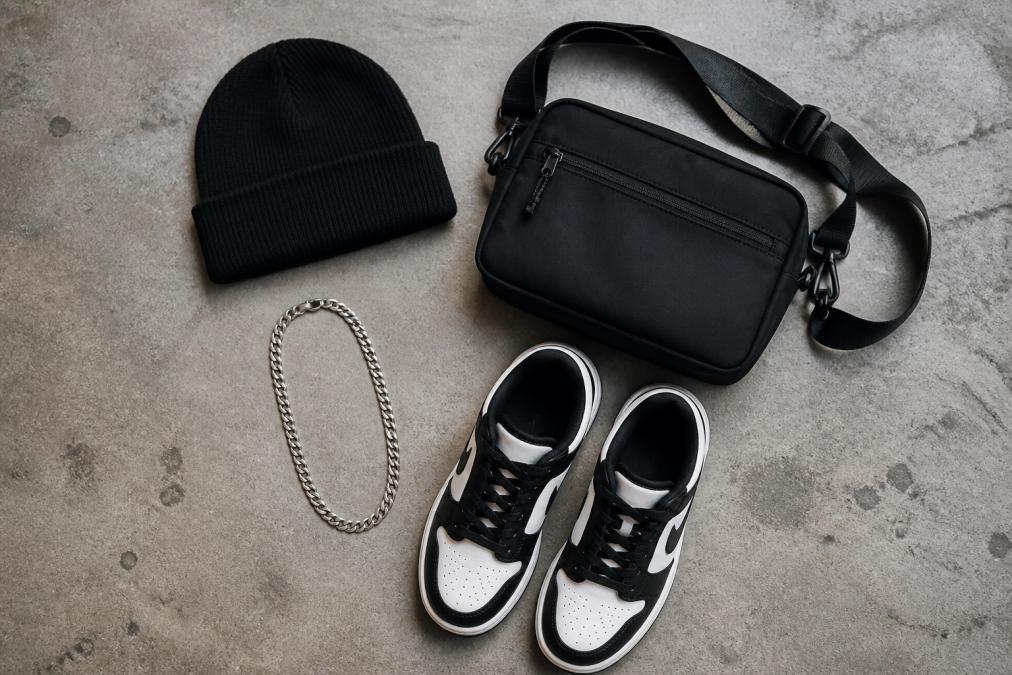
Essential streetwear accessories for beginners are the finishing pieces that turn a plain outfit into a considered one: headwear, a bag, jewellery, and the right footwear. Start with four categories and build outwards.
The Core Categories Worth Owning
- Headwear: beanies, caps, bucket hats
- Bags: crossbody, sling, technical backpacks
- Jewellery: chains, rings, a single watch
- Footwear: clean trainers, plus crease protectors
Four categories. That's the whole starting point.
Headwear: Beanies, Caps and Bucket Hats
Headwear is the fastest way to change an outfit's register, and it's the cheapest. A beanie reads relaxed; a trucker hat reads casual and sporty; a bucket hat reads deliberately retro. Own one of each before you buy anything else.
Bags That Work: Crossbody, Sling and Technical Packs
The bag you carry says more about your wardrobe than most people realise. Crossbody bags and sling bags suit everyday urban wear. A technical backpack handles heavier loads and skate sessions without looking like school equipment.
| Bag Type | Best For | Fits | Style Register |
|---|---|---|---|
| Crossbody bag | Everyday carry, nights out | Phone, wallet, keys | Clean, minimal |
| Sling bag | Cycling, short trips | Phone, small essentials | Sporty, technical |
| Technical backpack | Skate sessions, campus | Laptop, layers, gear | Utility, functional |
How to Style Streetwear Accessories Without Overdoing It
Restraint is the skill nobody teaches. The rule that works: one statement piece per outfit, everything else supporting it. If the bag is loud, keep the headwear plain. If the chain is chunky, skip the rings.
Building Aesthetic Cohesion
Cohesion comes from repetition, not variety. Pick a colour palette of three tones and stay inside it. Black, washed grey, and one accent covers most beginners for a full year.
Affordable Streetwear Accessories: Where to Spend and Where to Save
Most guides tell beginners to buy hype pieces and skip the maths. That is backwards. A beginner wardrobe should be built on a spend hierarchy, and the hierarchy is not the same as the one influencers push.
The Spend Hierarchy
Spend on the pieces that take daily mechanical load. Save on the pieces where construction is simple and the brand premium is mostly aesthetic.
- Footwear, spend. Soles, midsoles and stitching fail first. Soles, midsoles and stitching fail first.
- Bags, spend. Strap anchors, zips and lining are the failure points. Strap anchors, zips and lining are the failure points.
- Headwear, save. The fabric is simple knit or twill and the construction is a few seams. The fabric is simple knit or twill and the construction is a few seams.
- Jewellery, save, then upgrade one piece. Stainless steel chains at £15-£40 resist tarnishing far better than cheap plated brass. Save the upgrade for a single piece you wear daily.
Where to Actually Buy
- High-street and sportswear outlets. Uniqlo, Carhartt WIP stockists, and sportswear factory outlets cover beanies, caps and basic bags at entry prices without the resale markup.
- Charity and vintage shops. Bags and denim are the strongest secondhand categories. Leather and heavy canvas age well and often arrive already broken in.
- Online resale platforms. Vinted and Depop dominate the beginner secondhand market. Filter by brand and condition, and always ask for measurements rather than trusting the listed size.
- Sample and end-of-season sales. End-of-line colourways of technical bags and caps drop 40-60% without any change in construction.
Secondhand Without the Risk
Secondhand is the single biggest lever a beginner has on cost, and it is also the most sustainable route into the style. Two rules keep it safe:
- Inspect the load-bearing parts first. For bags, check strap stitching, zip teeth and lining seams. For trainers, check the midsole for compression creases and the outsole for heel drag.
- Avoid anything with a rigid structure you cannot see in person. Structured caps and moulded bags rarely survive shipping well and are hard to assess from photos.
What to Skip Entirely as a Beginner
- Trend-led statement pieces priced above £80, they date faster than they wear out.
- Matching accessory sets, they read as a costume rather than a wardrobe.
- Anything you cannot name a specific outfit for. If it does not slot into a combination you already own, it is a future drawer-filler.
Streetwear Outfit Ideas for Men: Accessories in Context
Three combinations cover most situations. Each uses the same four categories, arranged differently.
Care and Maintenance: Making Your Accessories Last
Most accessories fail from neglect, not poor quality. A £70 bag that is cleaned twice a year will outlast a £200 bag that is never touched. This is the section almost no streetwear guide bothers with, and it is where beginners lose the most money.
Fabric-by-Fabric Cleaning
Different materials need different methods. Using the wrong one is how a good piece becomes a ruined one.
- Canvas and cotton twill bags. Spot-clean with lukewarm water and a mild detergent on a soft cloth. For a full wash, remove the strap if possible, wash cold on a gentle cycle inside a pillowcase, and air dry away from direct heat. Never tumble dry, the heat shrinks webbing and warps shape.
- Technical nylon and ripstop. Wipe with a damp cloth and mild soap. Do not machine wash coated nylon; the agitation breaks down the water-repellent finish. Re-proof with a spray-on DWR treatment once a season if the fabric stops beading water.
- Leather straps and trims. Wipe with a dry cloth after wear, then condition with a neutral leather balm roughly twice a year. Over-conditioning softens the leather and stretches it, so less is genuinely more.
- Knit beanies. Hand wash in cool water with a wool-safe detergent, press, do not wring, between towels, and dry flat. Machine washing a wool blend is the fastest way to turn a beanie into a child's hat.
- Structured caps. Spot-clean the crown with a soft brush and mild soap. Never submerge a cap with a rigid brim; the cardboard or plastic insert collapses and will not recover.
- Metal jewellery. Wipe chains and rings with a dry microfibre cloth after wear. Skin oils and sweat accelerate tarnishing on plated pieces. Store stainless steel separately from plated brass to avoid galvanic marking.
Trainers: Rotation Beats Cleaning
The single highest-impact habit is rotation. Wearing one pair daily compresses the midsole foam and creases the toe box permanently within a few months. Two pairs alternated will outlast three pairs worn sequentially, because each pair gets 24-48 hours to decompress and dry.
- Brush uppers weekly with a soft shoe brush to lift surface dirt before it works into the weave.
- Use a shoe tree or crumpled paper in the toe box after wear to hold shape.
- For suede, use a dedicated suede brush and never water, water stains suede permanently.
- Crease protectors slow toe-box creasing but do not stop midsole compression; they are a cosmetic aid, not a structural one.
Denim and Washed Garments
Wash denim inside out, cold, and rarely, every 10-15 wears is a reasonable rhythm for most people. This preserves the indigo and the wash character. Washed and garment-dyed pieces, including cargo pants, can bleed colour on the first wash, so wash them separately the first time and check the care label for any variance note.
Storage That Preserves Shape
- Beanies and caps: store flat or on a shelf, not hung. Hanging stretches the crown and the hat never sits right again.
- Bags: stuff with tissue or bubble wrap to hold the silhouette, and store upright. A collapsed bag develops permanent creases at the base.
- Chains: hang or lay flat in a dry drawer. Tangled chains scratch each other and thin plating wears through at contact points.
- Trainers: store away from direct sunlight, which yellows white midsoles and fades suede.
A Simple Seasonal Routine
Twice a year, at the start and end of the colder months, do a full pass: clean every bag, condition leather, re-proof technical fabrics, brush trainers, and check for loose stitching before it becomes a tear.
Frequently Asked Questions
What are the essentials for a streetwear style?
The essentials break down into a few core categories: headwear like beanies or caps, a crossbody or sling bag, a statement chain or ring, and footwear that fits the silhouette. You do not need all of them at once. Start with one piece that matches your existing wardrobe, then build outward. The goal is a small rotation of items you actually wear, not a shelf full of things that never leave the house.
What are the best streetwear accessories for beginners on a budget?
Beanies and caps are the cheapest entry point, often under £30. A basic crossbody bag costs less than a technical backpack and does the same job for daily carry. For chains, look at stainless steel rather than plated metals, which last longer for a similar price. Spend more on pieces you wear daily, like a hoodie or bag, and save on trend-driven items you might swap out in a season.
How do I style streetwear accessories for a minimalist look?
Pick one focal accessory and let everything else stay quiet. A single crossbody bag in a neutral colour over an oversized hoodie and relaxed jeans reads clean. Avoid stacking multiple loud pieces, like a graphic cap plus a chain plus a patterned bag. Stick to two or three colours across the outfit, and let texture, like brushed fleece or washed denim, do the work instead of extra hardware.
Do I need expensive accessories to pull off a streetwear style?
No. Price does not determine whether an outfit works. A £30 cargo pant paired with a simple chain and a clean cap can look sharper than a head-to-toe designer fit. What matters is fit, proportion, and cohesion. Spend your budget on pieces that hold up to daily wear, and treat trend items as low-cost additions rather than core investments.
How do accessories change the look of a basic streetwear outfit?
Accessories shift the silhouette and add personality. A beanie changes the shape of your head and frames your face. A crossbody bag breaks up the line of an oversized hoodie. A chain adds a focal point at the chest. Even small changes, like swapping a plain cap for a trucker hat, can move an outfit from generic to intentional without buying new clothing.
