




Table of Contents
- How to Choose Streetwear Joggers Fit: Start With the Silhouette
- Size Up or Down? Getting the Waistband and Rise Right
- Tapered vs Baggy Joggers: Which Suits Your Style?
- Fabric Weight and Drape: Why 300gsm Feels Different to 600gsm
- How to Style Oversized Joggers Without Looking Sloppy
- Styling Joggers with High-Top Trainers: The Ankle Break
- Fit by Body Type and Common Mistakes to Avoid
- Final Checks Before You Add to Basket
- Frequently Asked Questions
Last Updated: September 6, 2026
Getting the right streetwear joggers fit is the difference between looking intentional and looking like you grabbed the first pair on the rack. We design heavy-weight joggers specifically for this balancing act.
The golden rule is simple: the fit should look deliberate, with every element from the waistband to the ankle break working together.
How to Choose Streetwear Joggers Fit: Start With the Silhouette
The silhouette is the overall shape the jogger creates against your leg, and it dictates everything else. This is where most people get confused between "oversized" and simply "too big."
Decide on the leg profile first. A straight leg offers a clean, uninterrupted line, while a tapered cut narrows towards the ankle for a sharper finish. If you are new to the oversized look, start with a straight leg that has room through the thigh.
Size Up or Down? Getting the Waistband and Rise Right
Do not size up to achieve an oversized look. The waistband is the anchor of the whole outfit, and a sloppy waistband ruins the illusion immediately. Keep your true size at the waist and let the cut of the leg provide the volume. Look for a thick elastic waistband with an inner drawcord, which lets you cinch the fit without creating bulk. The rise also matters; a mid-rise sits naturally and keeps proportions balanced. When you size up incorrectly, the waistband gaps at the back and the rise becomes too long, making the crotch sag.
Tapered vs Baggy Joggers: Which Suits Your Style?
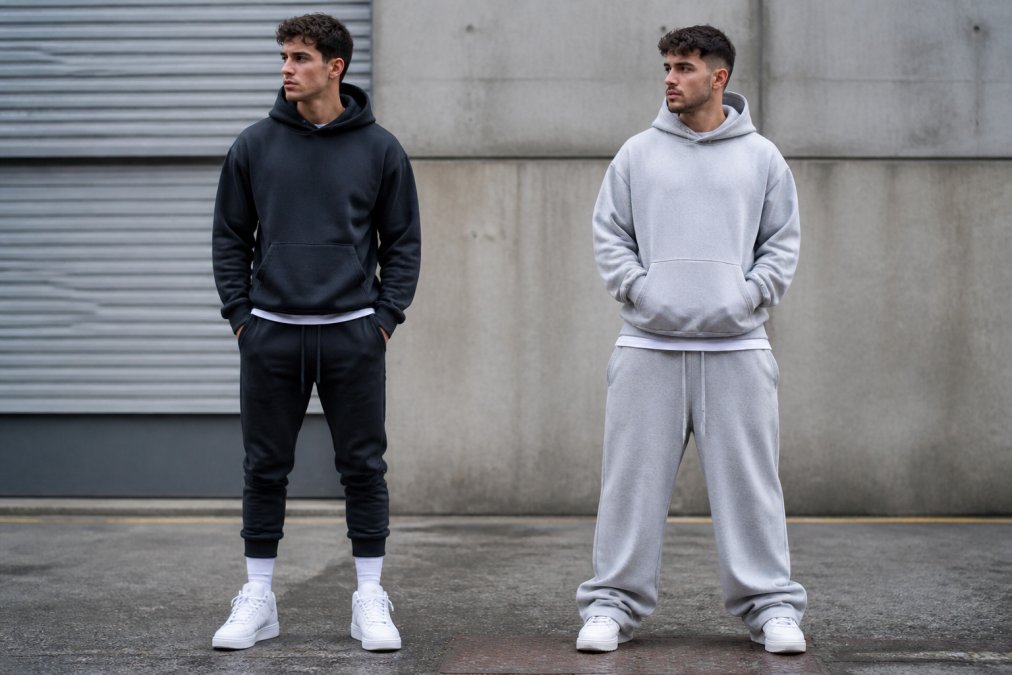
Tapered joggers narrow from the knee to the ankle, creating a sharp, athletic line that pairs well with slimmer footwear. Baggy joggers maintain volume through the leg and stack fabric at the hem, suiting chunkier trainers and a more relaxed streetwear aesthetic. Consider your existing wardrobe: if you favour clean lines and minimal logos, a tapered or straight leg in a heavier fabric works best. If you are chasing that mid-2000s skate influence or the current UK drill scene look, a baggy cut with a raw edge hem delivers the drape you want. The key is contrast: a baggy jogger needs a more structured top half to balance the volume, while a tapered jogger can handle an oversized hoodie without looking formless.
Fabric Weight and Drape: Why 300gsm Feels Different to 600gsm
Fabric weight is the most overlooked factor when choosing a fit, but it's not just about the number, it's about how that weight behaves on your body. The GSM (grams per square metre) tells you density, but the drape is determined by the knit structure, fibre blend, and finishing process. Two joggers at 500gsm can feel completely different if one uses a loopback terry and the other a brushed fleece.
Here's the practical breakdown:
- 300-350gsm: This is a lighter, single-knit or loopback terry. It moves with you, drapes loosely, and works for transitional weather or a relaxed, non-structured silhouette. The trade-off is that it creases easily at the knee and can lose its vertical line after a few hours of wear. If you're after a 'clean' oversized look, this weight will fight you.
- 400-450gsm: The sweet spot for a structured but breathable jogger. This weight typically uses a cross-grain or French terry construction, which gives it a smooth face and a soft looped back. It holds a straight-leg line without feeling like cardboard. This is a common weight for all-season pieces.
- 500-600gsm: Heavy brushed fleece. This is where the fabric has enough body to hold a true oversized drop without collapsing. The brush on the inside traps air for warmth, but it also adds bulk. A 600gsm jogger will keep its shape at the ankle and knee far better than a 300gsm pair, which is why it's the default for the stacked-hem look.
The Drape Mechanism
Drape isn't just about weight, it's about the 'hand feel' and how the fabric bends. A tightly spun, high-twist yarn creates a stiffer fabric that holds creases and falls in a clean vertical line. A loose, low-twist yarn (common in cheaper fleece) makes the fabric soft but floppy, so it bunches unpredictably. When shopping online, look for the fibre composition: a cotton-poly blend (like 80/20) will hold its shape better than 100% cotton, which relaxes and stretches as you wear it. Pure cotton also shrinks more aggressively on the first wash, which can ruin the intended fit.

How to Test Fabric in Person
If you're shopping in-store, use the 'scrunch test': grab a handful of the fabric at the thigh, hold it for five seconds, then release. A quality heavy fleece will slowly unfold and return to a flat state; a cheaper lightweight fabric will stay creased or spring back with a visible wrinkle. Also check the inside: a proper brushed fleece should feel like suede, not like a towel. If the inside is rough or pilled, it will degrade quickly and the drape will change within a few washes.
The GSM-to-Silhouette Matrix
| GSM Range | Best For | Avoid If | Typical Leg Behaviour |
|---|---|---|---|
| 300-350 | Light layering, tapered fits | You want a true oversized drop | Skims the leg, creases at knee |
| 400-450 | Straight-leg, all-season wear | You run hot or want maximum warmth | Holds a clean line, minimal stacking |
| 500-600 | Oversized baggy, stacked hems | You need breathability for summer | Falls vertically, stacks deliberately at the shoe |
The drape of the fabric ultimately decides whether your joggers fit looks premium or cheap. A heavy jogger in the wrong cut will look like workwear; a light jogger in an oversized cut will look like pyjamas. Match the GSM to the silhouette you want, not just to the season.
How to Style Oversized Joggers Without Looking Sloppy
Styling oversized joggers is about creating visual balance so the volume reads as fashion, not as a laundry accident. The trick is to pair volume with structure, which comes down to what you wear on top and on your feet.
Follow these rules to keep the look sharp:
- Wear an oversized hoodie or tee, but keep the shoulder seam from dropping too far past your natural shoulder line.
- Tuck in or crop your top layer to define your waist when wearing a baggier leg.
- Choose a jogger with a straight leg or slight taper if you are layering a long coat over the top.
- Keep colours tonal, like black on grey or washed black on white, to let the silhouette do the work.
- Avoid adding bulk at the waist; let the drawstring sit flat rather than tying a large bow.
Layering can also rescue a questionable fit. A structured jacket or an open overshirt adds a clean vertical line that breaks up the volume and gives your outfit a focal point.

Styling Joggers with High-Top Trainers: The Ankle Break
The ankle break is where a joggers fit succeeds or fails. When styling joggers with high-top trainers, the interaction between the hem and the shoe collar determines how clean the line looks. For high-tops, you have two options. The first is a clean break: the hem sits just above the top of the shoe, showing a sliver of sock or ankle, which works best with tapered or straight legs. The second is a stacked break: the fabric bunches slightly on top of the shoe, suiting baggier cuts and adding to the relaxed vibe. If your joggers have a raw edge or open hem, they will stack more naturally than a pair with a tight elastic cuff. Match the bulk of the shoe to the bulk of the jogger; chunky soles pair with wider legs, while slim high-tops suit a tapered profile.
Fit by Body Type and Common Mistakes to Avoid
Most fit guides stop at 'size up or down', but the reality is that the same jogger fits completely differently depending on your height, torso length, and leg-to-torso ratio. Here's a more precise breakdown for the three most common body types.
Tall and Slim (6'1" and above, 30-32" waist)
Your advantage is that you can carry volume without looking swamped, but the risk is that a baggy jogger makes you look like you're drowning in fabric. The key is to manage the inseam-to-height ratio. For a 32" inseam jogger, you want the hem to stack no more than approximately 1-2 inches on top of your shoe. If it stacks more than that, the fabric bunches at the ankle and breaks the vertical line of your leg.
Specific adjustments:
- Look for a 'long' or 'tall' inseam option (34-36") if you're over 6'2", but pair it with a tapered or straight leg, a baggy cut in a tall inseam will pool excessively.
- Avoid low-rise joggers. A mid-rise (10-11" front rise) keeps your torso visually connected to your legs, preventing the 'long legs, short torso' imbalance.
- If the waistband gaps at the back despite a drawstring, the rise is too short for your torso. Size up one and have the waist taken in, or look for a 'relaxed rise' cut.
Shorter and Stocky (5'7" and under, 32-36" waist)
The challenge here is that volume adds width, which can make you look shorter and broader. The solution isn't to avoid baggy joggers entirely, it's to control where the volume sits. A baggy jogger with a clean break (hem sitting just above the shoe) will add height; a stacked hem will visually shorten your legs by approximately 1-2 inches.
Specific adjustments:
- Choose a jogger with a 27-28" inseam for a clean break, or a 29-30" inseam for a single stack. Anything longer will create a double stack that eats your height.
- Avoid a true drop-crotch. A drop of more than approximately 2 inches below your natural crotch point adds width at the hip and shortens the leg. A standard mid-rise with a relaxed thigh is a better option.
- For the waist, stay true to size. A 34" waist in a 'baggy' cut will have extra room through the hip, which is fine, but the waistband itself should sit flat without needing to be cinched more than 1-2 inches.
Athletic or Muscular Build (Broad shoulders, large thighs)
The issue here is that a 'true to size' waist often means a tight fit through the thigh, while sizing up for the thigh creates a gaping waistband. The fix is to look for a 'relaxed taper' cut, one that has room through the thigh but narrows from the knee down.
Specific adjustments:
- Check the thigh measurement, not just the waist. A 32" waist jogger with a 12.5" thigh (measured flat, 2 inches below the crotch) will be tight on a 24" thigh circumference. You need at least 13.5-14" flat for comfort.
- If the waistband gaps, use the inner drawcord to cinch it, but don't tie a bow, tuck the excess cord inside the waistband for a clean front.
- Avoid a raw-edge hem if you have large calves; the fabric will catch on the widest part of your calf and create a balloon effect. A ribbed cuff that sits at the ankle bone is more forgiving.
Common Mistakes That Ruin the Fit
Ignoring shrinkage. A 100% cotton jogger will shrink 3-5% in length and 2-3% in width on a 40°C wash. If you're between sizes, size up and wash cold. If you're at the top of a size range, expect the inseam to shorten by about 1 inch after the first wash, account for that when choosing between a clean break and a stack.
Wearing the wrong rise with the wrong top. A low-rise jogger (8-9" front rise) with an oversized hoodie creates a boxy, disconnected silhouette. A mid-rise (10-11") keeps the waistband visible and anchors the outfit. If you prefer low-rise, tuck in your top or wear a cropped layer.
Matching the hem to the wrong shoe. A wide-leg jogger with a raw edge hem looks sloppy with slim low-top trainers, the fabric pools without a structure to stack against. A chunky sole (like a New Balance 990 or a chunky runner) gives the fabric something to break against. Conversely, a tapered jogger with a ribbed cuff looks awkward with a high-top that covers the cuff entirely. Match the hem style to the shoe collar height.
When in doubt, measure a pair of trousers you already own that fit well at the waist and thigh, and compare those numbers to the size chart, don't rely on S/M/L labels, which vary wildly between brands.
Final Checks Before You Add to Basket
Before you commit, run through a quick checklist to confirm the joggers fit will work for you.
| Check | What to Look For | Why It Matters |
|---|---|---|
| Waistband | Thick elastic with inner drawcord | Holds the fit without gaping or bulk |
| Leg profile | Straight, tapered, or baggy | Dictates how it pairs with your trainers |
| Fabric weight | 300gsm for light drape, 500-600gsm for structure | Heavier fabric holds the silhouette better |
| Ankle hem | Elastic cuff or raw edge | Determines clean break vs stacked look |
| Inseam length | Compare to your height | Prevents excessive bunching or high-water look |
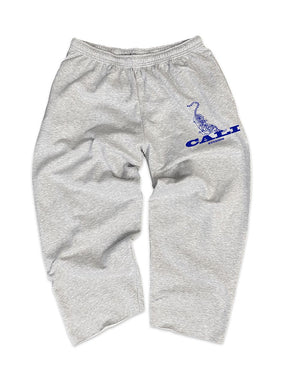
Think about the whole outfit, not just the trouser. The joggers should complement your existing hoodies, jackets, and trainers. If you are after a heavy-weight option that holds its shape, the Cali Studios Heavy Sweat Pants in washed black or grey come in a 500-600gsm cotton-poly blend with a thick elastic waistband and straight leg, built for exactly this aesthetic. For a lighter, relaxed option, the Tiger Joggers offer a 300gsm cotton feel at a lower price point.

Getting the fit right means understanding how fabric, cut, and styling work together. Trust the silhouette, keep the waistband true to size, and let the leg do the talking.
Frequently Asked Questions
Should you size up or down in streetwear joggers?
If you prefer a roomier fit, consider sizing up once from your regular size. The waistband should sit comfortably without cinching, and the thigh should feel roomy. If you prefer a cleaner tapered look, stick with your true size. Check the rise: a higher rise suits longer torsos, while a lower rise works for shorter frames. Always measure a pair of joggers you already own against the size chart.
What is the difference between tapered and oversized joggers?
Tapered joggers narrow from the knee to the ankle, creating a clean line that works well with low-top trainers and slimmer tops. Oversized joggers have a straight or wide leg with extra room through the thigh, giving that relaxed streetwear silhouette. Your choice depends on the look you want: tapered for a sharper finish, oversized for maximum comfort and urban style.
How should joggers sit on your trainers?
Joggers should either break cleanly on top of your trainers or stack slightly, depending on the fit. With high-top trainers, let the hem rest on the collar without bunching. With low-tops, a slight stack at the ankle works for baggy fits. The hem should never drag on the ground or look like it is flooding. A raw edge or open hem gives a relaxed finish.
Getting your streetwear joggers fit right comes down to balancing volume with structure, and choosing a pair that matches your body type and style. Cali Studios builds joggers with the heavy-weight fabrics and precise cuts that make this easy, from 600gsm brushed fleece to adjustable drawcord waistbands designed for real wear. Browse the collection and find the pair that fits your rotation.
