




Table of Contents
- Why Oversized Streetwear Needs Different Washing Habits
- What You'll Need Before Washing
- How to Prevent Graphic Prints from Cracking
- Choosing the Best Laundry Detergent for Streetwear
- Air Drying vs Tumble Drying Streetwear
- Step-by-Step Washing Process for Oversized Pieces
- Storage and Maintenance Tips for Oversized Garments
- Common Mistakes to Avoid
Why Oversized Streetwear Needs Different Washing Habits
Oversized streetwear demands a completely different approach to washing and care. The fabrics are heavier, the fits deliberately loose, and graphic prints are often the centrepiece of the design. Most people treat oversized pieces like regular t-shirts, throwing them in with everything else, using hot water, and wondering why graphics crack or hoodies stretch beyond recognition. The problem isn't the garment, it's the method.
When you wash oversized streetwear properly, you protect three critical things: fabric integrity, graphic print quality, and garment shape. Heavy-weight cotton blends need cold water to prevent colour bleeding and maintain fibre strength. Graphic prints require gentle handling to avoid cracking or peeling. And the oversized fit itself can shift with improper spin speeds and drying methods.
What You'll Need Before Washing
Gather the right tools before loading your machine. Using correct equipment makes the difference between successful washing and damaged pieces.
Essential items for washing oversized streetwear:
- A mesh laundry bag (non-negotiable for protecting graphic prints)
- Mild detergent specifically formulated for colours
- Cold water
- A gentle or delicate cycle option on your washing machine
- A drying rack or clothesline for air drying
- Optional: fabric softener (many prefer to skip this for streetwear)
The mesh laundry bag is the most important item. It protects your garment during the wash cycle by reducing friction and preventing graphic prints from rubbing against other fabrics or the machine drum. Without one, you risk visible wear on prints after just a handful of washes.
Mild detergent matters significantly. Standard laundry detergents are often too harsh for oversized pieces, especially those with hand-distressed finishes or delicate screen prints. Look for detergents marketed for delicate fabrics or colours, these are formulated with lower alkalinity, meaning less stress on fibres and less colour bleeding.
How to Prevent Graphic Prints from Cracking
Graphic prints crack because of heat, friction, and harsh detergent. The ink on screen-printed graphics sits on top of the fabric, not woven into it. Every wash cycle creates movement and stress that can cause the ink to crack and peel away.
Always use cold water. Heat causes ink to become brittle and more prone to cracking. Even warm water accelerates cracking over time.
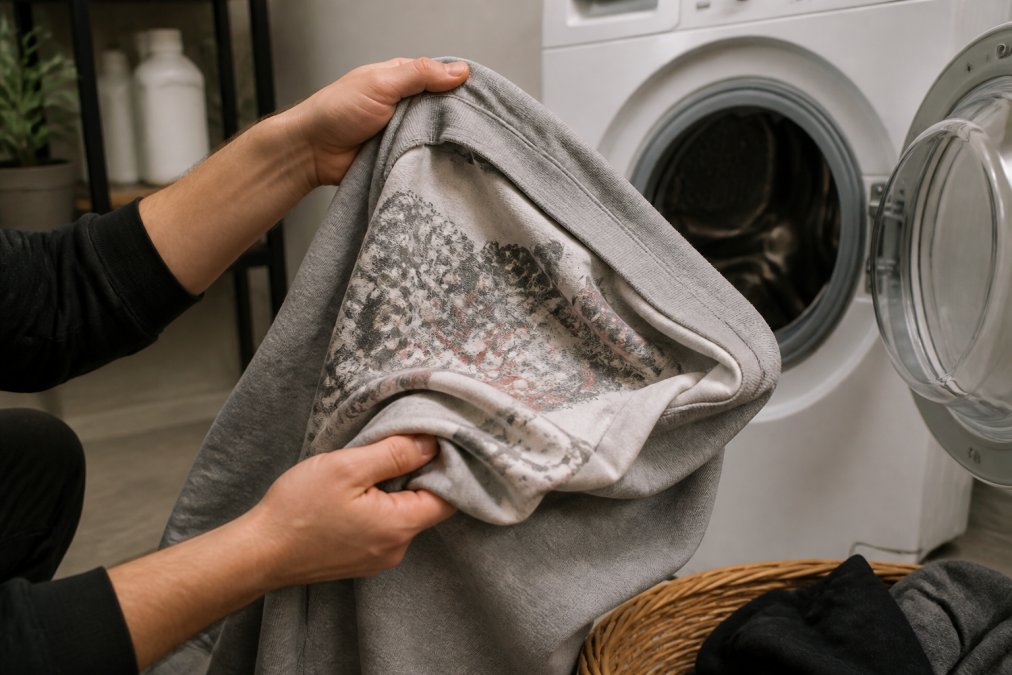
Turn your garment inside out before washing. This reduces direct contact between the graphic and the machine drum or other fabrics. The print sits against the inside of the garment rather than the outside, where it's exposed to the most friction.
Use a mesh laundry bag. The bag creates a barrier between your printed garment and everything else in the wash, dramatically reducing friction that causes cracking. Even washing the hoodie alone, the bag still protects the print from rubbing against the machine drum.
Avoid fabric softener. It leaves a coating that can make prints feel stiff and brittle. Over time, this coating causes ink to crack more easily.
Skip the dryer entirely. Machine drying applies sustained heat that accelerates cracking. Even low-heat tumble dry settings can damage prints faster than expected. Air drying is the only safe method for preserving graphic integrity.
Choosing the Best Laundry Detergent for Streetwear
Not all detergents are created equal for washing oversized streetwear. Standard laundry powders are often too alkaline and abrasive for quality fabrics and prints. You need something gentler.
Look for detergents specifically formulated for delicate fabrics or colours. These have lower alkalinity levels, meaning they're less harsh on fibres. Liquid detergents are generally better than powders because they dissolve completely and don't leave residue. Powders can sometimes leave white streaks on darker garments, especially in cold water where they don't dissolve as effectively.
Avoid detergents with optical brighteners. These additives make whites look whiter but can cause colour fading on darker streetwear. If your black or navy hoodie is starting to look grey, optical brighteners are often the culprit.
Dosage matters too. Most people use far too much detergent. With cold water and gentle cycles, you need less detergent to get clothes clean. Using too much leaves residue that dulls colours and makes prints feel stiff. Start with half the recommended dose and adjust only if clothes aren't coming clean.
For heavily soiled streetwear, consider a pre-wash treatment instead of adding more detergent. A pre-wash soak in cold water with mild detergent can break down stains without requiring a harsher wash cycle.
Air Drying vs Tumble Drying Streetwear
This decision directly impacts how long your oversized streetwear lasts. Air drying is universally better for streetwear.
Tumble drying applies sustained heat that damages multiple things at once. Heat causes colour fading, makes graphic prints brittle and prone to cracking, and can cause fabric shrinkage even on low settings. Cotton-poly blends used in quality hoodies are particularly vulnerable to heat damage.
Air drying eliminates all these risks. There's no heat, no tumbling action creating friction, and no risk of shrinkage. The downside is time, air drying takes 24-48 hours depending on humidity and airflow. But that's the actual cost of preserving your garment's quality.
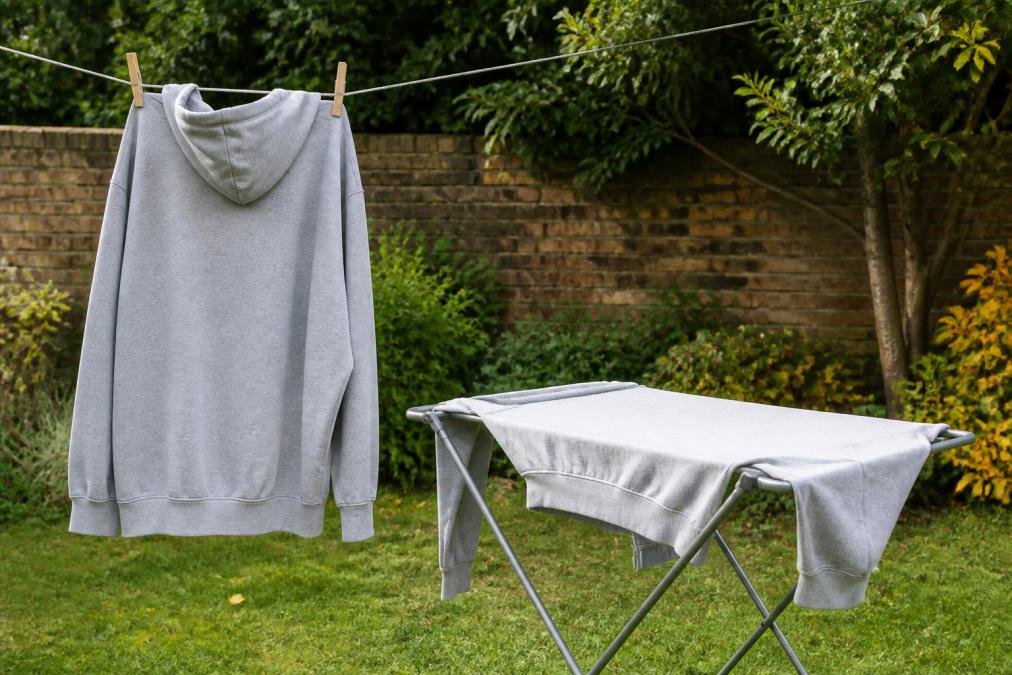
The best air drying method for oversized pieces is flat drying on a rack. Hanging an oversized hoodie can cause stretching because of the weight of wet fabric pulling downward. Flat drying distributes weight evenly and prevents distortion. If you don't have a drying rack, lay the hoodie flat on a clean, dry surface with a towel underneath.
For pieces with graphic prints, position the print side facing upward during drying. This prevents the print from pressing against the drying surface, which can cause uneven drying and potential staining.
If you must use a dryer, use the absolute lowest heat setting and remove the garment while still slightly damp. Don't run a full cycle. This minimises heat exposure while speeding up drying, but understand you're trading some longevity for convenience.
Step-by-Step Washing Process for Oversized Pieces
Here's exactly how to wash oversized streetwear without damaging it.
Step 1: Inspect and pre-treat stains (5 minutes)
Check your garment for visible stains or heavily soiled areas. If you spot stains, treat them before washing. Apply mild detergent directly to the stain and let it sit for 15-20 minutes. This gives the detergent time to break down the stain without requiring aggressive scrubbing.
Step 2: Turn the garment inside out (2 minutes)
Flip your hoodie inside out. This protects any graphic prints or embroidery from direct contact with the machine drum and other fabrics during the wash cycle.
Step 3: Place in a mesh wash bag (1 minute)
Put your inside-out garment into a mesh laundry bag and close it securely. This creates a protective barrier that reduces friction during washing.
Step 4: Load the machine (2 minutes)
Place the mesh bag in your washing machine. If washing multiple items, add other delicate pieces or similar colours. Avoid overloading, the garment needs space to move freely. Fill the drum only three-quarters full.
Step 5: Add detergent (1 minute)
Pour in half the recommended dose of mild liquid detergent. Cold water doesn't dissolve detergent as effectively as warm water, so use less rather than more.
Step 6: Select the right cycle (1 minute)
Choose the delicate or gentle cycle on your machine. Set water temperature to cold. Select a low spin speed if available, this is crucial for oversized pieces prone to stretching. Some machines have a "hand wash" cycle that's even gentler.
Step 7: Run the wash (30-45 minutes)
Let the machine run its full cycle.
Step 8: Remove immediately after washing (2 minutes)
Take the garment out as soon as the cycle finishes. Leaving wet fabric in the machine can cause colour bleeding or mildew.
Step 9: Prepare for air drying (5 minutes)
Lay your garment flat on a drying rack or clean surface. Smooth out wrinkles gently with your hands. Position the garment in its natural shape without stretching. If the piece has a graphic print, position it so the print faces upward.
Step 10: Air dry completely (24-48 hours)
Leave the garment to dry in a well-ventilated area. Avoid direct sunlight, which causes colour fading. Once completely dry, fold or hang as normal.
This process takes about an hour of active time, plus the drying period. A hoodie washed this way will look fresh after 20+ washes. One washed carelessly might look worn after five.
Storage and Maintenance Tips for Oversized Garments
How you store oversized streetwear between wears matters almost as much as how you wash it.
Folding is generally better than hanging for oversized pieces. Hanging can cause stretching over time because of the weight of the fabric pulling downward. Fold your pieces and store them in a drawer or shelf where they're supported evenly.
When folding, lay the garment flat, fold the sleeves inward, then fold the body in thirds. This creates a compact rectangle that stacks neatly without creating permanent creases.
For long-term storage, keep oversized pieces in a cool, dry place away from direct sunlight. If storing for several months, use cotton storage bags rather than plastic, plastic can trap moisture and create an environment where mildew develops.
Avoid hanging oversized hoodies on standard hangers. If you must hang them, use wide, padded hangers that distribute weight across the shoulders.
Between washes, you don't need to wash your streetwear every time you wear it. Oversized pieces worn casually can go 3-4 wears between washes, especially if not visibly soiled. This reduces total wash cycles, directly extending lifespan.
If your piece develops odours between washes, air it out rather than washing it. Hang it outside for a few hours or leave it in a well-ventilated room.
Common Mistakes to Avoid
Understanding what not to do is just as important as knowing what to do when washing oversized streetwear.
Mistake 1: Using hot or warm water. This is the single biggest mistake. Hot water causes colour bleeding, makes graphic prints brittle, and can cause shrinkage. Always use cold water.
Mistake 2: Skipping the mesh wash bag. People often think the bag is optional if washing alone. It's not. The bag protects the garment from the machine drum and reduces overall wear.
Mistake 3: Using too much detergent. More detergent doesn't mean cleaner clothes. It means residue left on the fabric that dulls colours and makes prints feel stiff. Use half the recommended dose with cold water.
Mistake 4: Putting printed pieces in the tumble dryer. Even low heat accelerates print cracking. Air drying is non-negotiable for pieces with graphics.
Mistake 5: Hanging oversized pieces to dry. The weight of wet fabric causes stretching. Flat drying on a rack is the only safe method. If you must hang dry, use clip hangers that hold the waistband rather than the shoulders.
Mistake 6: Washing oversized pieces with standard clothing. Oversized garments have different fabric weights and construction. Washing them separately, or at least with similar delicate pieces, prevents damage from friction.
Mistake 7: Ignoring stains. Fresh stains are easier to remove than set-in stains. Treat stains immediately with mild detergent and cold water.
Mistake 8: Using fabric softener. Fabric softener leaves a coating that makes graphic prints feel stiff and brittle. Skip it entirely for streetwear.
The Cali Studios Heavy Hoodie in Washed Black or standard Black, available at Cali Studios, is built to last when cared for properly. The 500-600 GSM custom cotton-poly blend and brushed inner fleece respond well to gentle washing. Follow these principles, and your piece will look fresh after dozens of wears.


Proper care for oversized streetwear comes down to understanding that these garments are built differently than standard clothing. They use heavier fabrics, intentional oversized fits, and often feature graphic prints that require protection. Start with cold water, use a mesh wash bag, choose gentle cycles, and air dry completely. These four principles alone will extend the life of your streetwear significantly. At Cali Studios, we've designed our hoodies and streetwear pieces to reward proper care. Follow this guide, and you'll see exactly what quality construction combined with thoughtful maintenance can achieve.
Frequently Asked Questions
Q: Can I tumble dry oversized cotton streetwear?
A: Tumble drying oversized streetwear risks shrinkage, colour fading, and heat damage to graphic prints. Machine drying also accelerates wear on heavy-weight cotton fibres. Air drying preserves garment longevity and shape retention far better. If you must use a tumble dryer, choose a low-heat or delicate cycle and remove the item while still slightly damp.
Q: How do I prevent prints from cracking on streetwear?
A: Turn graphic hoodies inside out before washing to shield the screen print from friction and detergent. Wash on a cold water cycle with mild detergent, avoid fabric softener, and never tumble dry. Air dry flat or hanging. Heat is the primary cause of print cracking; keeping temperatures low throughout the entire care process protects graphic integrity.
Q: What water temperature should I use for oversized streetwear?
A: Always use a cold water cycle for oversized streetwear. Cold water prevents colour bleeding, reduces fabric shrinkage in cotton jersey, and protects screen prints from heat damage. Cold water also extends the life of brushed inner fleece and maintains the shape retention of boxy, drop-shouldered fits. Warm or hot water significantly increases the risk of permanent damage.
Q: How often should I wash oversized streetwear to keep it looking new?
A: Wash oversized pieces every 3-4 wears for regular use, or less frequently if worn for shorter periods. Heavy-weight cotton hoodies like those with 600GSM construction can handle regular washing if done correctly. Spot-clean minor stains between washes to reduce overall wash frequency. Fewer washes mean longer garment longevity, but proper care during each wash is more important than washing frequency.
This article was written using GrandRanker
