




Table of Contents
- Streetwear vs High Street Fashion: Core Differences
- Material Quality and Craftsmanship
- Design Philosophy and Aesthetic Approach
- Durable Streetwear T-shirts vs Fast Fashion Alternatives
- Price Point, Durability and Long-Term Value
- Subculture Origins and Mainstream Evolution
- Making Your Choice: Streetwear or High Street
- Conclusion
- Frequently Asked Questions
Last Updated: August 24, 2026
Streetwear vs High Street Fashion: Core Differences
The choice between streetwear and high street fashion quality matters more than most people realise. At Cali Studios, we've spent years understanding what separates genuinely durable pieces from disposable fast fashion.
Streetwear vs high street fashion quality isn't just about aesthetics. It's about construction methods, material sourcing, and design philosophy. Streetwear emerges from subcultures, skateboarding, hip-hop, graffiti, urban communities, where clothing had to withstand real wear and demanding conditions. High street fashion prioritises rapid turnover, trend cycles, and accessibility through lower price points.
The fundamental difference is intent. Streetwear pieces are designed to be worn repeatedly in demanding conditions. High street items are engineered for seasonal rotation: buy, wear for months, move on. This shapes everything from fabric weight to seam construction to colour retention.
In practice: a quality streetwear hoodie uses 300-600GSM cotton blends with double-lined hoods and reinforced seams, designed to survive hundreds of washes. A high street equivalent often uses lighter 150-200GSM fabric, single-layer construction, and standard seaming that deteriorates quickly. The streetwear piece costs more upfront but lasts years, not seasons.
Material Quality and Craftsmanship
Material composition determines durability, comfort, ageing, and whether a piece justifies its price over time.
Streetwear brands invest in heavier, more durable fabrics. GSM (grams per square metre) measures fabric density and weight (iso.org). Quality streetwear hoodies run 300-600GSM, making fabric thick, substantial, and resistant to pilling. High street brands use 150-250GSM to keep costs down.
Cotton-polyester blends dominate both categories, but ratios matter. Streetwear typically uses 80-90% cotton with polyester for durability and shape retention (peer-reviewed research). High street brands lean heavier on polyester (50-60%) to reduce costs. When streetwear uses pure cotton, they pre-shrink and treat it properly. High street manufacturers often skip these steps.
Double-layered hoods are streetwear standard; single-layer hoods dominate high street. Hoods take constant friction from your head, shoulders, and backpacks. Double-layer hoods hold shape for years. Single-layer hoods stretch out within months.
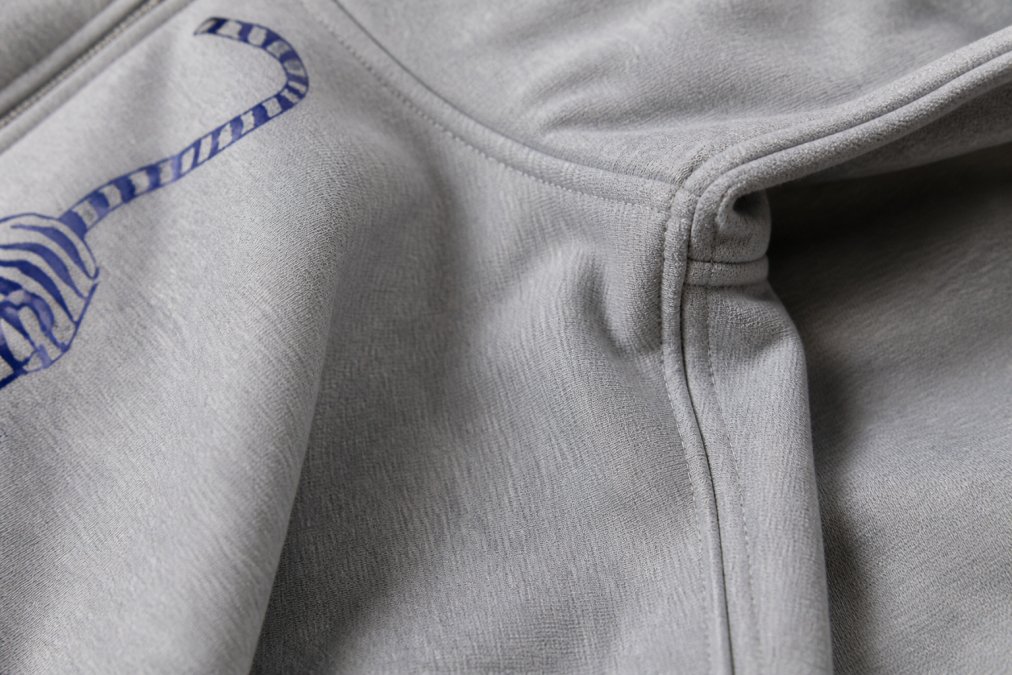
Stitching quality reveals the real gap. Streetwear uses reinforced seams at stress points, shoulders, armholes, pocket corners, often with double or triple stitching. High street brands use single-pass stitching to speed production. After hundreds of washes, single seams fail (peer-reviewed research). Reinforced seams don't.
How to Identify High Quality Cotton Garments
Check the fabric weight first. Look for GSM in the product description; anything under 200GSM won't last. Quality pieces run 250GSM minimum, with streetwear typically at 300GSM or higher. If the brand doesn't list GSM, that's a red flag.
Feel the fabric in person if possible. High-quality cotton has a smooth, slightly substantial hand feel, not thin or papery. The weave should feel even and tight, not loose.
Examine seams closely. Pull gently at a seam; quality construction resists movement. Stitching should be even, straight, and consistent. Count stitch lines at stress points, shoulders, underarms, pockets. One line means budget construction. Two or three lines means durability.
Check hems and cuffs. Quality pieces have finished hems that lay flat and don't curl. Cuffs should feel sturdy and retain shape, not limp immediately.
Look at the inside. Quality garments have neat, finished interiors with visible care. Budget pieces often have loose threads, visible seam allowances, or unfinished edges.
Design Philosophy and Aesthetic Approach
Streetwear design prioritises function within aesthetic. Pieces are built around actual use cases: skateboarders need room for movement and durability for impacts. Hip-hop culture valued oversized silhouettes for freedom of movement and layering. Graffiti writers needed pockets and durability for tools and repeated wear.
High street design prioritises trend alignment and production speed. Designers chase what's currently selling, manufacture quickly, and move inventory before trends shift. This creates pieces optimised for visual impact in the moment, not longevity.
Oversized fits in streetwear aren't arbitrary, they're functional. They allow layering, movement, and distribute stress across larger fabric areas, so seams and hems wear more slowly. High street oversized pieces often use lighter fabrics that don't hang properly, looking cheap and shapeless within weeks.
Drop shoulders, boxy cuts, and substantial hoods in quality streetwear work because they're comfortable for extended wear, look intentional, and distribute stress evenly. High street brands copy these silhouettes but execute them in lighter fabrics, making them look like budget knockoffs.
Graphic placement and print quality differ significantly. Streetwear typically uses screen printing or embroidery on substantial fabric, keeping prints crisp. High street brands often use cheaper digital printing on thin fabric; prints fade quickly and crack along fold lines after a few washes.
Durable Streetwear T-shirts vs Fast Fashion Alternatives
The gap between durable streetwear t-shirts and fast fashion alternatives shows up immediately in wear patterns and longevity.
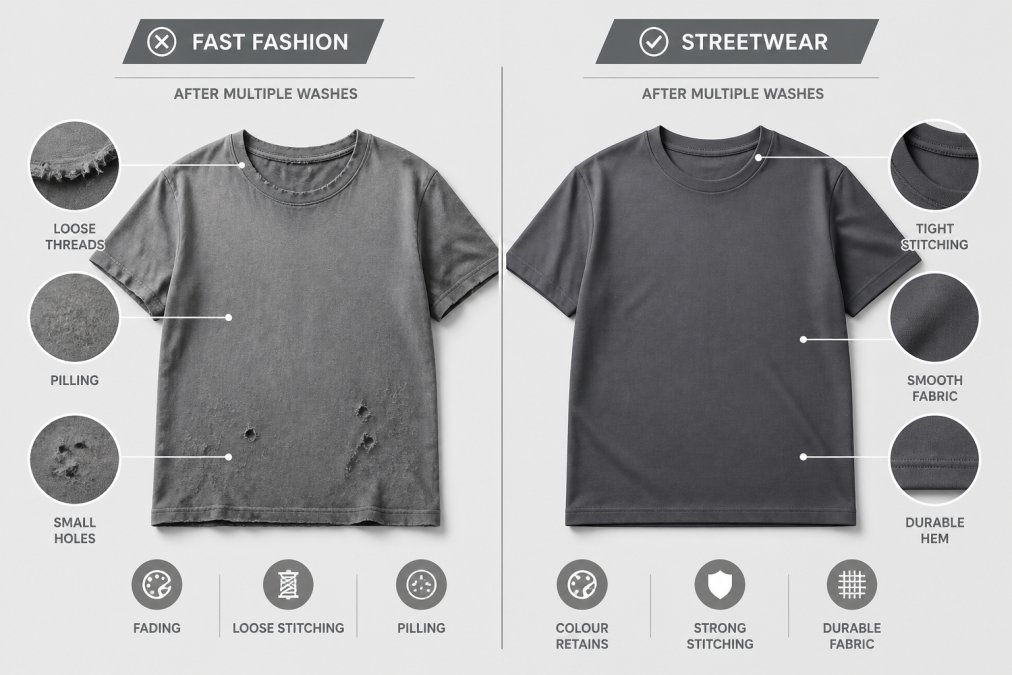
A quality streetwear t-shirt uses 200-250GSM cotton or cotton-blend fabric. This weight resists pilling, holds colour better, and maintains shape through dozens of washes. Seams are reinforced at shoulders and sides, stress points that fail first on cheap pieces.
Fast fashion t-shirts typically use 130-180GSM fabric, thin enough to feel cheap immediately and vulnerable to pilling within weeks. Dye doesn't penetrate properly because manufacturers rush the dyeing process. Seams are single-pass stitching that stretches and fails within 20-30 washes.
Colour retention separates them dramatically. Quality streetwear uses proper pre-wash and dye-setting processes, so colour stays true for years. Fast fashion skips these steps. Black t-shirts fade to grey within months. Colours become dull and washed out.
Quality pieces are pre-shrunk properly, holding size and shape through repeated washing. Fast fashion pieces often shrink unpredictably because fabric isn't pre-treated, sometimes dramatically after one wash.
Price Point, Durability and Long-Term Value
The initial price gap between streetwear and high street fashion quality is real, but the long-term value calculation differs significantly.
A quality streetwear hoodie from Cali Studios costs £50-£85. The Tiger Zip Hoodie runs £85 with 600GSM premium cotton, double-layered hood, and reinforced construction. The Scorpion Hoodie sits at £50 with 300GSM custom cotton-poly blend. A comparable high street piece might cost £25-£40 upfront.


That £50 streetwear hoodie lasts 3-5 years of regular wear. The £30 high street equivalent lasts 6-12 months before it's unwearable, faded, pilled, stretched, or with failed seams. To match the lifespan of one quality piece, you'd need 3-5 cheap alternatives, totalling £90-£150 versus £50-£85 for the quality piece.
Quality pieces age gracefully. Fabric softens and becomes more comfortable with washing. Colours fade evenly and develop character. After two years, a quality piece still looks intentional and wearable. Fast fashion pieces deteriorate, they pill, fade unevenly, stretch out of shape, and develop visible wear that looks cheap rather than vintage.
Limited edition or older streetwear pieces often hold or increase in value. A classic piece from 2020 might sell for more than its original price. Fast fashion pieces have zero resale value.
Subculture Origins and Mainstream Evolution
Streetwear emerged from real subcultures where clothing had to perform under actual conditions. Skateboarders needed durable pieces for impacts and friction. Hip-hop culture valued bold aesthetics and quality reflecting status and respect. Graffiti writers needed functional clothing with pockets and durability. These were practical requirements that shaped an aesthetic.
High street fashion evolved from traditional retail cycles, seasonal collections, trend-chasing, and rapid inventory turnover. The goal was always volume, accessibility, and profit margins. Quality was secondary to speed and cost.
This origin story explains why streetwear pieces are built differently. They emerged from communities that actually wore them hard and valued durability. High street fashion evolved from business models optimised for sales velocity, not garment longevity.
Mainstream adoption of streetwear has complicated this distinction. Luxury brands now produce "streetwear-inspired" pieces at premium prices. Fast fashion brands copy streetwear aesthetics in cheap fabrics. You can't judge by aesthetics alone anymore. A boxy hoodie could be quality streetwear or cheap fast fashion; the difference is in fabric, construction, and intended lifespan.
| Characteristic | Streetwear | High Street Fashion |
|---|---|---|
| Fabric Weight | 300-600GSM | 150-250GSM |
| Seam Construction | Double or triple-stitched | Single-pass stitching |
| Hood Design | Double-layered | Single-layer |
| Colour Retention | 2-5 years | 6-12 months |
| Lifespan | 3-5 years regular wear | 6-12 months |
| Design Intent | Functional durability | Seasonal trend |
| Price Point | £50-£150+ | £20-£50 |
| Cost Per Wear | Lower over time | Higher due to replacement |
Making Your Choice: Streetwear or High Street
Choose streetwear if you wear pieces regularly and want them to last. If you have a consistent style and build a wardrobe of pieces you'll wear for years, quality streetwear makes financial sense. You're paying more upfront but spending less overall. This works especially well for basics, hoodies, t-shirts, joggers, pieces you wear constantly.
Choose high street if you enjoy trend-chasing and want variety. If you get bored quickly or your budget won't stretch to quality pieces, high street works. You're accepting faster deterioration but getting more visual variety short-term.
Consider your lifestyle. If you're in active subcultures or urban communities, streetwear pieces are designed for how you actually live. They're built for the movements you make and conditions you're in. High street pieces deteriorate faster under these conditions.
For everyday wear in typical conditions, quality streetwear still wins on value. A £50 hoodie worn casually might last 5-7 years, genuinely economical compared to buying three £30 pieces over the same period.
The Cali Studios range offers genuine middle ground. The Scorpion Hoodie at £50 delivers 300GSM custom cotton-poly blend with double-lined hood and boxy fit. The Tiger Zip Hoodie at £85 steps up to 600GSM premium cotton with reinforced construction. The Skull T-shirt at £50 delivers 200GSM cotton with proper graphic printing. These are honest streetwear built for actual wear, priced for accessibility.

Conclusion
The choice between streetwear and high street fashion quality comes down to what you want from your clothes. If durability, longevity, and cost-per-wear matter, streetwear quality wins consistently. The upfront cost is higher, but total cost of ownership is lower because pieces last years instead of months.
Cali Studios delivers exactly this value: quality streetwear designed for real wear, available in both entry-level and premium options. Construction is visible in the details, fabric weight, seam reinforcement, hood design, and materials that hold up. Whether you choose the Scorpion Hoodie for everyday wear or the Tiger Zip Hoodie for pieces you'll wear for years, you're getting clothing built to last, not disposable trend pieces. Start with a quality foundation piece and build from there.
Frequently Asked Questions
What is the key difference between streetwear and high street fashion quality?
Streetwear typically uses heavier fabric weights (300-600GSM), premium material blends, and reinforced construction techniques like double-layered hoods and double-end zips. High street fashion prioritises cost efficiency, often using lighter fabrics (150-250GSM) and simpler construction. Streetwear garments are engineered for durability and retain their shape and colour longer, while high street pieces often show fading and wear within months of regular use.
How do I identify high quality cotton garments when shopping?
Check the GSM (grams per square metre) weight, premium pieces are typically 300GSM or above. Examine the seams: they should be straight, tight, and reinforced. Look for double-stitching or taped seams, especially around stress points. Feel the fabric; quality cotton has a soft, consistent texture without pilling. Check the label for fibre composition, pure cotton or premium blends (cotton-polyester) perform better than cheap synthetics. Finally, inspect the hem and cuffs for neat finishing.
Are durable streetwear t-shirts worth the extra cost compared to fast fashion?
Yes, if you wear pieces regularly. A quality streetwear t-shirt at £50 will last 2-3 years with proper care, while a fast fashion alternative at £15-20 typically fades and loses shape within 6-12 months. Over time, buying three cheap t-shirts (£45-60) versus one durable piece becomes the same investment, but the quality piece maintains its appearance and fit far longer. For statement pieces like graphic tees, durability matters more because the design is central to the aesthetic.
What construction techniques should I look for in a heavy-weight hoodie?
Look for double-layered or double-lined hoods, which provide structure and comfort. Double-end zips are superior to single zips because they reduce strain and last longer. Neck taping reinforces the neckline and prevents stretching. Oversized fits with dropped shoulders should use panel construction (typically 2-3 panels) rather than single-piece cuts, as this improves durability and shape retention. Check that pockets are securely stitched and that drawstrings are reinforced at attachment points.
This article was written using GrandRanker
