




Table of Contents
- The Aesthetic of Modern Urban Streetwear
- Organic Cotton Streetwear Essentials That Last
- Ethical Streetwear Brands: What to Look For
- Circular Fashion in the UK: Resale and Repair
- Budget-Conscious Sustainable Styling
- Care and Repair Guide for Streetwear
- Sustainable Streetwear Trends in the UK: What's Next
- Frequently Asked Questions
Last Updated: September 16, 2026
The Aesthetic of Modern Urban Streetwear
Sustainable streetwear in the UK has moved from niche to mainstream, and the aesthetic has shifted with it. The look is looser, softer and more lived-in than the sharp graphics of a decade ago: boxy tees, relaxed denim, faded washes and dropped shoulders. Comfort now signals credibility.
This guide from Cali Studios covers the trends shaping 2026, plus the practical side most trend reports skip: how to care for pieces, style them on a student budget and tell genuine ethical manufacturing from marketing noise. Below, we'll show you exactly what to buy, what to avoid and how to make each piece last.
Sustainable streetwear is clothing built for urban subcultures that minimises environmental impact through material choice, ethical labour and long garment life. It is not a single fabric or label; it is a set of decisions made at every stage of production.
Organic Cotton Streetwear Essentials That Last
Organic cotton streetwear essentials are the foundation pieces you rebuild around: plain tees, hoodies and denim in neutral tones that survive hundreds of washes. Organic cotton is grown without synthetic pesticides and uses less water than conventional cotton, and it tends to hold its shape longer.
For the Soil Association's guidance on organic textiles, certification is the clearest proof a fibre claim is genuine. Look for GOTS or Soil Association logos rather than vague "eco" language.
What matters most is weight and construction. A 200GSM organic ringspun combed cotton tee, like the US Seal T-shirt at £40, holds structure through repeat washing. Heavier fabric resists the thinning and stretching that kills cheap cotton.

| Essential | Fabric Signal | Why It Lasts |
|---|---|---|
| Plain tee | 200GSM organic cotton | Retains shape, resists thinning |
| Hoodie | Ringspun combed cotton | Softer hand-feel, less pilling |
| Denim | High-quality denim, relaxed fit | Withstands daily wear |
The Saint Denim Jeans at £90 use a relaxed fit and washed finish, built to withstand everyday wear rather than fade out after a season.

Ethical Streetwear Brands: What to Look For
Ethical streetwear brands publish who made their clothes, where the fabric came from and what it cost the people sewing it. If a brand cannot answer those three questions, treat the sustainability claim as decoration.
Check for supply chain transparency first. A brand that names its factories and fibre suppliers is accountable; one that hides behind "ethically made" is not. Fair wage matters as much as fabric: a garment made from organic cotton in a sweatshop is not sustainable. The strongest signals are a named factory list, a stated code of conduct and evidence of independent audit rather than self-declaration.
UK rules that back up the claims
Greenwashing is the trap here, and UK law now gives buyers real leverage. The Competition and Markets Authority's Green Claims Code requires businesses to back environmental claims with evidence, to avoid vague terms like "eco-friendly" without proof, and to consider the full life cycle of a product rather than one narrow attribute. The Advertising Standards Authority can act on misleading environmental advertising, and the Consumer Protection from Unfair Trading Regulations 2008 prohibit commercial practices that mislead the average consumer. If a label says "sustainable" with no specifics, that is a red flag, not a selling point.
On labour, the Modern Slavery Act 2015 requires larger businesses operating in the UK to publish an annual statement setting out the steps they have taken to prevent modern slavery in their supply chains. A brand that publishes a clear statement, and updates it, is doing more than the minimum. The Ethical Trading Initiative base code is a widely used reference point for what fair labour looks like in practice.
Certifications worth checking
Certification is not a guarantee, but it is a shortcut past marketing language:
- GOTS for organic textiles, covering both fibre and processing
- Soil Association certification for organic textiles sold in the UK
- Fairtrade marks for cotton and supply-chain fairness
- GRS (Global Recycled Standard) for recycled content claims
- OEKO-TEX Standard 100 for chemical safety in finished garments
A common mistake is assuming higher price equals ethics.
Questions to ask before you buy
- Who made this, and can the brand name the factory?
- What is the fibre, and is it certified?
- Does the brand publish a modern slavery statement?
- Is there a repair or take-back option?
- Does the price reflect labour, or just positioning?
If a brand answers four of those five clearly, it is ahead of most of the market. If it answers none, the sustainability claim is decoration.
Circular Fashion in the UK: Resale and Repair
Circular fashion in the UK means keeping garments in use through resale, repair, swapping and upcycling rather than sending them to landfill. Textile waste is one of the fastest-growing waste streams, and the resale market has become a genuine route for streetwear rather than a charity-shop afterthought.
- Resale - selling or buying secondhand keeps garments circulating and cuts demand for new production. Platforms such as Vinted, Depop and eBay have normalised pre-owned streetwear, and dedicated resale sites now sit alongside them.
- Repair - fixing a split seam, replacing a zip or re-stitching a hem extends garment longevity far beyond its original life. A local tailor or a mail-in repair service costs a fraction of a replacement.
- Upcycling - turning worn pieces into something new, from patched denim to reworked tees. Deadstock fabric and limited-run reworks fit streetwear culture precisely: unique finishes and a story behind each item.
- Take-back and trade-in - a growing number of brands accept old garments for credit or recycling, which keeps material in the loop and gives buyers a reason to return rather than bin.
What UK regulation means for circular streetwear
The regulatory backdrop is shifting. Under extended producer responsibility (EPR) rules for packaging, businesses that handle packaging above the relevant thresholds must register and report, and the costs of managing that packaging shift toward the producer. For clothing, the Waste and Resources Action Programme (WRAP) has long pushed voluntary agreements such as the Sustainable Clothing Action Plan and its successor, Textiles 2030, which asks signatories to cut the carbon and water footprint of UK textiles and to design for circularity.
A simple repair kit for streetwear
You do not need a sewing machine to keep a rotation alive. A basic kit covers most failures:
- A needle and thread in black, white and indigo
- Iron-on patches for quick fixes on the inside of a tear
- A spare zip pull or two
- A fabric shaver for pilling on hoodies
- A small pair of scissors for loose threads
Budget-Conscious Sustainable Styling
Budget-conscious sustainable styling comes down to buying fewer, better pieces and building a capsule wardrobe around them. The cheapest garment is the one you wear for five years, not the one that costs least today.
- Audit what you already wear weekly
- Identify the two or three gaps
- Buy only those pieces, in neutral tones
- Rotate, don't hoard
Care and Repair Guide for Streetwear
Caring for streetwear properly is the single biggest lever on garment longevity, and it costs nothing. Most pieces fail because of how they are washed, not how they are made.
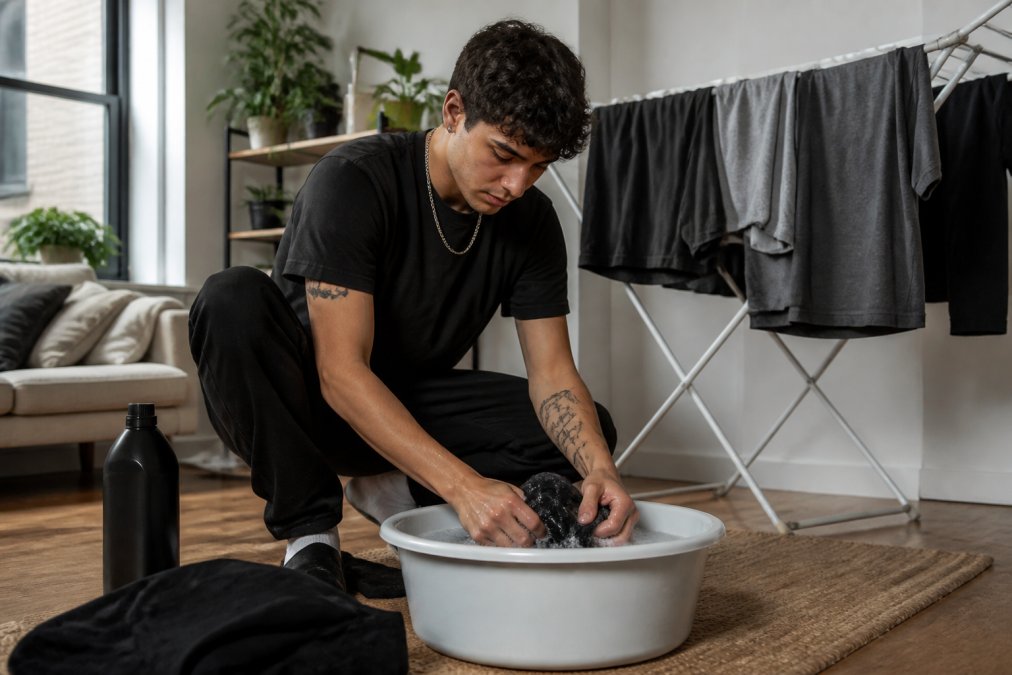
The routine that works:
- Wash cold - heat shrinks cotton and fades prints.
- Turn inside out - protects graphics and raw edges.
- Use gentle detergent - harsh chemicals strip colour.
- Air dry - tumble drying is the fastest way to ruin a fit.
- Repair early - a stitch now beats a replacement later.
Sustainable Streetwear Trends in the UK: What's Next
The sustainable streetwear trends in the UK for 2026 point in one direction: slower, more durable, more transparent. Expect more brands publishing factory lists, more resale built into retail, and more repair services offered alongside new stock.
Three shifts define the next phase:
- Biobased and recycled fabrics moving from novelty to default, including recycled polyester and biodegradable blends.
- Chrome-free and vegetable-tanned leathers replacing harsher tanning methods.
- Climate activism and streetwear culture merging, with drops tied to environmental campaigns rather than pure hype.
Frequently Asked Questions
Which streetwear brands are sustainable?
Look for brands that publish supply chain transparency, use certified organic cotton or recycled polyester, and offer repair or resale options. Check for specific claims like '100% organic ringspun combed cotton' rather than vague green language. Brands that list factories, hold fair wage certifications, and design for garment longevity are usually the ones making real progress. Cali Studios uses organic cotton in its US Seal T-shirt, which is a solid example of a staple piece built with sustainable materials.
What materials define sustainable streetwear in the current market?
Organic cotton, recycled polyester, deadstock fabrics, and biodegradable alternatives like lyocell are the core materials. Chrome-free and vegetable-tanned leathers appear in accessories, while biobased textiles are gaining ground. Look for GSM ratings and fibre content on the label. A 200GSM organic cotton tee, for instance, holds its shape longer than a thin fast-fashion equivalent, which reduces how often you replace it. Fewer, better pieces is the principle that matters most.
How do I maintain my streetwear pieces to ensure longevity?
Wash cold and inside out, use a gentle detergent, and skip the tumble dryer. Air-dry flat or on a rack to protect the shape and print. For denim, wash only when necessary and spot-clean between wears. Repair loose seams and small holes early before they spread. Rotating your wardrobe so each piece gets rest between wears also extends fabric life. These habits directly support circular fashion by keeping garments in use for years rather than months.
Are oversized fits still relevant in sustainable streetwear?
Yes. Oversized and relaxed fits remain central to urban style because they suit layering and skate-friendly movement. The sustainable angle is that a well-made oversized piece in organic cotton or high-quality denim stays in rotation longer than a trend-driven cut. Relaxed denim, boxy tees, and dropped-shoulder tops are wardrobe staples that work across seasons. Buying one durable oversized piece beats buying three cheap ones that lose shape after a few washes.
