




Last Updated: October 29, 2026
Quick Summary
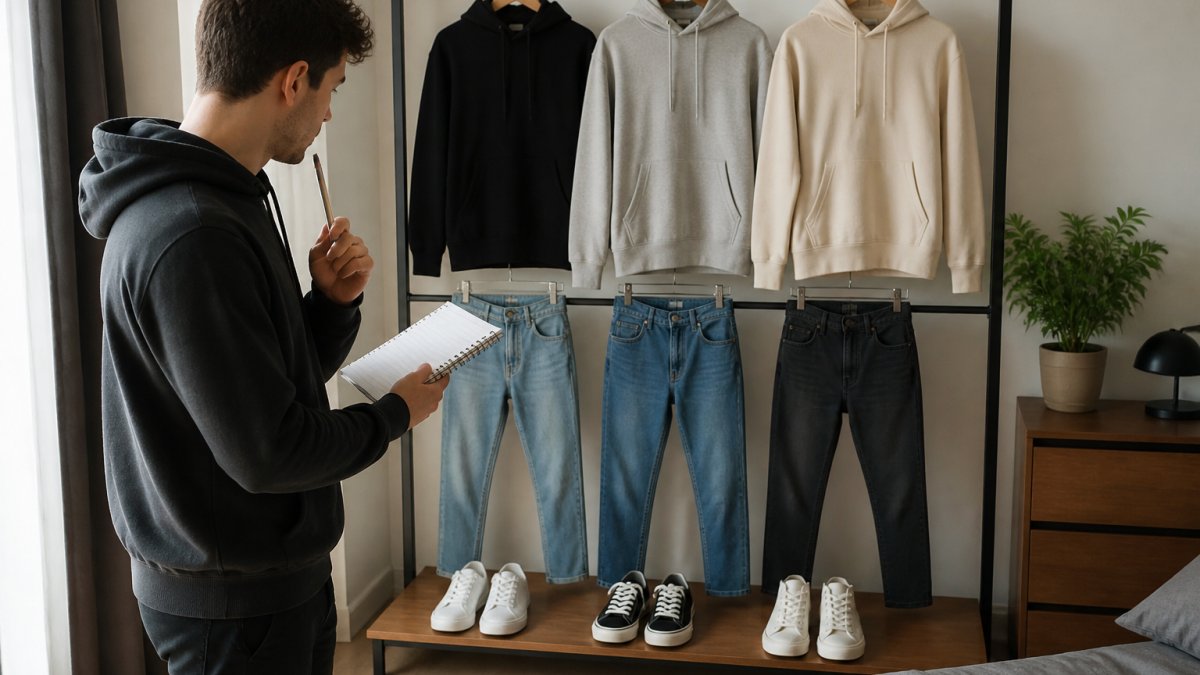
The 3-3-3 rule for men's clothing is a styling formula where you pick three tops, three bottoms and three pairs of shoes, then rotate them to create a small, hard-working wardrobe. Nine pieces mixed and matched give you up to 27 outfit combinations without a packed rail or a morning crisis.
- The 3-3-3 rule differs from Project 333, which limits you to 33 items worn for three months.
- Three tops, three bottoms and three pairs of shoes give you 27 combinations: 3 x 3 x 3.
- Keep at least two of your three tops simple so loud prints don't kill your mix-and-match options.
- Starting with two pairs of shoes gives 18 combinations to test the rule before buying a third pair.
- Every item should match at least two of the other eight pieces, or it is a weak link.
Table of Contents
- What the 3-3-3 Rule Actually Means
- Step 1: Pick Three Tops That Work Together
- Step 2: Pick Three Bottoms With Different Jobs
- Step 3: Pick Three Pairs of Shoes
- The Real Maths: How Many Men's Outfit Combinations You Get
- How to Build a Capsule Wardrobe for Men Around Nine Pieces
- Making It Work With Oversized Streetwear Outfits
- Project 333 for Men: When the 3-3-3 Rule Is Not Enough
- Frequently Asked Questions
What the 3-3-3 Rule Actually Means
The 3-3-3 rule for men's clothing is a simple styling formula: pick three tops, three bottoms and three pairs of shoes, then wear them in rotation to create a small, hard-working wardrobe. Nine pieces, mixed and matched, give you a surprising number of men's outfit combinations without a packed rail or a morning crisis.
The rule isn't a law. It's a shortcut to getting dressed fast and looking deliberate.
Below, we'll show you exactly how to choose each set of three, how the outfit maths actually works, and where the formula breaks down.
How It Differs From Project 333 and the Three-Color Rule
Three fashion formulas get confused constantly, and mixing them up is the fastest way to make the 3-3-3 rule feel harder than it is.
- The 3-3-3 rule: three tops, three bottoms, three pairs of shoes. Nine items, endless mix and match.
- Project 333: a wardrobe challenge where you wear only 33 items for three months. Bigger commitment, bigger cull.
- The three-color rule: an outfit guideline. Stick to three colors per look so nothing clashes.
One is a capsule wardrobe starter. One is a seasonal wardrobe challenge. One is a color coordination tip. Use the 3-3-3 method to simplify your daily choices, and the three-color rule to keep each outfit combination clean.
Step 1: Pick Three Tops That Work Together
Start with three tops that share a color palette but differ in weight and shape. A plain hoodie, a graphic tee and a heavier layer are three options.
Choose fabrics you'll actually wear. A 600GSM cotton-poly hoodie is one option; a lighter 300GSM piece is another. Think about fit, too: boxy and drop-shouldered reads streetwear, regular fit reads cleaner.
Watch out: buying three tops in three loud prints kills your mix-and-match options. Keep at least two simple.
If you want more styling depth on the hoodies you choose, our guide on how to style oversized hoodies for men walks through the details.
Step 2: Pick Three Bottoms With Different Jobs
Your three bottoms should each do a different job, not three versions of the same thing.
- Denim: relaxed-fit jeans.
- Joggers: a comfortable option.
- Cargo or chinos: another option.
Keep colors close: black, washed black, grey or stone. For deeper styling advice on the cargo pants you might pick, see our cargo pants styling guide.
Step 3: Pick Three Pairs of Shoes
If you want pairing tips, our guide on styling joggers with sneakers covers the combinations in detail.
The Real Maths: How Many Men's Outfit Combinations You Get
Three tops, three bottoms and three pairs of shoes give you 27 outfit combinations: 3 × 3 × 3. That's 27 different looks from nine items. Wear one a day and you've got nearly a month of outfits sorted.
The maths has limits. Not every combination works equally well. Some tops suit certain bottoms better, and shoes can clash with the wrong silhouette. Treat 27 as the ceiling, not the guarantee.
Why 27 Is a Ceiling, Not a Guarantee
The 27 figure assumes every top works with every bottom and every pair of shoes. In practice, three things reduce the usable count:
- Colour compatibility. If one top is a bold print and one bottom is a contrasting wash, that pairing may never feel right. Keeping two of your three tops plain and your bottoms in a tight neutral range (black, washed black, grey, stone) protects most of the 27.
- Silhouette and volume. A boxy, drop-shouldered hoodie over slim jeans can look top-heavy; the same hoodie over relaxed denim balances out. One oversized piece per outfit is a reliable rule of thumb.
- Dress code and weather. Trainers may not suit a smart evening; boots may be too warm for summer. If your week spans work, casual wear and nights out, you may need to accept that some combinations are seasonal or occasion-specific.
Outfit-Count Maths for Different Capsule Sizes
| Pieces | Combinations | What It Means |
|---|---|---|
| 3 tops + 3 bottoms | 9 | Solid base for a capsule |
| 3 tops + 3 bottoms + 3 shoes | 27 | Full 3-3-3 formula |
| 4 tops + 3 bottoms + 3 shoes | 36 | Room to expand later |
| 3 tops + 3 bottoms + 2 shoes | 18 | A realistic starting point if you live in one pair |
If you are testing the rule for the first time, starting with two pairs of shoes (18 combinations) is one way to see whether a nine-piece core suits you before buying a third pair.
How to Build a Capsule Wardrobe for Men Around Nine Pieces
The 3-3-3 rule is an entry point into a capsule wardrobe for men. You're not clearing out your whole wardrobe. You're building a nine-piece core.
Here's one way to do it:
- Clear a single rail or drawer for your nine pieces.
- Pick your three tops, three bottoms and three shoes using the steps above.
- Store everything else separately for a month.
- Note which combinations you reach for most.
- Add one or two pieces only when a real gap appears.
A Men's-Specific Selection Checklist
Before you commit to nine pieces, run each item through these questions:
- Does it fit without alteration? A small wardrobe works best when every piece is comfortable enough to wear for a full day. If a top pulls at the shoulders or a waistband digs in, you will avoid it, and the maths collapses.
- Does it layer? Tops should work over a tee and under a jacket. Bottoms should accommodate a belt and sit cleanly over your shoes.
- Is the fabric appropriate for your climate? A 600GSM cotton-poly hoodie is a cold-weather piece; a lighter 300GSM loopback works for milder days. If you live somewhere with short winters, one heavy layer is enough.
- Can it be laundered easily? Check care labels before choosing pieces.
- Does it match at least two other pieces? Every item should pair with at least two of the other eight. If it only works with one, it is a weak link.
Adapting the Rule to Work, Exercise and Formal Dress Codes
The strict 3-3-3 formula assumes a casual lifestyle. If your week includes office days, gym sessions or formal events, adapt rather than abandon it:
- Work: Swap one casual bottom for tailored trousers and one top for a button-down or fine-knit polo. Keep the third top and bottom casual so the capsule still covers weekends.
- Exercise: If you train regularly, treat gym kit as separate from your nine pieces. Trying to make one pair of trainers serve both the gym and evenings usually shortens their life and weakens the capsule.
- Formal events: One pair of leather boots or clean leather sneakers can stretch to smart-casual evenings, but black-tie or formal weddings need a separate outfit. Accept that the 3-3-3 rule is a daily-wear system, not a complete life wardrobe.
Fit and Fabric Notes That Make a Small Wardrobe Work
- Fit: Regular-fit tops and relaxed-fit bottoms mix more reliably than slim-fit everything. Boxy, drop-shouldered hoodies read streetwear; regular-fit tees read cleaner.
For a broader framework to expand that core into a full refined wardrobe, read our refined streetwear style guide.
Making It Work With Oversized Streetwear Outfits
Oversized streetwear outfits can be used with the 3-3-3 rule.
A boxy hoodie over relaxed jeans is one outfit option. Swap the jeans for joggers and you've got a different outfit from the same capsule. The key is balancing volume.
Our full guide to styling oversized streetwear outfits shows how to layer without looking swamped.
Project 333 for Men: When the 3-3-3 Rule Is Not Enough
Project 333 for men is the next step up: 33 items worn for three months. If nine pieces feels too limited, or your lifestyle spans work, gym and nights out, Project 333 gives more room.
But start with 3-3-3 first. It's small enough to try this week.
Nine pieces won't style themselves, but they're a lot easier to work with than a wardrobe full of maybes. Build your core with a Heavy Hoodie or a Tiger Hoodie, and add Saint Denim Jeans.


Frequently Asked Questions
What is the 3-3-3 clothing rule for men?
It is a styling formula built on nine pieces: three tops, three bottoms and three pairs of shoes. The theoretical maximum is 27 top-bottom-shoe combinations from a small rail of clothes. The point is not restriction for its own sake.
How many men's outfit combinations can you actually make from nine pieces?
The straightforward maths gives 3 x 3 x 3 = 27 theoretical combinations once shoes are included. If you only count tops and bottoms, it is 9 combinations. In practice some pairings will look better than others.
Does the 3-3-3 rule work with oversized streetwear outfits?
Yes. The listed Cali Studios options include oversized hoodies and relaxed-fit jeans. Keep the volume balanced by pairing a boxy top with a straighter bottom.
What is the difference between the 3-3-3 rule and Project 333 for men?
The 3-3-3 rule is a styling exercise: nine pieces. Project 333 is a longer commitment. Start with 3-3-3 if you want a test.

