




Table of Contents
- Are Expensive Streetwear Hoodies Worth It? The Honest Answer
- What Makes a Hoodie High Quality: Fabric Weight and Construction
- Expensive Hoodie vs Cheap Hoodie: What You Actually Pay For
- Best Price Range for a Hoodie: What Each Tier Gets You
- Hoodie Cost Per Wear: The Ownership Maths That Settles the Debate
- Streetwear Value Beyond Materials: Fit, Sizing and Culture
- How to Judge a Hoodie Before You Buy: A Practical Checklist
- Verdict: When to Spend and When to Save
- Frequently Asked Questions
Last Updated: October 14, 2026
Are Expensive Streetwear Hoodies Worth It? The Honest Answer
Yes, expensive streetwear hoodies are worth it when fabric weight, construction and fit hold up over years of wear. It is not worth it when you are paying purely for a logo on a thin, high-street blank.
The longer answer comes down to maths, not taste. This guide from Cali Studios breaks down fabric weight, stitching, price tiers and cost per wear so you can judge a hoodie before you spend, and the five checks that settle the question in under a minute.
What Makes a Hoodie High Quality: Fabric Weight and Construction
Fabric weight and construction decide whether a hoodie feels premium and survives daily wear. Weight is measured in GSM (grams per square metre); construction covers stitching, seams, hood panels and the inner fleece.
A quality hoodie starts with substantial fabric and a fit that holds its shape. Everything else, print, logo, colourway, is decoration on that foundation.
Fabric weight and feel: what the GSM number actually tells you
GSM stands for grams per square metre and measures fabric density. Higher GSM means a heavier, warmer, more structured garment that drapes rather than clings.
- Under 300 GSM: light, thin, prone to clinging. Fine for summer, weak for a statement piece.
- 300-400 GSM: midweight. The standard high-street zone.
- 400-500 GSM: heavyweight. Noticeably warmer and holds its shape.
Our own Heavy Hoodie range sits at 500-600 GSM, which is why it feels dense rather than flimsy. Fabric blend matters too: a cotton-poly mix keeps the weight without the sag pure cotton can develop.

Stitching, seams and the details that survive wear and tear
Stitching is where cheap hoodies give themselves away. Turn the garment inside out: dense, even stitching with no loose threads signals a hoodie built to last; sparse, wavy stitching signals the opposite.
Three details separate premium construction from basic:
- A double-fabric or three-panel hood that holds its shape instead of collapsing flat.
- Reinforced seams at the shoulders and underarms, the points that take the most strain.
- A brushed inner fleece that stays soft after repeated washing instead of going stiff and bobbly.
Expensive Hoodie vs Cheap Hoodie: What You Actually Pay For
An expensive hoodie vs cheap hoodie comparison comes down to four things: fabric weight, construction, fit consistency and how the garment ages. The logo is the smallest part of the price difference.
| What you pay for | Budget hoodie | Premium hoodie | How to check it |
|---|---|---|---|
| Fabric weight | 250-300 GSM | 400-600 GSM | Ask for the GSM, or weigh the garment |
| Stitching | Single-stitch, loose | Double-stitch, reinforced | Turn inside out, count stitches per inch |
| Hood | Single-layer, flattens | Double or three-panel, holds shape | Stand it up on a table |
| Fit | Inconsistent between sizes | Graded, consistent | Compare size guide to a hoodie you own |
| Lifespan | 1-2 seasons | Several years | Judge by fabric density and seam type |
A cheap hoodie is not automatically bad value. If you want something for the gym and will replace it next year, a lighter option does the job. The premium only makes sense when you want a piece that stays in rotation.
Pilling, shrinkage and wash performance over time
Pilling, shrinkage and fading are the three ways a hoodie ages, and the clearest test of quality. A heavyweight cotton-poly blend resists all three better than a thin, loosely knit fabric. You can assess each before you buy.
- Pilling. Rub the fabric briskly between thumb and forefinger for ten seconds. Short, loose fibres ball up quickly; dense, longer-staple fibres resist. Check the underarm and cuffs of a hoodie you own to see how it behaves after wear.
- Shrinkage. Look for a pre-shrunk or garment-washed claim. Without it, expect movement after the first hot wash: commonly 3-5% on a cheap cotton hoodie, less on a pre-shrunk heavyweight.
- Colourfastness. Rub a damp white cloth on a hidden seam. If dye transfers, the colour will fade faster in the wash. Dark and saturated colours are the most prone to this.
The test that settles it in a shop
If you are holding the hoodie, run this sequence in under a minute:
- Weigh it in your hands against a hoodie you already trust.
- Turn it inside out and inspect the shoulder and side seams.
- Stand the hood up on a flat surface and see if it collapses.
- Stretch the cuff and let it snap back.
- Check the size guide against your own measurements, not the label.
If it passes all five, the price is buying garment quality. If it fails two or more, the price is buying the logo.
Best Price Range for a Hoodie: What Each Tier Gets You
The best price range for a hoodie depends on how often you will wear it, but the tiers are predictable: below £40 you get basics, £40-£90 midweight, £90-£150 genuine heavyweight construction.
- Under £40: high-street basics. Thin fabric, single stitching, prints that crack. Fine for occasional wear.
- £40-£90: the mid tier. Better fabric and a wider fit range, but construction is still inconsistent.
- £90-£150: premium heavyweight. Dense fabric, reinforced seams, consistent sizing, a hood that holds its shape.
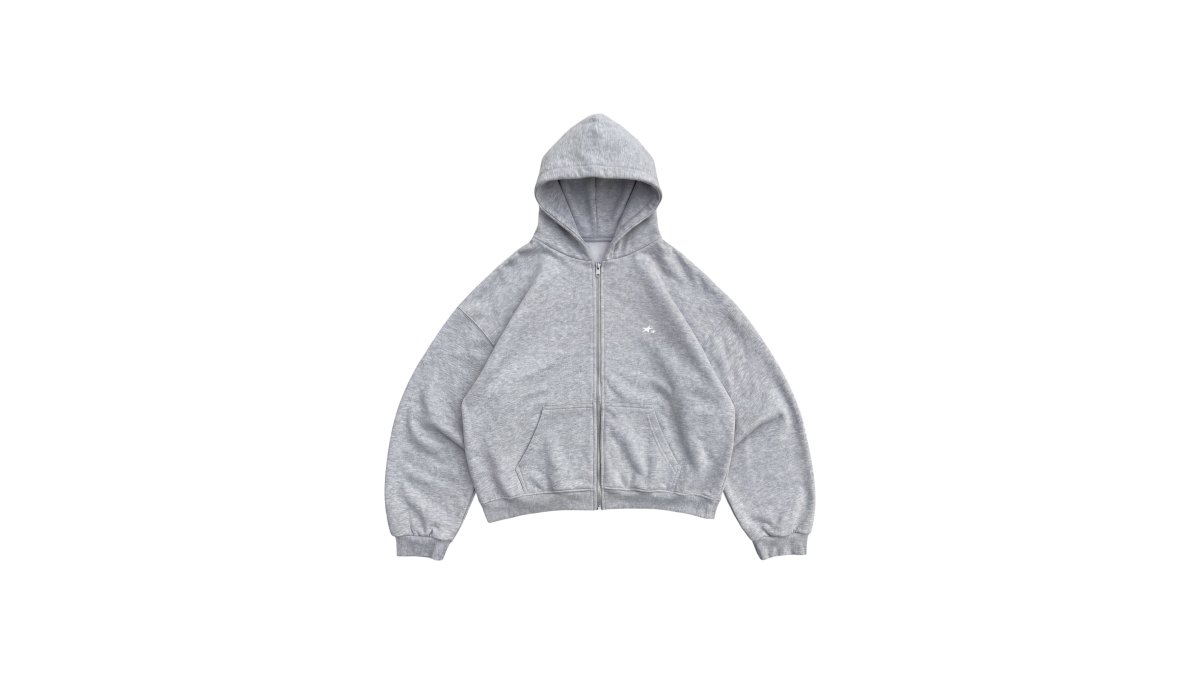
Our Heavy Zip Hoodie and Heavy Hoodie sit at £100, squarely in the premium heavyweight tier: 500-600 GSM fabric, a double or three-panel hood, a boxy drop-shouldered fit and a brushed inner fleece.

That is the tier where the value sits for most people. Below it, you replace the hoodie often. Above it, you start paying for the badge.
Hoodie Cost Per Wear: The Ownership Maths That Settles the Debate
Hoodie cost per wear is the price divided by the number of times you wear it, the single most useful number in this debate.
Start with the basic sum. A £40 hoodie worn 30 times before it fades costs £1.33 per wear.
Now add the inputs most people ignore.
- Lifespan, not seasons. A budget hoodie at 250-300 GSM often survives one to two seasons before pilling at the cuffs and underarms. A 500-600 GSM heavyweight with reinforced seams commonly holds shape for three to five years, the difference between replacing a hoodie every year and replacing it once.
- Care costs. A premium heavyweight wants a cold, gentle wash and air drying to protect the fleece and colour, cheaper per wash than a hot cycle and tumble dry, but slower. Tumble drying a heavyweight hoodie shortens its life and hands back the cost-per-wear advantage.
- Shrinkage and fit drift. A cheap hoodie that shrinks after the first hot wash stops fitting the way you bought it, so it leaves rotation early. That is a hidden cost: you paid for a garment you no longer wear.
Put the numbers side by side over a three-year window:
| Budget hoodie | Premium heavyweight | |
|---|---|---|
| Purchase price | £40 | £100 |
| Realistic wears | 30-60 | 150-250 |
| Replacements in 3 years | 2-3 | 1 |
| Three-year spend | £80-£120 | £100 |
| Cost per wear | £1.33-£2.66 | £0.40-£0.67 |
The maths only flips if you rarely wear it. A premium hoodie that sits in the wardrobe is the worst value of all.
One more check: compare the premium hoodie against two budget hoodies bought over the same period, not one. That is the honest comparison, because the budget option rarely lasts the full stretch.
Streetwear Value Beyond Materials: Fit, Sizing and Culture
Streetwear value goes beyond fabric. Fit, sizing consistency and cultural credibility are a real part of what you pay for, and harder to copy than cloth.
An oversized fit is a design decision, not just a bigger size.
Culture plays a role too. Streetwear carries meaning through association with skate, music and urban scenes. Some of that value is genuine; some is pure marketing.
At Cali Studios, we build for people in those scenes, which is why our hoodies come in oversized and regular fits and use durable fabrics meant for daily wear.
How to Judge a Hoodie Before You Buy: A Practical Checklist
You can judge a hoodie in about a minute if you know what to check. Use this checklist before you commit, in a shop or on a product page.
- Check the GSM. 400+ is heavyweight; 500+ is premium. If it is not listed, ask.
- Look at the fabric blend. A cotton-poly mix resists sagging better than pure cotton.
- Turn it inside out. Even, dense stitching and clean seams mean quality.
- Feel the hood. A double or three-panel hood holds its shape; a single layer flattens.
Run those checks and the branding stops mattering. You are judging the garment, not the logo.
Verdict: When to Spend and When to Save
Spend on an expensive streetwear hoodie when you will wear it often and want it to last.
The dividing line is simple.
For most people building a wardrobe of statement pieces, the premium heavyweight tier is where the value sits, the range where fabric, construction and fit all pull in the same direction.
The real challenge is not deciding whether quality costs more. It is finding a hoodie that delivers it without charging designer prices for a logo.
Frequently Asked Questions
Do expensive hoodies last longer than cheaper ones?
Often, yes, but it depends on what you're paying for. Heavier fabrics and reinforced stitching resist pilling, shrinkage and seam failure better than thin high-street basics. A 500-600GSM cotton-poly blend hoodie, like those in the Cali Studios range at £100, holds its shape through repeated washing far better than a lightweight budget option. The premium is real when it goes into fabric weight and construction rather than just a logo.
What should you check before buying a streetwear hoodie?
Check four things: fabric weight (GSM), construction details, fit and return policy. Look for a double-fabric hood, reinforced seams and a brushed inner fleece. Confirm the fit, whether it runs oversized or true to size, so you know what you're getting. Finally, read the returns policy carefully. A hoodie that fits well and survives washing is worth more than one that looks good in photos but pills after a month.
How much should you spend on a quality hoodie?
For a heavyweight streetwear hoodie with premium construction, £80 to £120 is a reasonable range. At £100, options like the Cali Studios Heavy Hoodie offer 500-600GSM fabric, a boxy drop-shouldered fit and brushed fleece lining. Below £40 you're usually looking at lighter fabric and simpler construction. Above £150 you're often paying for branding and exclusivity rather than a meaningful jump in quality.
Are designer hoodies worth the money compared to high-street basics?
It depends on what you value. Designer and streetwear brands charge a premium for exclusivity, limited releases and cultural positioning, not just materials. If you want a hoodie that fits a specific aesthetic and holds resale value, that premium can be justified. If you mainly want warmth and comfort, a well-constructed mid-price hoodie delivers most of the practical benefit for less. The key is knowing which part of the price you're actually buying.
How do I work out the cost per wear of a hoodie?
Divide the price by how many times you'll realistically wear it. A £100 hoodie worn twice a week for two years works out at roughly £1 per wear. A £30 hoodie that pills after six months and gets retired costs more per wear despite the lower sticker price. Factor in durability, wash performance and how often it actually leaves your wardrobe. Cost per wear is the fairest way to compare a budget option with a premium one.
