




Last Updated: November 14, 2026
Quick Summary
Durable skate socks are worth it for high impact because they use synthetic blends, reinforced heel and toe zones and a snug fit to control friction and spread pressure where landings hit hardest. Ordinary cotton socks hold sweat and wear thin fast, while a good pair can last roughly twice as long with proper care.
- Cushioning helps most under the heel and forefoot, while the arch should stay thin for board feel.
- Turn the sock inside out and rub the heel and toe panels for ten seconds to check abrasion resistance.
- Wash cool at 30°C or lower, inside out, with mild detergent and no fabric softener.
- Rotate at least three or four pairs so each one dries fully between sessions.
- Retire a pair at the first sign of thinning, compressed padding or slack elastic.
Table of Contents
- Why High-Impact Skating Destroys Ordinary Socks
- The Best Socks for Skateboarding: What Separates Them From Basics
- Padded Skate Socks: Where Cushioning Actually Helps
- How to Choose Skate Socks That Survive Repeated Sessions
- Durability Under Repeated Skate Impacts
- Care and Lifespan: Making a Pair Last
- Matching Your Socks to Your Skate Setup
- Frequently Asked Questions
Why High-Impact Skating Destroys Ordinary Socks
A skate session is a grinding, repetitive assault on your feet. Every push, ollie and landing drives force through the same small contact points inside your shoe, thousands of times an hour. Ordinary socks are not built for that.
Most high street socks use thin cotton with a loose knit. Cotton holds sweat against the skin, so the fabric stays damp and heavy.
This guide breaks down what makes durable skate socks for high impact worth the money, where cushioning earns its place, and how to match a pair to your setup.
The Best Socks for Skateboarding: What Separates Them From Basics
The best socks for skateboarding share three traits: a synthetic blend that manages moisture, reinforced heel and toe zones, and a snug fit that stops the sock sliding inside the shoe. Basic socks have none of these, which is why they fail so quickly under repeated loading.
Skate socks are designed around friction control and pressure distribution rather than everyday comfort alone. A common mistake is buying a thick sock and assuming it will protect the foot. Thickness without structure just bunches up and creates new pressure points.
Impact Protection by Foot Zone
Protection is not spread evenly. The zones that take the most punishment are the heel, the ball of the foot and the outer edge near the little toe, because that is where landings and board contact concentrate force.
The arch and ankle need support rather than bulk. A compression band through the midfoot keeps the sock locked to the foot, which reduces movement and the friction that causes blisters. Look at where the padding sits before you buy, not just how much there is.
Material Trade-Offs for High-Impact Use
Cotton feels soft but holds sweat, so it loses shape and wears thin fast under high impact. Synthetic fibers such as polyester and nylon dry quicker and resist abrasion better. A cotton blend can work for short sessions, but pure cotton is a poor choice for daily skating.
Padded Skate Socks: Where Cushioning Actually Helps
Cushioning helps most under the heel and forefoot, where landings and board feel drive force into the foot. It helps least in the arch, where too much bulk reduces board feel and makes the shoe fit tighter than it should.
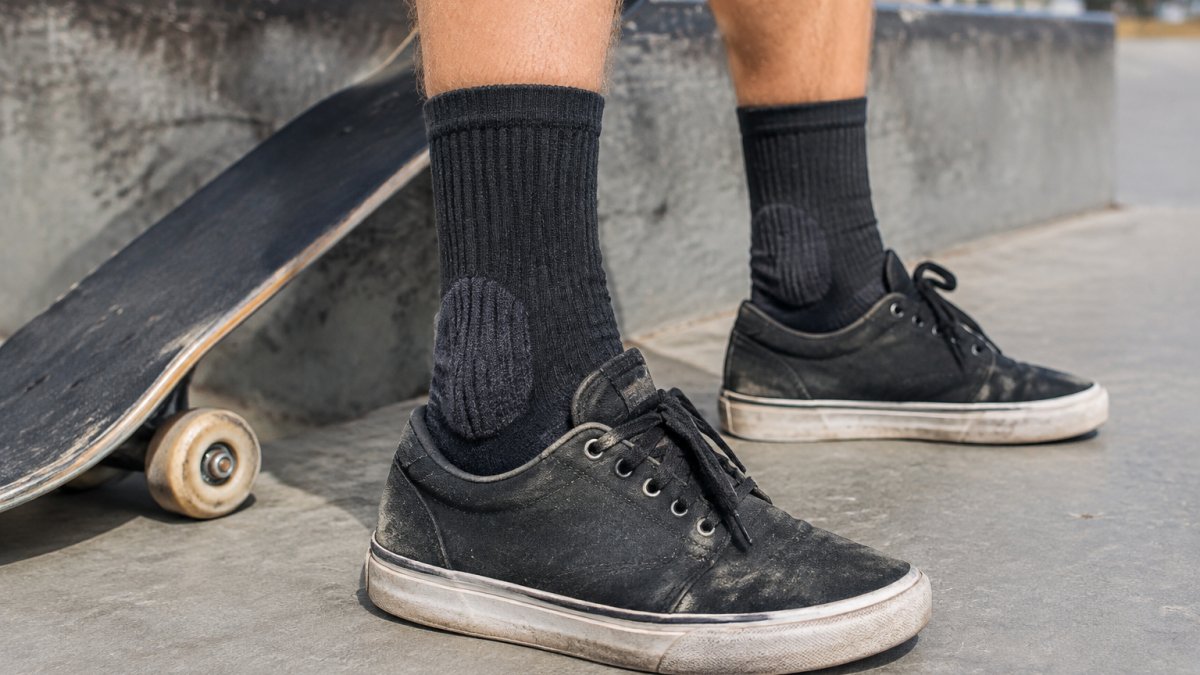
- Heel: the highest priority for impact protection
- Forefoot: useful for landing-heavy riding
- Arch: keep it thin for board feel
- Toe: reinforced for abrasion, lightly padded at most
How to Choose Skate Socks That Survive Repeated Sessions
Choosing well comes down to four checks: material, padding placement, seam construction and fit. Get these right and a pair will outlast several cheap alternatives, which is where the real value sits.
Start with the fabric label. Favour a synthetic-dominant blend with some elastane for stretch and recovery. Next, turn the sock inside out and look at the heel and toe: reinforced zones should be visibly denser. Flat or seamless toe seams reduce rubbing against the toes.
Fit and Sizing Inside Skate Shoes
Fit issues cause more premature wear than bad materials. A sock that is too loose slides, bunches and rubs; one that is too tight stretches thin at the heel and toe. Measure your foot and match it to the sock's size chart rather than guessing.
Crew fit and sock height matter too. A crew sock that sits above the shoe collar protects the ankle from the shoe edge and stays put during movement. Too short and it slips down; too long and it bunches at the calf.
Durability Under Repeated Skate Impacts
Durability under high impact is not one property but four: abrasion resistance at the contact zones, seam strength, cushioning retention, and elastic recovery. A sock can pass on one and fail on another, which is why broad "built to last" claims tell you very little. The useful question is where and how a pair wears out first.
Where Skate Socks Actually Fail
Wear concentrates in a predictable order. The heel cup goes first, because every push and landing drives the foot back into the shoe and grinds the knit against the lining. The ball of the foot and the outer edge near the little toe follow, since board contact and grip tape pressure abrade the fabric through the shoe.
A common pattern is a sock that looks intact on the outside but has thinned to a translucent patch at the heel within a few weeks of daily skating. That thinning is the real failure: once the knit loses density, it stops cushioning and starts rubbing.
A Simple Home Test Method
You can assess durability without a lab by running four checks on a new pair and repeating them over time.
- Abrasion check: turn the sock inside out and rub the heel and toe panels firmly between thumb and forefinger for ten seconds. A tightly knit, reinforced zone resists and stays smooth; a loose knit fuzzes up immediately.
- Seam strength: find the toe seam and the heel join, then tug gently across each. Flat or seamless toe seams should hold without gaping. If you can see daylight through the stitch line, it will open under repeated flexing.
- Cushioning retention: pinch the heel padding between finger and thumb and note its thickness. Recheck after a month of wear and washing. Terry-loop padding that compresses permanently has lost the impact protection you paid for.
- Elastic recovery: stretch the cuff and midfoot band to roughly double their resting width, hold for five seconds, release, and see how quickly they return. Slow or incomplete recovery means the elastane is degrading, and a baggy sock will slide and rub inside the shoe.
Reading the Construction Before You Buy
Reinforced heel and toe zones should be visibly denser and often a different colour or texture on the inside. Look for a high-gauge knit in those panels rather than a thick, fluffy surface, which feels plush but mats down quickly.
Watch out: a sock that feels thick and soft in the shop is not automatically durable. Thickness without dense, tightly knit fibres compresses into a thin, baggy layer within weeks, and that is when the rubbing and holes begin.
Why Repeated Impacts Are Different From Everyday Wear
Everyday walking loads a sock gently and intermittently. Skating loads the same small zones thousands of times an hour with sharp, repetitive force, then soaks the fabric in sweat that softens fibres and accelerates abrasion. That combination is why a sock that survives months of office wear can fail at the heel in a few weeks of daily skating. Durability for high impact therefore depends on dense reinforcement at the contact zones, strong seams, padding that recovers its loft, and elastic that keeps the sock locked in place between sessions.
Care and Lifespan: Making a Pair Last
Care decides how long a pair lasts, and the two things that kill technical socks fastest are heat and fabric softener. Heat breaks down elastane and shrinks the knit, while softener coats the fibres and blocks the moisture management that keeps feet dry. Get the washing and drying habits right and you can roughly double the useful life of a good pair.
Washing Without Damaging the Knit
Wash cool, at 30°C or lower, and turn the socks inside out so the inner surface and any padding face the drum rather than rubbing against other garments. Use a mild detergent and skip fabric softener entirely.
Watch out: a hot wash or a tumble dryer on high heat is the fastest way to ruin a good pair. The elastane loses its snap, the cuff goes slack, and the sock starts sliding inside the shoe, which brings back the friction and blisters you bought technical socks to avoid.
Drying and Rotation
Air dry wherever possible, flat or hung, away from direct heat. Socks need to dry fully between sessions, and a rotation of several pairs gives each one time to dry out completely rather than staying damp in a kit bag. Damp socks left in a bag develop odour and break down faster, so air them before they go back in the drawer.
Knowing When to Replace a Pair
Any one of those signals means the sock has stopped cushioning and started rubbing. A pair that has gone slack at the cuff is also a blister risk, because it slides inside the shoe with every push.
Repair Versus Replace
Small holes at the toe seam or heel can be darned or stitched, and our guide on how to repair ripped skate joggers at home covers the same mending approach for skate clothing. Repair makes sense for a single small hole in an otherwise sound pair. It does not rescue a sock whose padding has compressed or whose elastic has gone, because those failures affect the whole foot rather than one spot.
A Simple Lifespan Routine
- Wash cool and inside out, with mild detergent and no softener.
- Air dry fully, away from direct heat.
- Rotate at least three or four pairs so each dries between sessions.
- Check the heel, toe, padding and cuff monthly using the pinch and stretch checks above.
- Retire a pair at the first sign of thinning, compressed padding or slack elastic.
Matching Your Socks to Your Skate Setup
Your setup should guide the sock choice. A low-profile vulcanised shoe pairs well with a thin-to-medium crew sock that keeps board feel. A chunkier cupsole shoe has room for more cushioning under the heel.
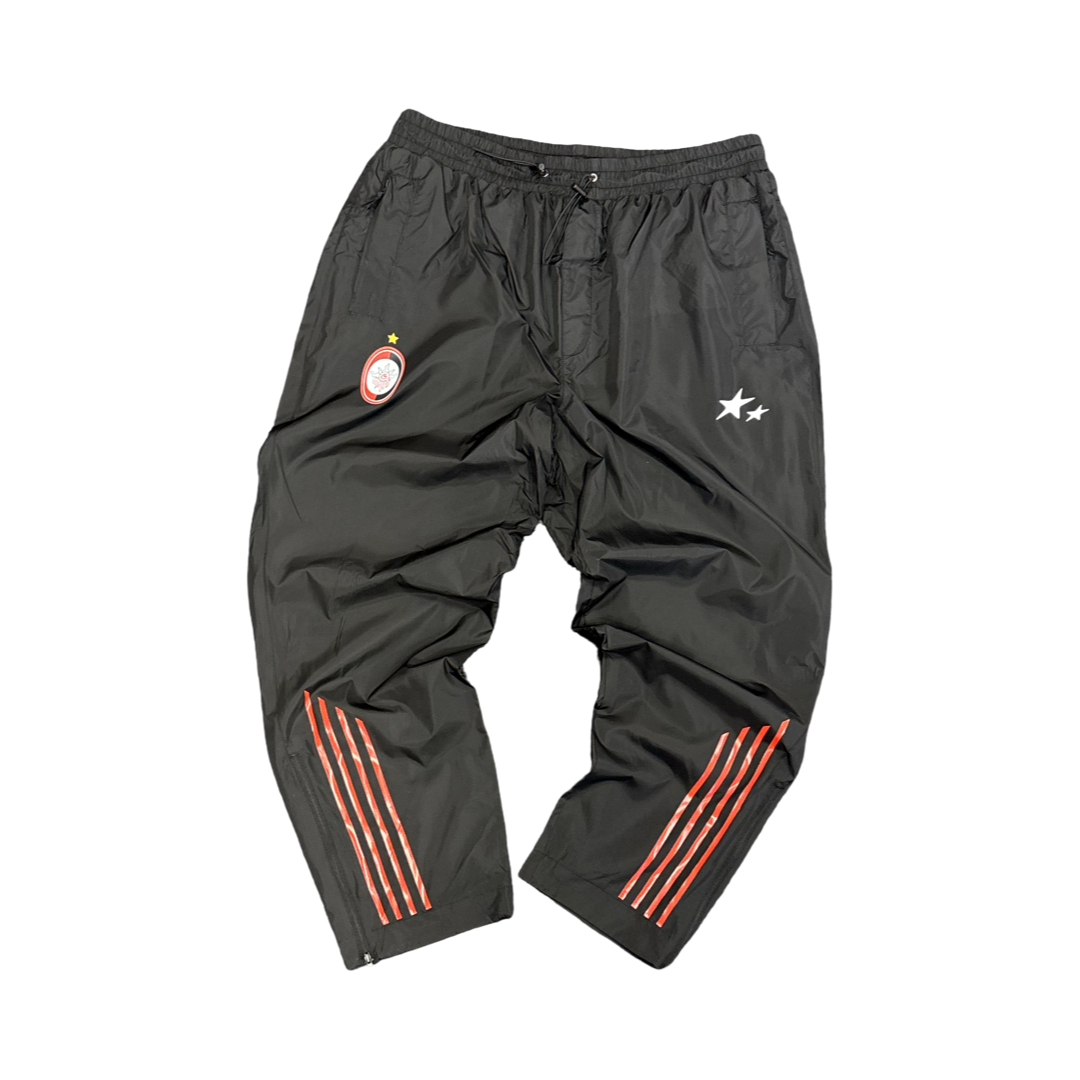
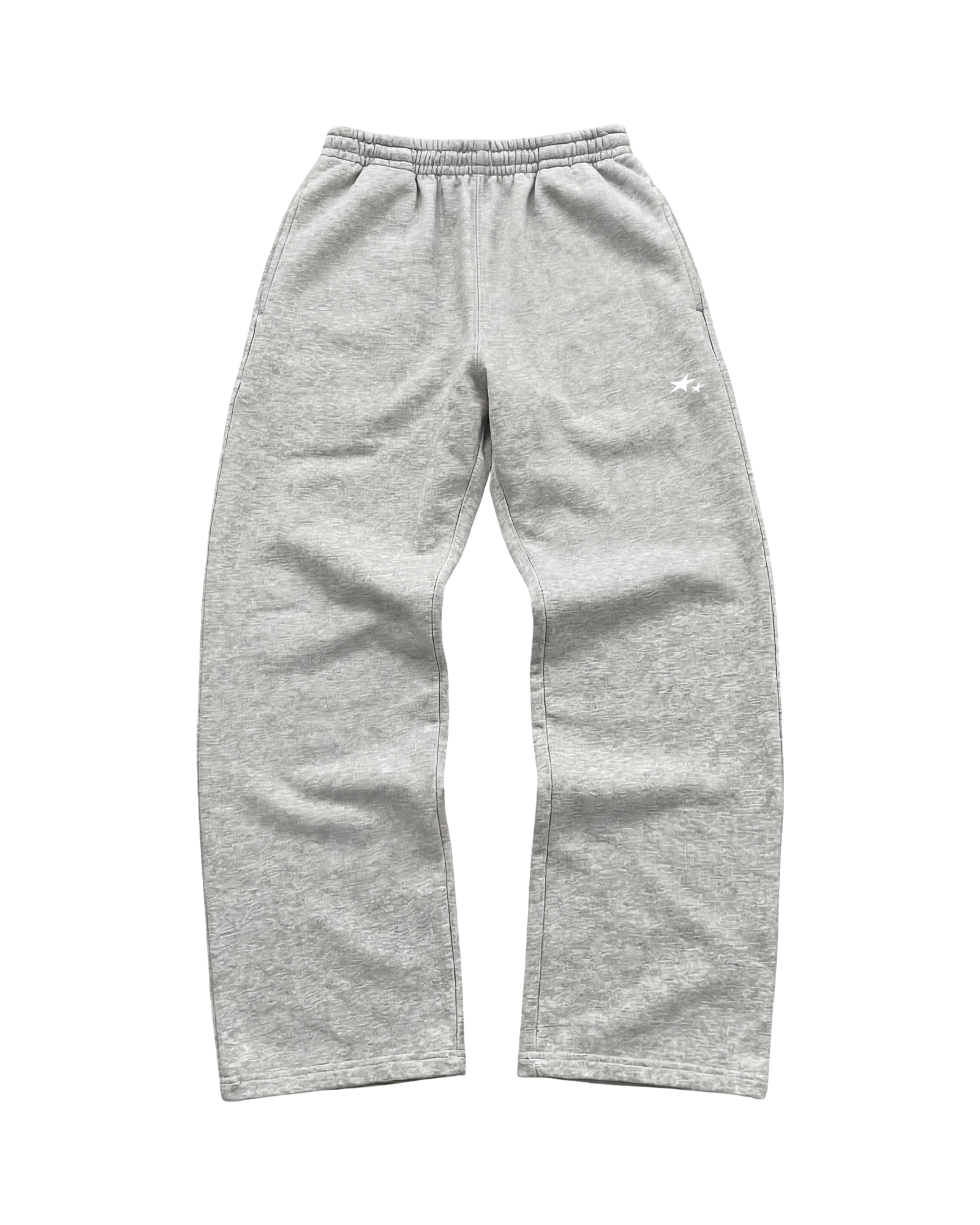
Colour and height matter for the look as much as the ride. If you are building the full outfit, our Scorpion joggers and La Santo track pants are cut to sit cleanly over skate shoes, and the Heavy Sweat Pants Grey and Ac Track Pants round out a setup that holds up to daily wear.
| Sock Feature | What It Does | Best For |
|---|---|---|
| Reinforced heel and toe | Resists abrasion at contact zones | Daily skating |
| Targeted heel padding | Absorbs landing impact | High-impact riding |
| Midfoot compression | Locks the sock to the foot | Blister prevention |
| Synthetic blend | Manages sweat, dries fast | Long sessions |
| Crew height | Stays put above the shoe | All-round wear |
Skate socks are a small purchase that decides how comfortable every session feels. Get the material, padding and fit right and you will stop thinking about your feet and start focusing on the board.
Frequently Asked Questions
What socks are best for skateboarding?
Look for crew-length skate socks with reinforced heels and toes, a synthetic or wool blend that wicks sweat, and cushioning at the heel and forefoot. Cotton-heavy socks hold moisture and compress flat under repeated loading, which is where blisters start. A snug fit with no bunching inside the shoe matters as much as the padding itself. Replace pairs once the heel thins or seams rub.
Do padded skate socks help reduce impact when skating?
Padding helps most at the heel, forefoot and ankle, where pressure points take repeated loading from landings and pushing.
How should skate socks fit inside skate shoes?
Skate socks should sit smooth against the foot with no wrinkles or bunching at the toe or heel, and the heel pocket should line up with your actual heel. Too loose and the sock slides, causing friction and blisters; too tight and it restricts circulation and compresses cushioning flat. Try socks with the shoes you actually skate in, since skate shoes fit differently from trainers.
How often should you replace skate socks?
Replace skate socks when the heel or toe thins, seams start to rub, elastic goes slack, or padding compresses flat. Worn socks are a common cause of blisters and foot fatigue that gets blamed on the shoes.

