




Table of Contents
- Assessing the Rip Before You Start
- Choosing Between a No-Sew Repair and Sewing
- Preparing the Joggers: Inside Out and Edges Aligned
- How to Patch Polyester Joggers Step by Step
- Fixing a Seam Coming Apart in Joggers
- How to Fix a Rip in Sweatpants Without Making It Worse
- Making a Repair Last Through Skating and Daily Wear
- Booking Your Next Pair: Choosing Joggers That Can Take the Wear
- Frequently Asked Questions
Assessing the Rip Before You Start
Knowing how to repair ripped skate joggers at home can be quick, but only if you check the damage first. The location and size of the rip decide which repair will hold up under skating and daily wear.
Where the rip is and how big it is
Look at the rip while the joggers are on, then again once they are off. A rip on the thigh or knee sees the most movement, so it needs a stronger fix than a small tear on the hem.
Measure the tear and note the fabric around it. A tear under 3 cm with healthy fabric around it is a good candidate for a simple patch. A longer rip or one where the fabric is thin and frayed will need reinforcement.
- Small tear (under 3 cm): patch or no-sew tape
- Medium tear (3-8 cm): patch with backing and stitching
- Large or frayed tear: reinforce the area, then sew
Choosing Between a No-Sew Repair and Sewing
A no-sew repair is the quickest option, and it works well for light wear. Sewing takes longer, but learning how to repair ripped skate joggers with stitching holds up better when the joggers face daily skating stress.
Most people choose a no-sew fix for a small rip that is not on a high-movement area. Sewing is the better choice for anything on the knee, seat or inner thigh.
- No-sew: Fast, needs no sewing skills, best for small tears
- Sewing: Stronger hold, better for knees and seams, takes more time
Preparing the Joggers: Inside Out and Edges Aligned
Turn the joggers inside out before you start. This keeps the patch hidden and gives you a clean surface to work on.
Next, line up the torn edges. Pinch the tear closed and check that the fabric lies flat. If the edges are pulled out of shape, smooth them gently before you apply anything.
Skip this step and the repair will pucker. Take the extra minute to get it right.
How to Patch Polyester Joggers Step by Step
Polyester is a synthetic knit, so it behaves differently from cotton: it can melt under a hot iron, it does not absorb fabric glue as readily, and it stretches. A patch that works on a cotton tee can fail on polyester joggers if you use too much heat or a stiff adhesive. The steps below assume a tear on a high-movement area such as the knee or inner thigh, where the repair must flex with the fabric.
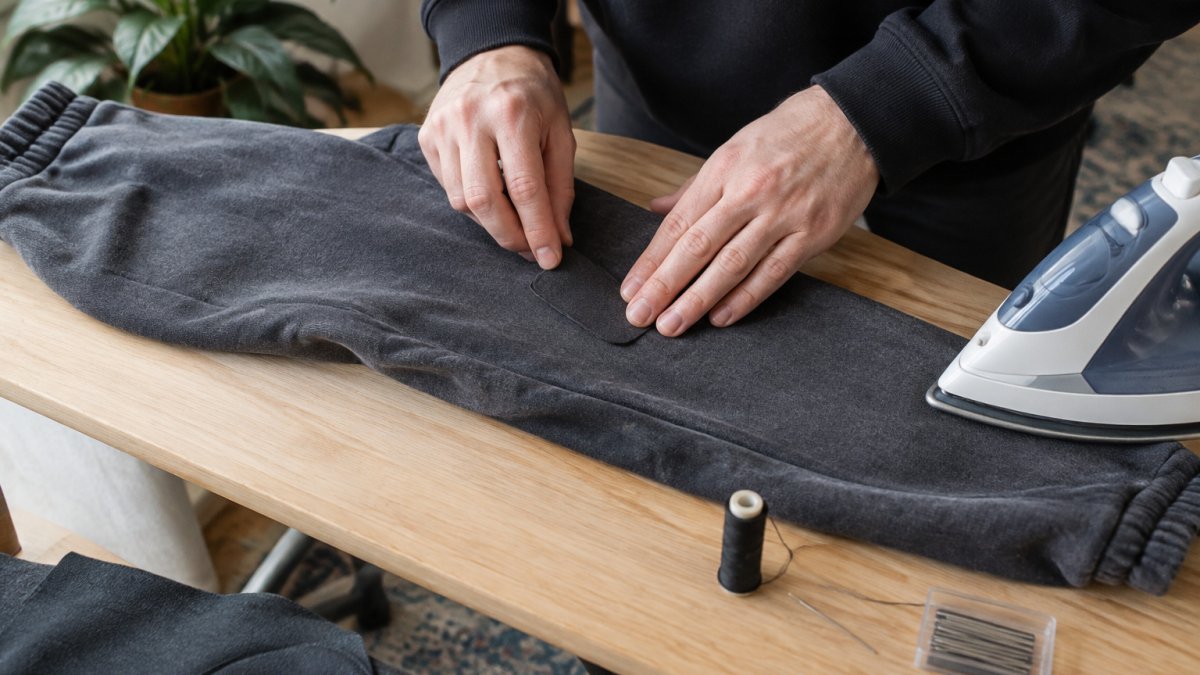
Prepare the area
Turn the joggers inside out and trim any loose, frayed threads with sharp scissors, do not pull them, as this can enlarge the hole. Place a pressing cloth over the area and press it flat with a warm iron (synthetic setting, roughly 110-150°C) for a few seconds to relax the fabric. Test the iron on an inside hem first if you are unsure how the polyester reacts.
Cut and position the patch
Choose a patch that matches the fabric weight. A lightweight patch is better for thin joggers; a heavier patch suits thicker fabric. Cut the patch so it extends at least 1 cm past the tear on every side, 2 cm on a knee or seat repair where friction is constant. Round the corners with scissors; square corners lift first.
Place the patch on the inside of the fabric, adhesive side down, and check from the outside that the tear edges meet cleanly over it. If the tear is longer than 5 cm, add a second patch or a backing strip so the repair is not relying on one adhesive layer.
Bond the patch
Set the iron to a low-to-medium synthetic setting and use a pressing cloth between the iron and the patch. Press firmly for 10-15 seconds per section, working from the centre outwards, then let the garment cool completely before moving it. Do not drag the iron, dragging shifts the patch and can stretch the polyester.
Watch out: polyester can scorch or shine at high heat, so never press directly on the patch without a cloth and never hold the iron still in one spot.
Reinforce for stretch and movement
An iron-on patch alone can peel at the edges on a stretch fabric. For knee, seat, and inner-thigh repairs, stitch around the patch perimeter with a narrow zigzag (2-2.5 mm wide, 2-2.5 mm long) using a stretch or polyester thread. This lets the repair flex instead of cracking. If you are hand-sewing, use a whipstitch with polyester thread and keep the stitches 3-4 mm apart.
Iron-on tape and fabric glue
Iron-on tape is the fastest option for small, low-stress tears. Cut a strip that covers the tear plus 1 cm, press it with a cloth for 10 seconds, and let it cool before testing. It is not a good choice for a knee that bends repeatedly, because the tape stiffens and lifts.
Fabric glue suits small tears on flat areas. Apply a thin layer to the backing, press the edges together, and weight the area with a book for the cure time on the packet (often 24 hours). Too much glue stiffens polyester and makes the repair obvious. Glue is a temporary fix on high-movement areas, plan to stitch it later.
Hand-sewing and machine stitching
Hand-sewing gives control on small or awkward areas. Use a running stitch or whipstitch with polyester thread and keep stitches close (2-3 mm) so the tear cannot spread.
Machine stitching is quicker and stronger for larger tears. Use a stretch or ballpoint needle (size 75/11 or 80/12) so the needle passes between the polyester fibres rather than cutting them. Set a narrow zigzag stitch, loosen the tension slightly, and sew slowly around the patch, leaving a 5-8 mm seam allowance. A straight stitch alone will snap when the joggers stretch; the zigzag is what makes the repair last through skating.
Test before you wear
Turn the joggers right side out and gently stretch the repaired area in both directions. If the patch lifts or the stitches pucker, add another row of zigzag or a second backing patch before washing.
The article's steps for patching polyester joggers come down to these key choices and settings.
| Method | Best for | Key difference |
|---|---|---|
| Iron-on patch with cloth | Knee and seat tears | Press 10-15 seconds per section at low-medium heat |
| Iron-on tape | Small, low-stress tears | Cover tear plus 1 cm, press 10 seconds |
| Fabric glue | Small tears on flat areas | Cure time on packet, often 24 hours |
| Zigzag machine stitch | Larger tears and high-movement areas | 2-2.5 mm wide and long, stretch or ballpoint needle |
| Whipstitch by hand | Small or awkward areas | Polyester thread, stitches 3-4 mm apart |
Fixing a Seam Coming Apart in Joggers
Seams on skate joggers fail for a reason: the inner thigh, seat, and crotch seams take repeated friction and stretch, and the original overlock stitch can abrade or the thread can break. Fixing the seam without addressing the cause means it will split again within weeks. This section covers diagnosis, repair, and reinforcement for the seams that actually fail.
Diagnose the failure first
Check whether the seam thread has broken (the fabric edges are intact) or the fabric itself has torn along the seam line (the edges are frayed). A broken thread is a straightforward re-stitch. A torn seam line means the fabric is under strain and needs a backing patch as well as stitching.
Run your finger along the seam to find where the stitching has stopped holding. Mark the start and end of the failed section with a pin or tailor's chalk so you repair the whole weak length, not just the visible gap.
Re-stitch the seam
Turn the joggers inside out. Pin the seam edges together, matching the original seam allowance (usually 1-1.5 cm on joggers). Use a polyester or stretch thread that matches the fabric colour.
For hand-sewing, use a backstitch along the original seam line with 3-4 mm stitches, then a second row of whipstitch over the raw edges to stop fraying.
Watch out: do not pull the seam tight as you sew, if the fabric puckers, the seam will pull apart again the first time you squat or skate.
Reinforce high-friction seams
For inner-thigh and seat seams, add a backing strip of soft knit or jersey inside the seam before stitching. Cut a strip 2 cm wide and long enough to cover the repaired section plus 2 cm at each end, and stitch it in with the seam. This spreads the load across the fabric instead of concentrating it on the seam line, the same principle used in reinforced knees on skate pants.
Finish and test
Trim loose threads, press the seam flat with a warm iron and pressing cloth, then turn the joggers right side out and stretch the seam gently. If any stitches pop or the fabric puckers, re-stitch that section with a slightly wider zigzag. Check the seam again after the first wash; a seam that survives a wash and a skate session is likely to hold.
How to Fix a Rip in Sweatpants Without Making It Worse
Sweatpants are often made from a thicker knit fabric, so take care not to pull the edges too tight. Work slowly and keep the fabric flat.
Avoid stretching the area while you sew. If you pull the fabric as you work, it can pucker once you wear the sweatpants again.
Making a Repair Last Through Skating and Daily Wear
A good repair still needs care. Wash the joggers inside out on a gentle cycle, and avoid high heat when drying.
Check the repair every few weeks. Catch small loose threads early, and reinforce the area again if it starts to lift.
If you want clothing that handles skating well from the start, see our durable streetwear for daily skating. For a closer look at how reinforced knees resist wear, read our guide on reinforced knees in skate pants.
Booking Your Next Pair: Choosing Joggers That Can Take the Wear
Sometimes a repair is not worth the time. If you are ready to replace ripped joggers with a sturdier pair, you can browse SPORT Joggers built for active wear. If the fabric is worn thin across the whole leg, a new pair makes more sense.

Look for a heavier fabric and a relaxed fit that allows free movement. The SPORT Joggers feature an elasticated waistband with drawstring and a cuffed ankle, a practical choice for active wear at £65.00. For guidance on fit and fabric, read our best joggers for athletic builds, or compare skate pants and jeans for mobility before you decide.
Frequently Asked Questions
How do you repair a rip in skate joggers?
Turn the joggers inside out, pinch the torn edges together and check the rip is clean and stable. For a small tear, use iron-on repair tape or a backing patch, then add a few hand stitches or a fabric glue bond around the edges. Larger rips near the seams or knee need a sewn repair. Lay the patch flat, press firmly, and let the adhesive cure fully before wearing the joggers again.
Can you fix ripped joggers without sewing?
Yes. Iron-on repair tape and fabric glue both work well for small to medium rips in cotton-poly or polyester joggers. Clean and dry the area first, align the edges, and apply the adhesive or tape to the inside of the fabric. Use a hot iron with a cloth between it and the fabric, shiny side down, following the packet instructions. No-sew repairs suit flat, low-movement areas better than the knee or crotch, where stretch and friction are highest.
Should you sew or patch a hole in sweatpants?
Sew small rips that run along a seam or sit in a high-stress area, because stitching holds the fabric under tension better than adhesive. Patch larger holes or areas where you want a low-profile finish. A patch on the inside of the fabric keeps the repair hidden, while a visible patch works as a deliberate design choice. Many repairs combine both: a patch for coverage and a few stitches around the edge for durability.
How do you stop a rip in joggers from getting bigger?
Stop the tear spreading by reinforcing its ends and avoiding strain on the damaged area. Bar tacks or a few small stitches across each end of the rip prevent it running further along the fabric grain. Avoid pulling the area when you put the joggers on, and repair fraying edges early, before they widen. For skate joggers, check the knee and inner thigh regularly, as these areas take the most movement.

