




Last Updated: November 5, 2026
Quick Summary
Professional skate clothing is built around fabric weight, seam construction and a fit that clears your stance without dragging under your wheels. Look for 400GSM or higher fabric, reinforced knees, a double-layered hood and an inner drawcord, and choose relaxed, loose or oversized cuts that pass the crouch test.
- A complete core kit covers four zones: a durable top, a reinforced bottom, a warm layer and sturdy footwear.
- Higher GSM generally means better abrasion resistance and slower wear at contact points.
- Loose fit typically adds 5-10cm more than relaxed at the hem.
- A hem below the heel of your shoe will catch on the board during flip tricks.
- Wash heavyweight cotton cold and air dry to limit shrinkage that changes fit.
Table of Contents
- What to Wear When Skateboarding: The Core Kit
- Best Fabrics for Skateboarding: What Holds Up on Concrete
- Skate Clothing Fit Guide: Relaxed, Loose and Oversized
- Skateboarding Clothes for Different Weather
- The Feature Checklist: What Separates Pro Skate Apparel
- Making Skate Clothing Last: Care, Repair and Lifespan
- Building Your Kit with Cali Studios
- Frequently Asked Questions
What to Wear When Skateboarding: The Core Kit
Professional skate clothing starts with a simple test: does it survive a fall and still let you push home? The gap between skate apparel and ordinary streetwear shows up fast on grip tape and concrete.
The exact essential features of professional skate clothing come down to fabric weight, seam construction, and fit that clears your stance without dragging under your wheels.
Skateboard England guidance on safe skatepark practice
Tops, Bottoms and the Layers in Between
Start with a heavyweight T-shirt or long-sleeve shirt in a relaxed fit. Add a hoodie for warmth and a flannel or overshirt for wind. Bottoms should be loose enough to squat in and tough enough to slide on. Socks matter more than people think: a thicker crew sock absorbs impact and stops shoe rub.
For a full breakdown of durable pieces, see our guide to durable streetwear for daily skating.
Best Fabrics for Skateboarding: What Holds Up on Concrete
Cotton twill and heavy fleece generally outlast thin jersey. Look for a tight weave that resists abrasion, because concrete shreds loose fibres on contact.
GSM, Twill Weight and Abrasion Resistance Explained
GSM (grams per square metre) measures fabric weight. A 400GSM cotton jogger feels substantial; a 500GSM fleece hoodie feels genuinely heavy. Higher GSM generally means better abrasion resistance and slower wear at contact points.
If you want the numbers in plain terms, our practical guide to GSM in streetwear explains how weight translates to feel and lifespan.
Skate Clothing Fit Guide: Relaxed, Loose and Oversized
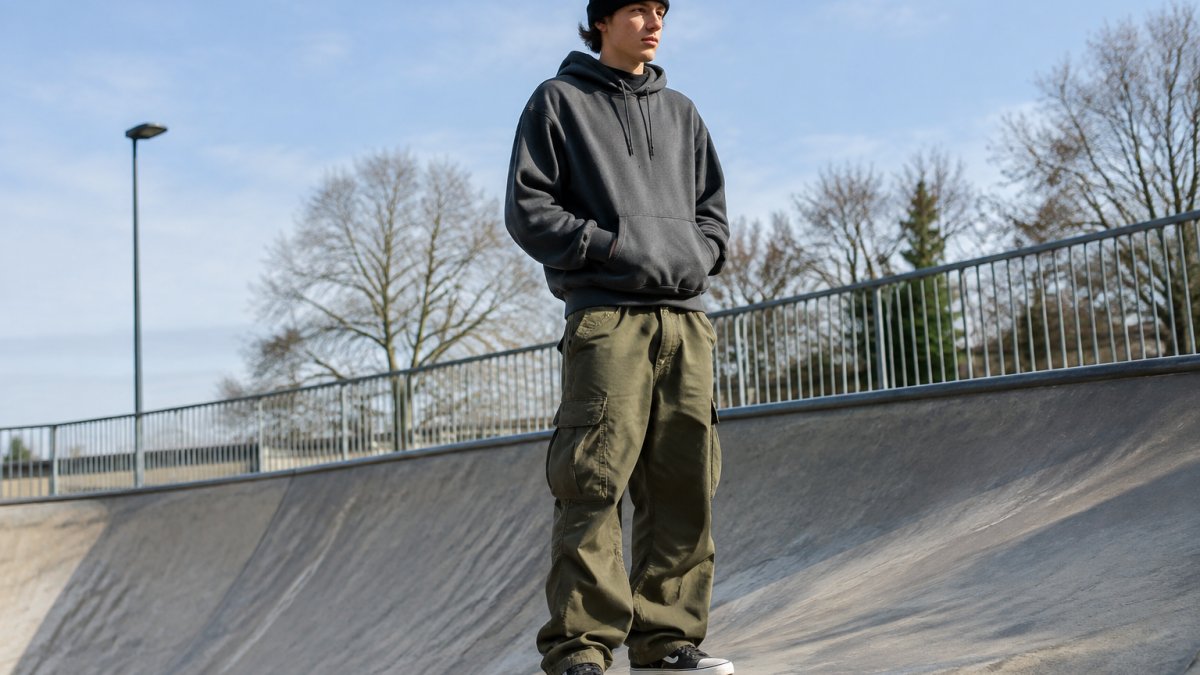
Fit is a performance decision, not just a style one. The right fit lets you crouch, push, and fall without fabric catching under your board or riding up your back. The wrong fit looks fine standing still and fails the moment you move. The difference between a good session and a frustrating one often comes down to a few measurements such as shoulder width, rise, and leg opening.
What the three fits actually mean
Relaxed fit gives mobility without excess fabric. It sits close to your regular size through the shoulder and chest, with a little room through the body and leg.
Loose fit adds room through the leg and body, typically 5-10cm more than relaxed at the hem.
Oversized drops the shoulder seam and lengthens the body, often by 5-8cm. It looks sharp standing still but can bunch at the waist when you crouch, and long hems catch on the board during flip tricks.
Fit and movement: the crouch test
The single best fit test is the crouch. Squat down as if setting up for an ollie. Your trousers should not pull tight across the seat or knee, and your top should not ride up past your waistband.
Watch out: a hem that sits below the heel of your shoe will catch on the board during flip tricks. Cuffed or adjustable ankles solve this without changing the rest of the fit.
Fit across body types
If you are taller, look for brands that list body length and sleeve length separately rather than just chest size. If you are shorter, an oversized top can swamp your frame, a relaxed fit in your regular size usually looks cleaner. If you carry weight through the seat and thighs, check the rise measurement: a low rise pulls tight when you crouch, while a mid or high rise gives room.
Fit with protective gear
If you wear knee pads, choose trousers with a wider leg opening or a stretch panel at the knee so the pad sits under the fabric without pulling. For helmets and pads, clothing should sit close enough not to snag but loose enough to layer over protection. A hoodie that is too tight over shoulder pads restricts arm movement; one that is too loose can ride over the helmet.
Sizing adjustments that actually help
- Check the rise measurement, not just the waist, for trousers.
- Look for adjustable ankle drawcords or cuffs on loose and oversized trousers.
- Choose tops with a slightly longer body if you plan to layer a hoodie underneath.
- If you are between sizes, size up for layers and stay true for movement.
- Wash heavyweight cotton cold and air dry to limit shrinkage, which changes fit over time.
Skateboarding Clothes for Different Weather
Most skate clothing advice stops at "wear layers", which is useless when you are deciding what to actually put on at 7am in a damp car park or at 2pm in direct sun. Each mode changes fabric weight, fibre choice, and how many pieces you carry.
Hot and humid sessions
In heat, the goal is airflow and fast drying, not technical fabric for its own sake. A loose-fitting 150-180GSM cotton T-shirt moves air better than a tight performance top and dries faster than a heavy jersey. Lightweight cotton-poplin or ripstop shorts with a mesh lining beat thick cargo shorts because they shed heat and do not hold sweat against the skin. Dark colours absorb heat, so a white or pale tee is a practical choice, not just a style one.
Cold and dry sessions
Cold weather is where layering earns its keep. Start with a moisture-wicking base layer, a thin polyester or merino blend, then a 400-500GSM fleece hoodie, then a wind-resistant overshirt or flannel. The base layer's job is to move sweat away from skin so the hoodie does not become a wet compress when you stop moving. A double-layered hood holds shape and traps warm air at the neck.
Heavy Sweat Pants - Washed Black →
Wet and damp conditions
Cotton is the wrong outer layer in rain. A soaked hoodie pulls heat away from the body fast, and heavyweight fleece takes hours to dry. For damp sessions, choose a water-resistant shell or a synthetic overshirt over a fleece, and keep a spare dry layer in your bag. Quick-dry synthetic shorts or trousers beat denim in persistent drizzle because denim stays heavy and cold when wet.
Transitional weather
Spring and autumn are the hardest conditions because temperature swings between a cold start and a warm session. The practical answer is a three-piece system: a base layer, a mid-layer you can remove, and a light shell you can tie around your waist. A 250-300GSM hoodie is the most versatile mid-layer because it is warm enough for a cold start and light enough to carry once you warm up. Packable shells that fold into a pocket are worth the space.
A simple weather-to-kit table
| Conditions | Top | Bottom | Carry |
|---|---|---|---|
| Hot and dry | 150-180GSM loose cotton tee | Lightweight shorts with mesh lining | Spare tee, water |
| Hot and humid | Breathable loose tee | Quick-dry shorts | Spare tee, synthetic socks |
| Cold and dry | Base layer + 400-500GSM hoodie + shell | 400GSM+ joggers or lined cargos | Removable mid-layer |
| Wet and damp | Synthetic base + water-resistant shell | Quick-dry trousers, not denim | Dry spare layer, wool socks |
| Transitional | 250-300GSM hoodie + packable shell | Relaxed joggers or cargos | Packable shell, bag with clip |
The point is not to buy five kits. It is to build a small set of pieces, a base layer, a mid-layer hoodie, a shell, quick-dry bottoms, and a spare tee, that combine into each mode. That is the difference between clothing that works in one season and clothing that works all year.
The Feature Checklist: What Separates Pro Skate Apparel
Use this checklist before you buy anything:
-
Fabric weight of 400GSM or higher for hoodies and joggers
-
Double-layered hood that holds shape
-
Elastic waistband with an inner drawcord
-
Deep side pockets that clear your stance
Protection, Stitching and the Details That Matter
Reinforced knees are the single biggest durability upgrade in skate pants. Our breakdown of reinforced knee benefits explains why the panel placement matters as much as the fabric. Beyond that, look at bar-tacked pockets, taped neck seams, and metal zips that survive a wash cycle.
| Feature | Why It Matters | What to Check |
|---|---|---|
| Heavy GSM fabric | Resists abrasion on concrete | 400GSM+ label |
| Reinforced knees | Survives repeated falls | Double panel at knee |
| Double-layered hood | Holds shape, adds warmth | Thick hood interior |
| Inner drawcord | Stays put mid-session | Cord inside waistband |
| Flat seams | Reduces rub and wear | No raised stitching |
Making Skate Clothing Last: Care, Repair and Lifespan
Wash cold, inside out, and skip the tumble dryer. Heat is what shrinks heavyweight cotton and breaks down elastic waistbands. Air dry flat, and repair small rips early with a patch before they spread across the knee.
If shrinkage is your recurring problem, read why oversized hoodies shrink after washing before your next wash cycle.
Building Your Kit with Cali Studios
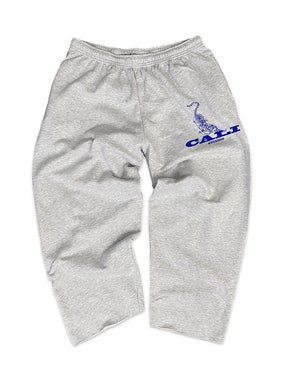
Our Heavy Sweat Pants in Washed Black use a 500GSM cotton-poly blend with a thick elastic waistband, inner drawcord, side pockets and brushed inner fleece, all in an oversized fit with a straight leg.

You could also pair them with our Saint Cargo Pants in cotton twill with cargo pockets and an adjustable ankle drawcord, or the SPORT Joggers in 400GSM cotton with a relaxed baggy fit.
Frequently Asked Questions
What features should skate clothing have?
Fabric weight matters: thick cotton twill or 400GSM-plus fleece generally resists wear better than thin jersey. A relaxed cut gives freedom of movement without excess fabric catching underfoot. Elasticated waistbands with drawcords, side pockets that sit flat, and breathable cotton blends round out the essentials.
What is the best fit for skateboarding clothes?
A relaxed or loose fit works best for most skaters. It gives mobility through the hips and shoulders when you crouch, ollie or bail, and the extra fabric absorbs scrapes rather than your skin. Oversized is a style choice rather than a performance one: too much length in the leg can bunch under your feet. Use a skate clothing fit guide to check sleeve and inseam lengths against your height. If you are tall, size up in the body but watch the leg length, and choose cuffed joggers or tapered cargos to keep hems clear of the board.
Which fabrics are best for skateboarding?
Heavy cotton and cotton-poly blends are the workhorses. Thick twill cargo trousers and denim resist abrasion from grip tape and concrete, while 400GSM to 500GSM fleece hoodies hold their shape through repeated washing. Cotton breathes and takes print well; a polyester blend adds strength and speeds drying. Avoid thin single-jersey tops for sessions, as they tear easily. Brushed inner fleece adds warmth for colder months without bulk.
Are baggy clothes suitable for skateboarding?
Yes, baggy silhouettes are a long-standing part of skate fashion and they work functionally. Loose fabric lets you move freely and takes the scuffing that would otherwise hit your skin. The caveat is length: overly long trousers can drape over the board and catch under wheels. Choose a baggy fit with a defined waistband and, if needed, a drawcord at the ankle to control the hem. Baggy tops are fine as long as the sleeves do not hang past your hands, which affects grip and balance.
What should you wear for skateboarding in cold or wet weather?
Layer up with a breathable base layer, a mid-layer such as a hoodie or flannel, and a water-resistant outer shell. A 500GSM hoodie with a double-layered hood keeps heat in without restricting your arms. For wet sessions, choose synthetic blends that dry faster than pure cotton, and avoid heavy denim that soaks through and stays cold. Footwear and socks matter as much as the top half. Keep extremities covered: cuffed joggers stop draughts at the ankle, and a cap or beanie helps in wind.
How can you make skate clothes last longer?
Choosing heavier fabrics from the start, such as thick twill or 500GSM fleece, is the single biggest factor in how long skate clothing survives regular sessions.
Building a kit that survives concrete takes the right fabric, the right fit and the right details. Get started with Cali Studios and put together skate clothing that holds up session after session.

