




Last Updated: November 16, 2026
Quick Summary
To learn how to choose skate shoes for flat feet, prioritize arch support that holds the midfoot without digging in, a firm heel counter that locks the heel down and limits inward roll, and cushioning that absorbs landing impact without turning the shoe to mush. Cupsole construction usually suits flat feet better than vulcanised, and a slim aftermarket insole with a moulded arch can add support without crowding the toe box.
- Flat feet often run wider through the middle, so a shoe that fits a neutral foot can feel tight.
- Leave roughly a thumb's width in front of your longest toe and check the forefoot does not spill over the sole edge.
- A cupsole uses a stitched, moulded rubber sole with a thicker midsole for more cushioning and structure under the arch.
- Take your orthotics with you when trying shoes on, since not every skate shoe has the depth to take them.
- Test new shoes at the end of the day when your feet are at their largest, and wear the socks you actually skate in.
Table of Contents
- Start With Your Arch: What Flat Feet Need From a Skate Shoe
- How Skate Shoes Should Fit: Width, Toe Box and Heel Lockdown
- Skate Shoe Insoles for Flat Feet: Arch Support Without Losing Board Feel
- Cupsole vs Vulcanised Skate Shoes: Which Suits Flat Feet?
- Cushioning, Impact Protection and Grip for Landings
- Best Skate Shoes for Flat Feet: What to Compare Before You Buy
- Try This Fit-Testing Routine Before Your First Session
- Build Your Skate-Ready Wardrobe at Cali Studios
- Frequently Asked Questions
Start With Your Arch: What Flat Feet Need From a Skate Shoe
Flat feet change what a skate shoe has to do. When your arch collapses under load, the whole foot rolls inward, and a shoe that ignores this will leave you with arch fatigue, pressure points and sore heels long before your session ends. This guide explains how to choose skate shoes for flat feet by matching arch support, cushioning and fit to the way you actually skate.
The core problem is stability. A flat foot needs a shoe that resists inward roll and spreads landing impact across the whole sole, not just the inside edge. Most skate shoes are built for neutral feet, so you have to look harder at the midsole, heel counter and insole before you buy.
Three things matter more than anything else:
- Arch support that holds the midfoot without digging in
- A firm heel counter that locks the heel down and limits roll
- Cushioning that absorbs landing impact without turning the shoe to mush
Get those right and the rest, from grip to board feel, becomes a matter of taste. Get them wrong and no amount of breaking in will fix it.
NHS information on flat feet and foot pain
How Skate Shoes Should Fit: Width, Toe Box and Heel Lockdown
How skate shoes should fit comes down to three checkpoints: a toe box wide enough for your forefoot to spread, a midfoot that holds without pinching, and a heel that stays put when you push off. Flat feet often run wider through the middle, so a shoe that fits a neutral foot can feel tight here. A short fit-testing routine that checks the shoe while you stand and move is the most reliable way to judge it.
Start with width. Your foot should not spill over the sole edge when you stand. In the toe box, leave roughly a thumb's width in front of your longest toe, and make sure you can wiggle your toes without the upper pressing down on them.
Heel lockdown is the one most people skip. Lace up fully, then try to lift your heel out of the shoe. If it slides, the shoe will let your foot roll inward on every landing. Look for a padded collar and a stiff heel counter, and use the top eyelet if there is one.
Watch out: buying a size up to gain width can make heel slip worse. Go wider, not longer.
Break-in is another factor. Persistent pressure or pain is a sign of a poor fit, not something that will fix itself. If your arch aches within minutes of skating, the support is wrong. For a full routine, test new shoes at the end of the day when your feet are at their largest, and wear the socks you actually skate in.
Skate Shoe Insoles for Flat Feet: Arch Support Without Losing Board Feel
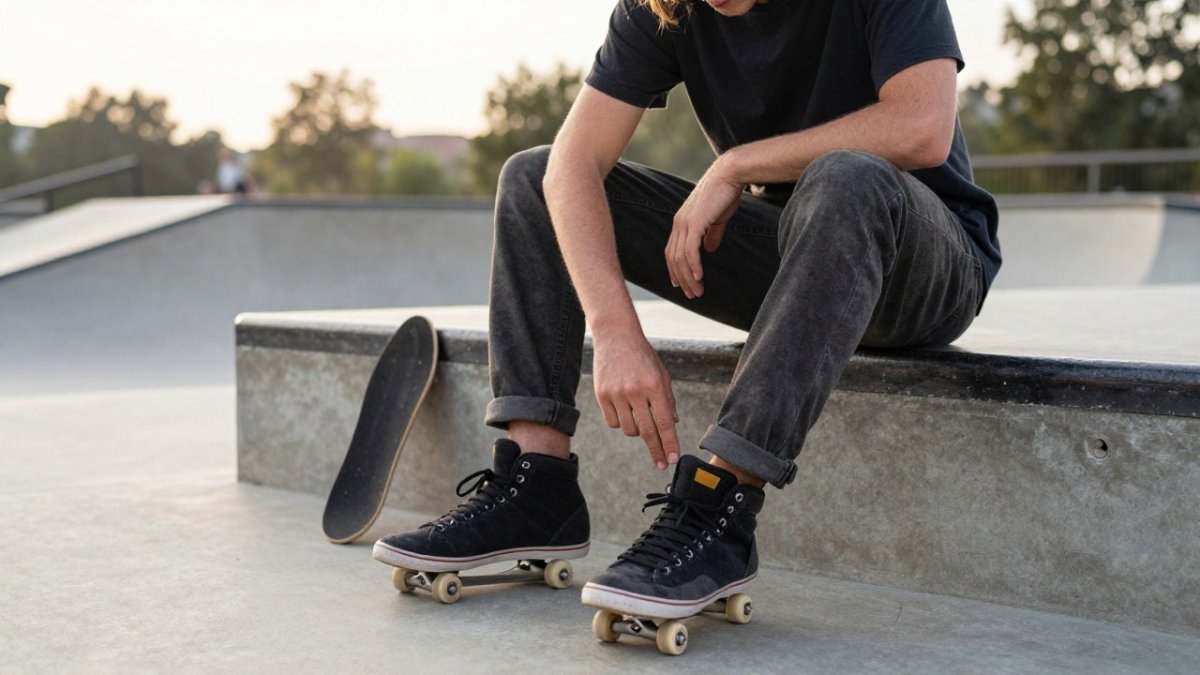
Skate shoe insoles for flat feet are the simplest upgrade you can make, but they are also the easiest thing to get wrong. A supportive aftermarket insole adds arch support and shock absorption without forcing you into a whole new shoe, and you can swap it between pairs.
Start by checking whether your shoe has a removable footbed. Many cupsole skate shoes do, and pulling it out tells you how much depth you have to work with. A slim insole with a moulded arch and a firm heel cup is usually the safest starting point.
- Flexible support suits street skating and shorter sessions, where you want feel and quick footwork
- Rigid support suits bigger landings and longer sessions, where stability matters more than sensitivity
- Removable stock insoles are the ones to replace; glued-in insoles limit your options
If you already wear orthotics, take them with you when you try shoes on. Not every skate shoe has the depth to take them, and a orthotic that sits too high will lift your heel and let it roll. Look for a shoe with a deep heel pocket and a removable footbed, and test the orthotic in the shoe before you commit.
Watch out: adding a thick insole to a shoe that already fits snugly can make the toe box too tight and reduce board feel more than you expect. If the shoe feels worse after the swap, the insole is either too thick or the shoe is too shallow.
NHS information on flat feet and foot pain
Cupsole vs Vulcanised Skate Shoes: Which Suits Flat Feet?
Cupsole vs vulcanised skate shoes is the biggest construction decision for flat feet, and the answer usually leans cupsole. A cupsole uses a stitched, moulded rubber sole with a thicker midsole, which gives more cushioning, more structure under the arch and better shock absorption on landings.
Vulcanised shoes have a thin, glued sole with a rubber foxing tape around the edge. They offer strong board feel and flexibility, but that thin sole transfers landing impact more directly through your arch.
| Feature | Cupsole | Vulcanised |
|---|---|---|
| Cushioning | High | Low |
| Board feel | Moderate | High |
| Arch support | Better | Minimal |
| Break-in time | Shorter | Longer |
| Best for | Flat feet, big landings | Technical street skating |
Cushioning, Impact Protection and Grip for Landings
Landing impact is where flat feet suffer most. Every trick that ends in a drop sends force through the heel and midfoot, and a thin, worn sole gives you nothing to absorb it. Look for a midsole with a cushioning layer and a heel area that feels dense rather than spongy.
Grip and traction matter just as much. A grippy outsole with a proper tread pattern keeps your feet planted on the board and stops slips on ledges and ramps.
Durability ties in here too.
RoSPA advice on skateboarding safety and protective equipment
Best Skate Shoes for Flat Feet: What to Compare Before You Buy
The best skate shoes for flat feet are the ones that combine real arch support, a stable heel and enough cushioning for the way you skate. Rather than chasing a single model, compare every pair against the same short checklist.
| What to compare | What to look for | Why it matters |
|---|---|---|
| Arch support | Moulded arch or room for an insole | Reduces arch fatigue |
| Heel counter | Firm, padded, no slip | Limits inward roll |
| Midsole | EVA foam, dense heel | Absorbs landings |
| Sole type | Cupsole for support | Better shock absorption |
| Toe box | Wide, thumb's width | Prevents pressure points |
| Outsole | Grippy tread, reinforced toe | Grip and durability |
Set a budget before you shop and put it toward construction rather than branding. Check current prices and stock on our site.
Try This Fit-Testing Routine Before Your First Session
Test new skate shoes at the end of the day, when your feet are at their largest, and wear the socks you actually skate in. This routine takes about ten minutes and catches most fit problems before you commit.
- Stand and spread. Stand up and check that your forefoot does not spill over the sole edge.
- Check the toe box. Confirm a thumb's width in front of your longest toe and room to wiggle.
- Press the arch. Push a thumb into the arch area. You want firm resistance, not a soft collapse.
- Test heel lockdown. Lace up and try to lift your heel. Any slide means the shoe is too loose or too long.
- Roll test. Rock side to side. The shoe should resist inward roll rather than letting your ankle drop.
- Skate a lap. Do a few pushes and a small drop. If your arch aches within minutes, the support is wrong.
If you want to fine-tune the feel further, our guide on whether durable skate socks are worth it for high impact explains which socks pair best with a snug shoe. And because grip and sole wear start with the tape, our breakdown of grip tape mistakes that ruin your skate shoes is worth a read before your first session.
Build Your Skate-Ready Wardrobe at Cali Studios
Getting the shoes right is half the battle. The other half is kit that moves with you, holds its shape through a session and still looks right off the board.
At Cali Studios, we make streetwear for everyday wear. Our joggers and hoodies come in oversized and regular fits, made with comfortable fabrics. If you are putting a session wardrobe together, start with pieces that work as hard as your shoes do.
Your feet carry every landing, so give them a shoe that supports the arch instead of fighting it. Cali Studios can kit out the rest of your setup with comfortable, street-ready clothing built for the scene. Browse our range of joggers, hoodies and tees in both oversized and regular fits, and build a wardrobe that works on and off the board. Get started with Cali Studios and skate in comfort from the first push.
Frequently Asked Questions
What should people with flat feet look for in skate shoes?
Look for a shoe with a firm heel counter, a midsole that does not collapse under pressure and enough internal depth to take an aftermarket insole. A removable stock footbed makes swapping in arch support far easier. Prioritise a secure midfoot fit and a wide toe box so your foot stays stable without pinching. Cupsole designs usually offer more structure than thin vulcanised soles, which helps if your arch tends to roll inward during landings.
Are cupsole or vulcanised skate shoes better for flat feet?
Cupsole skate shoes generally suit flat feet better because the thicker midsole and moulded construction add stability and shock absorption on landings. Vulcanised shoes are thinner and more flexible, which gives good board feel but less support under a low arch. If you mainly skate ledges and gaps, go cupsole. If you want maximum board feel for technical flatground tricks, a vulcanised shoe with a supportive insole can still work, but expect to replace insoles more often.
How can you tell if skate shoes are too narrow?
Try them on late in the day when feet swell. Your toes should wiggle freely and the widest part of your foot should sit at the widest part of the shoe, not pressing against the edge. If you feel pressure at the little toe or along the outer edge within the first few minutes, the shoe is too narrow. Also check the midfoot: laces should close without a wide gap, and the upper should not bulge over the sole.
Can insoles make skate shoes more comfortable for flat feet?
Yes. Skate shoe insoles for flat feet can add arch support and cushioning that some stock footbeds lack. Choose a slim insole so you do not lift your heel out of the shoe or crowd the toe box. Check that the insole sits flat without creasing, and skate a short session before committing to a long one. If you feel heel slip or pressure points, the insole is either too thick or positioned wrong, so adjust or try a thinner option.

