




Table of Contents
- How to Choose Streetwear T-Shirt Fit: The 2026 Guide
- Regular Fit vs Oversized T-Shirt: Which One Works for You?
- How to Measure a T-Shirt That Already Fits You Well
- T-Shirt Shoulder and Sleeve Fit: The Details That Make or Break Your Look
- Matching Fit to Your Body Shape and Height
- Oversized T-Shirt Styling: Making the Look Intentional
- Fabric Weight, Drape, and Construction: Why They Matter for Fit
- Conclusion: Your Fit Decision Framework
- Frequently Asked Questions
Last Updated: October 12, 2026
How to Choose Streetwear T-Shirt Fit: The 2026 Guide
Getting how to choose streetwear t-shirt fit right comes down to measurements, not guesswork. This guide covers the four main fit types, how to measure a tee you own, and how to make an oversized look deliberate.
Why Fit Is Everything in Streetwear
Streetwear lives or dies on silhouette. A plain tee can look premium or cheap depending on how it sits on your frame.
The cut shapes how your shoulders read, where the hem lands, and how the fabric moves.
Most high street brands cut for the average body. Streetwear is about proportion and attitude, and a boxy fit creates a different mood than a close-fitting one.
Regular Fit vs Oversized T-Shirt: Which One Works for You?
Regular fit suits a clean, everyday look; oversized works when you want a relaxed silhouette with intention. Neither is better, they solve different problems.
The better question is: what silhouette do you want, and what is the rest of the outfit doing? That framework is what actually stops you buying the wrong tee.
The Three-Question Fit Framework
Answer these in order, each narrows the choice.
1. What silhouette am I building?
Streetwear silhouettes fall into three broad shapes:
- Tapered top, structured bottom, a regular or relaxed tee over straight jeans or chinos. The tee follows the body; the trousers carry the shape. The safest everyday silhouette.
- Boxy top, tapered bottom, an oversized tee over slim or straight-leg trousers. Volume on top, clean legs. The classic streetwear proportion.
- Volume on volume, an oversized tee over baggy jeans or wide joggers. Only works when the tee is genuinely boxy (not just long) and the fabric is heavy enough to hold shape. Get it wrong and you look swamped.
2. Where do I want the shoulder seam to land?
This is the clearest signal of which fit you are wearing, and it is measurable:
- On the shoulder bone, regular fit. The seam sits at the edge of your natural shoulder line.
- Just past the bone, roughly 1-2cm down the arm, relaxed fit. Extra room through the body, but the shoulder still reads as "your" shoulder.
- Clearly down the upper arm, often 4-8cm past the bone, oversized fit. The dropped shoulder is the whole point of the cut.
If a tee is labelled oversized but the seam sits on your shoulder bone, it is just a long regular tee, which is why so many "oversized" buys disappoint.
3. What is the tee doing in the outfit?
- Layering under an overshirt, jacket, or hoodie, go regular or relaxed; oversized bunches and ruins the line.
- Worn alone as the statement piece, go oversized, but only if the fabric drapes rather than clings.
- Tucked or half-tucked, go regular or relaxed; oversized has too much fabric to tuck cleanly.
Slim, Regular, Relaxed, and Oversized: A Fit Type Breakdown
How the four main fit types differ, with the measurements that separate them:
- Slim fit: Close to the body, tapered waist, shorter sleeves. Chest width sits within a few centimetres of your own. Best for lean builds, no room for layering.
- Regular fit: Follows your shape with 4-8cm of ease through the chest. The most versatile, safest first purchase.
- Relaxed fit: 8-12cm of ease through the chest and torso, but shoulders still sit on the bone. Comfort without changing the silhouette.
"Relaxed" and "oversized" are not the same thing. Relaxed adds comfort; oversized changes the whole shape, and only looks intentional when shoulder drop, body width, and hem length move together.
A Quick Decision Shortcut
One rule: match the tee's volume to the volume of your trousers. Boxy tee, tapered trousers. Regular tee, any trousers. Oversized tee, only with tapered trousers or a genuinely heavy fabric. Break it and the outfit loses its proportions.
How to Measure a T-Shirt That Already Fits You Well
Lay your best-fitting tee flat on a table. Measure chest width, body length, and shoulder width, and write the numbers down, that's your baseline for every future purchase.
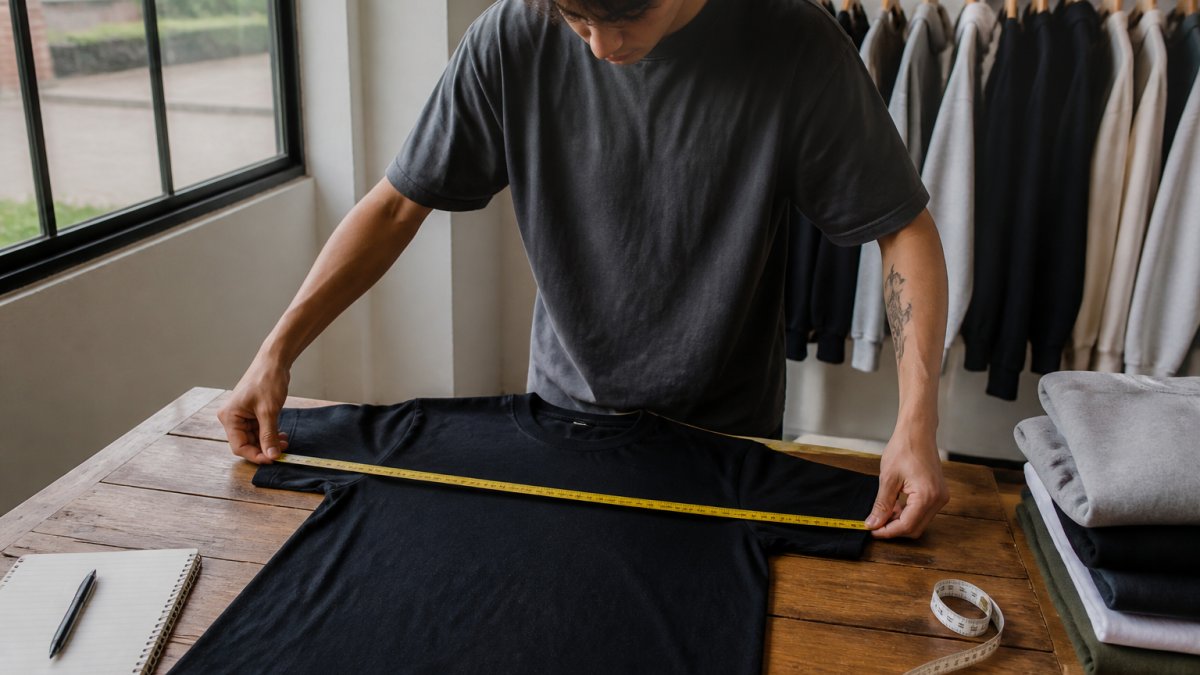
Five minutes saves you a drawer full of wrong sizes.
Here's what to measure:
- Chest width: Armpit to armpit, straight across. Double it for full circumference.
- Body length: From the highest point of the shoulder to the bottom hem.
- Shoulder width: Seam to seam across the back.
Measuring Your Own Body for Comparison
Body measurements give your starting point; garment measurements show how a specific tee will sit.
Measure your chest at the fullest point with the tape level, then shoulder width bone to bone at the back. Compare both to the size chart.
Don't trust the label alone, a medium from one brand can match a large from another.
T-Shirt Shoulder and Sleeve Fit: The Details That Make or Break Your Look
Shoulder seam placement is the biggest tell of a good fit: on the edge of your shoulder for regular, down the upper arm for oversized.
Sleeve length matters too: mid-bicep sleeves read as streetwear, high-stopping sleeves read as a size too small.
Sleeve width affects the silhouette: wide sleeves pair with a boxy body, narrow sleeves with a close-fitting cut.
Chest, Torso Room, and Hem Placement
Chest room decides whether a tee drapes or clings, you want space to move without fabric pulling across your chest.
The hem is the other half: regular lands around the hip, oversized sits lower, often covering the top of your jeans.
Print placement follows the fit: a large front graphic sits centred and low on a boxy cut, but looks cramped on a slim tee.
Matching Fit to Your Body Shape and Height
Tall frames suit longer bodies and dropped shoulders; shorter frames look best in regular fits with a higher hem. Proportion beats the number on the label.
Lean builds: regular and relaxed cuts add visual weight; slim works but leaves no room for layering.
Broader builds: relaxed and oversized cuts balance wide shoulders instead of fighting them.
Height changes everything:
- Under 173cm: Regular fit, hem at the hip. Size up only if you want a boxy look.
- 173cm to 183cm: Most fits work. Focus on body length, not width.
- Over 183cm: Look for longer bodies and extended sleeves. A standard large often runs short.
Oversized T-Shirt Styling: Making the Look Intentional
An oversized tee should look chosen, not borrowed, balance volume on top with structure below.
Pair a boxy tee with slim or straight jeans, chinos, or tapered joggers.
Tuck the front hem slightly for a cleaner line. Let it hang loose for a relaxed, skate-ready look.
- With jeans: Straight or slim cuts keep the proportions sharp.
- With chinos: A smarter take, good for evenings.
- With joggers: Full streetwear, comfortable for daily wear.
Sizing up one step gives a relaxed silhouette; two sizes up is true oversized, which needs the right frame and styling.
Fabric Weight, Drape, and Construction: Why They Matter for Fit
Two tees with identical size-chart measurements can sit completely differently. The difference is fabric weight, weave, and construction, the factors that decide whether an oversized tee looks deliberate or like a mistake.
Fabric Weight: The Number That Changes Everything
Fabric weight is measured in grams per square metre (gsm). For cotton tees:
- Under 150gsm, lightweight summer basics. Clings, shows every contour, rarely holds a boxy shape.
- 150-180gsm, the standard midweight most high street tees sit in. Comfortable, but drapes softly and can lose shape.
- 180-220gsm, heavyweight territory where streetwear tees start to hold a silhouette. A 200gsm cotton tee keeps a boxy shape without going stiff, the sweet spot for oversized cuts.
Heavier fabric has more mass, so gravity pulls it down instead of letting it cling. That is why a 200gsm oversized tee hangs cleanly while a 140gsm tee in the same measurements sticks to your chest. For an intentional oversized look, weight matters as much as the cut.
Drape: Weight Plus Weave
Drape is how the fabric falls when unstretched, the result of weight and weave together, and why two tees with the same measurements look different once worn.
- Single jersey, the standard knit. Soft, stretchy, drapes closely. Fine for regular fits, less good for boxy ones.
- Heavier single jersey, the same knit in a heavier yarn. More structure, holds shape better.
- Ribbed or interlock knits, denser and less stretchy. Hold shape well but feel different against the skin and are less common in streetwear.
A lightweight tee in a relaxed cut looks sloppy; the same cut in heavyweight fabric looks intentional. The cut did not change, the drape did.
Construction Details That Affect Fit
- Shoulder construction. A dropped shoulder only convinces when the seam is finished properly and the sleeve matches. Cheap ones twist or pull across the chest.
- Hem finish. A raw edge hem, like on our Eagle T-shirt, adds texture and a worn-in feel, a deliberate streetwear detail, not a fault.
- Side seams. Straight seams give a boxy body; tapered seams pull in at the waist and fight an oversized cut.
Shrinkage and Fit Retention: What Happens After You Wash It
This is where a good purchase goes wrong. Cotton tees shrink, and how much depends on the fabric and care.

- Expected shrinkage. Most cotton tees shrink roughly 3-5% in length and width after the first few washes. On a 70cm body, that is 2-3.5cm, enough to turn an oversized hem into a regular one.
- Why it happens. Cotton fibres contract with heat and moisture; higher temperatures and tumble drying accelerate it.
- How to limit it. Wash cool (30°C or below), skip tumble drying, and reshape while damp before hanging.
How to Use This When You Buy
When comparing two tees online, check three things: fabric weight in gsm and shoulder construction. A 200gsm cotton tee in a relaxed cut holds its shape far better than a 150gsm tee in the same cut, that check prevents most fit disappointment.
Conclusion: Your Fit Decision Framework
Use this framework before every purchase:
| Step | What to Do | Why It Matters |
|---|---|---|
| 1 | Measure a tee that fits | Gives you a real baseline |
| 2 | Compare to the size chart | Catches brand-to-brand variation |
| 3 | Check shoulder seam | The clearest fit signal |
| 4 | Match fit to body shape | Proportion beats label size |
| 5 | Consider fabric weight | Affects drape and shape |
Getting the fit right takes a little effort up front. It pays off every time you get dressed.
At Cali Studios, we build tees in both oversized and regular fits, so you can pick the silhouette that suits you.
Start with your measurements, then find the fit that matches how you want to look.
Frequently Asked Questions
How should a streetwear T-shirt fit?
A streetwear T-shirt should strike a balance between comfort and intentional style. For a regular fit, the shoulder seam should sit at the edge of your shoulder, with about 2.5-5 cm of room in the chest. An oversized fit should have dropped shoulders and a roomier torso, but the hem should not extend past mid-fly. The key is that the fit looks deliberate, not accidental. Brands like Cali Studios offer both regular and oversized options, so you can choose based on your preferred silhouette.
How do I choose between a regular and oversized T-shirt?
Choose a regular fit if you want a clean, classic look that works for everyday wear and layering. Go oversized if you prefer a relaxed, streetwear-inspired silhouette with dropped shoulders and extra room. Consider your body type: taller frames often suit oversized fits well, while leaner builds may prefer regular fits to avoid looking swamped. You can also size up in a regular fit for a semi-oversized look. Cali Studios' Tiger Ringer T-Shirt, for example, is regular fit but can be sized up for a more oversized feel.
How can you tell if a shirt will fit without trying it on?
Measure a T-shirt you already own that fits well, then compare those measurements to the size chart provided by the brand. Key measurements include chest width (pit to pit), body length (from shoulder seam to hem), and shoulder width. If the brand's size chart matches your favourite tee within 1-2 cm, it should fit similarly. Also check the model's height and size worn in product photos, as this gives a real-world reference. Cali Studios lists model height and size for each product, making it easier to gauge fit.
What is the difference between a relaxed-fit and oversized T-shirt?
A relaxed-fit T-shirt offers a comfortable, slightly looser cut than a regular fit but still follows the body's natural lines. An oversized T-shirt is intentionally cut with extra room throughout, often with dropped shoulders and a longer body. Relaxed fit is subtler; oversized makes a statement. Both can work in streetwear, but oversized tends to have a more pronounced silhouette. When choosing, think about how much volume you want and whether the rest of your outfit will balance it.
Choosing the right streetwear t-shirt fit shouldn't feel like a gamble. Cali Studios makes it simple with tees available in both oversized and regular fits, crafted from comfortable fabrics built for daily wear. Browse the range, check the size guide, and pick the silhouette that fits your frame and your style. Get started with Cali Studios and find your next wardrobe staple.
