




Table of Contents
- Why Getting the Right Fit Matters in Streetwear
- How to Measure Yourself for Streetwear Clothing
- Reading Size Charts Accurately
- Understanding Streetwear Sizing Guide for Men
- How to Style Oversized Streetwear Without Looking Swamped
- Modern Streetwear Wardrobe Essentials
- Fabric Composition and Fit Consistency
- Common Fit Mistakes to Avoid
Last Updated: August 23, 2026
Why Getting the Right Fit Matters in Streetwear
Finding streetwear that fits properly is the foundation of building a wardrobe that actually works for your body and lifestyle. A piece can be visually stunning, but if it doesn't sit right on your frame, it'll never feel or look authentic. When fit is wrong, even premium fabrics and thoughtful designs fall flat.
Streetwear that fits isn't just about comfort, it's about control. A properly fitted piece lets you dictate how others perceive your aesthetic. An oversized hoodie that's actually oversized by design hits differently than one that's just too big. The distinction matters, and it starts with knowing your measurements and understanding what you're looking for.
How to Measure Yourself for Streetwear Clothing
Accurate measurements are non-negotiable if you want to buy streetwear online with confidence. Fit standards vary wildly between brands and construction methods. Taking your own measurements takes about five minutes and eliminates most guesswork.
Start by wearing fitted clothing that lets you move freely. You'll need a soft measuring tape, ideally fabric-based rather than rigid metal. If you don't have one, most tailors will measure you for free or a small fee.
Measuring shoulder width (pit-to-pit)
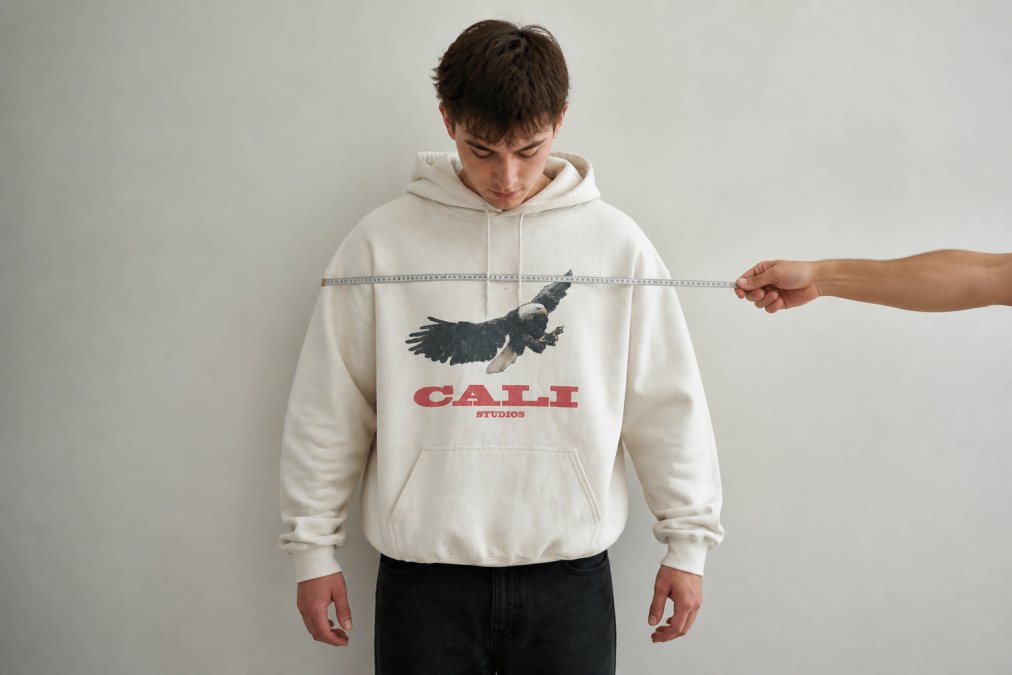
Pit-to-pit measurement is arguably the most critical dimension for streetwear. This is the distance from armpit seam to armpit seam across the chest, and it determines whether a piece will feel boxy, fitted, or genuinely oversized.
Lay a fitted t-shirt or hoodie flat on a table. Measure straight across from the centre of one armpit to the centre of the other. For streetwear that fits, you want roughly 5-10 cm of additional ease beyond your actual shoulder width, depending on the intended silhouette. Most streetwear brands size their pit-to-pit measurements generously, so a 122 cm pit-to-pit on a hoodie will feel noticeably oversized on someone with a 107 cm chest measurement.
Measuring sleeve length and inseam
Sleeve length determines whether your wrists sit properly or get buried. Stand with your arms relaxed at your sides and have someone measure from the centre back of your neck, across your shoulder, down to your wrist bone. For streetwear hoodies, most brands run with sleeves that hit around your wrist or slightly past it. Drop-shoulder designs typically add extra length, so account for that when comparing to standard fit pieces.
Inseam is equally important if you're buying joggers or trousers. Measure from the inside of your thigh down to your ankle bone. Streetwear joggers often taper at the ankle, so you want the inseam to hit right at or just above your shoe. Too long and you'll get bunching; too short and the proportions look off.
Reading Size Charts Accurately
Every brand's size chart is different. A Large from one brand might be dramatically different from a Large elsewhere. This is why size charts exist, and why most men ignore them to their detriment.
When you find a piece you want, pull up the size chart immediately. Look for pit-to-pit, sleeve length, and total length measurements. These three numbers tell you everything. Cross-reference them against your own measurements, not against what size you normally wear in high street clothing.
Pay attention to how the model is described. If the brand says "Model is 5'10" and 70kg wearing size Large," you now have a reference point. If you're 6'2" and 85kg, you can estimate how that same size might fit you. Many streetwear brands intentionally run oversized, so don't be surprised if your measurements suggest sizing up. Some brands like Cali Studios clearly state when pieces run oversized, which removes the guesswork entirely. The Eagle Hoodie and Tiger Hoodie both run oversized with drop shoulders, so if you're accustomed to fitted clothing, you might actually size down or go true to size depending on how much ease you prefer.

Understanding Streetwear Sizing Guide for Men
Streetwear sizing operates on different logic than traditional menswear. The whole point is intentional silhouettes, oversized, boxy, drop-shouldered, that create a specific aesthetic.
Oversized versus regular fit profiles
Oversized fit in streetwear means deliberate additional volume, typically 10-15 cm of ease beyond your actual measurements ([EXTERNAL_LINK: peer-reviewed research on clothing fit | pmc.ncbi.nlm.nih.gov]). This creates a relaxed, statement-making silhouette. Regular fit sits closer to your body with 2.5-5 cm of ease and works well for layering underneath oversized pieces.
The key distinction: oversized isn't just "larger." It's a specific construction choice that affects how fabric hangs, where seams sit, and how the piece interacts with your body. A properly oversized hoodie will have drop shoulders, a longer length, and wider sleeves by design.
Drop shoulders and boxy silhouettes
Drop shoulders move the armpit seam down 2.5-7.5 cm from where it naturally sits on your body, creating a relaxed, contemporary look central to modern streetwear. Boxy silhouettes maintain consistent width from chest to hem, rather than tapering inward, creating a structured, graphic quality that works well for statement pieces.
Both design choices intentionally reject fitted tailoring. They're not mistakes or poor construction, they're deliberate aesthetic decisions. When evaluating fit, you need to understand whether a piece is supposed to be boxy or tapered, oversized or regular, because that determines whether it's actually fitting correctly.
Fabric weight and how it affects fit
Fabric weight, measured in GSM (grams per square metre), dramatically influences how a garment drapes and moves on your body ([EXTERNAL_LINK: ISO standard for textile fabric properties | iso.org]). Lightweight fabrics (under 200 GSM) feel airy and drape closely to your frame. Mid-weight fabrics (200-300 GSM) offer structure while remaining comfortable. Heavy fabrics (over 300 GSM) hold their shape and create pronounced silhouettes.
The Scorpion Hoodie from Cali Studios uses a 300 GSM cotton-poly blend specifically for this reason. That weight creates a structured, boxy silhouette that holds its shape throughout the day. For oversized pieces, heavier fabric actually works better because it prevents the garment from looking shapeless. When shopping for streetwear that fits, always check the fabric weight and composition, it's not just about comfort, it's about how the piece will actually look when worn.

How to Style Oversized Streetwear Without Looking Swamped
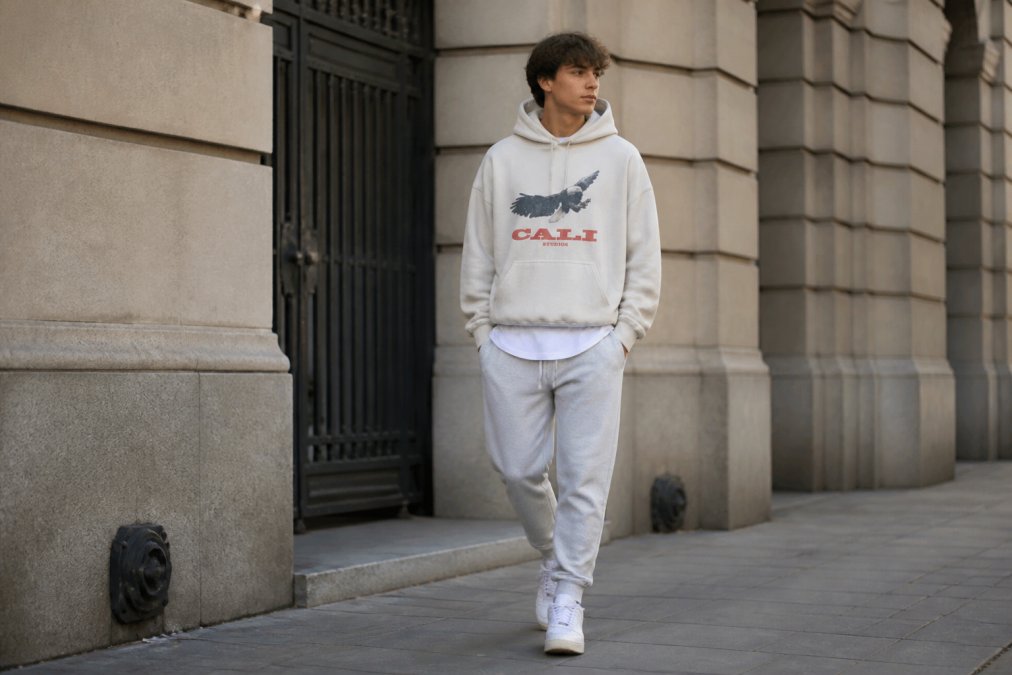
Owning oversized pieces is one thing. Styling them so they look intentional rather than accidental is another. The core principle is simple: if your top is oversized, your bottom should be fitted or tapered. If your bottom is oversized, your top should be more fitted.
Layering techniques for proportion balance
Layering is the most powerful tool for making oversized streetwear work. A fitted t-shirt under an oversized hoodie creates definition at the chest and shoulders, preventing the piece from consuming your silhouette. Visible layering, where you intentionally show the fitted piece underneath, creates visual interest and proportion control.
Length layering also matters. If you're wearing an oversized hoodie that hits mid-thigh, pair it with tapered joggers that taper at the ankle. Colour blocking through layering adds another dimension, an oversized neutral hoodie over a contrasting fitted t-shirt creates visual separation and makes both pieces work harder.
Pairing oversized tops with tapered bottoms
Tapered joggers or trousers are non-negotiable when wearing oversized tops. The taper at the ankle creates a visual anchor that balances the volume above. Look for joggers that taper aggressively in the last 15-20 cm, creating definition at the ankle and preventing the outfit from looking like you're wearing a tent.
Footwear also plays into proportion balance. Chunky trainers or boots ground an oversized outfit and prevent it from feeling too ethereal. Slim or delicate shoes can make an oversized outfit look sloppy because there's no visual weight at the bottom to anchor the look.
Modern Streetwear Wardrobe Essentials
Building a functional streetwear wardrobe means starting with pieces that work across multiple outfits and styling approaches.
A quality oversized hoodie is the cornerstone. The Eagle Hoodie from Cali Studios hits this brief perfectly, it's oversized with drop shoulders, made from durable cotton-poly fleece, and understated enough to pair with almost anything. At £45, it's an accessible entry point into quality streetwear.
Tapered joggers or track trousers complete the foundation. These should fit snugly at the ankle and work with both oversized and fitted tops.
Fitted t-shirts in neutral colours serve as layering bases and standalone pieces. Grey, black, and white are non-negotiable.
A quality zip hoodie adds versatility. The Washed Tiger Zip Hoodie from Cali Studios offers this in plush sponge fleece, which is softer than standard fleece and adds a premium feel.

Statement pieces like graphic hoodies add personality. The Scorpion Hoodie from Cali Studios, with its 300 GSM weight and boxy silhouette, functions as a statement piece that anchors an outfit.
Fabric Composition and Fit Consistency
The materials a piece is made from directly affect how it fits, how it ages, and whether it'll maintain its shape after repeated washing.
Cotton-poly blends and shrinkage impact
Pure cotton shrinks, sometimes significantly. A 100% cotton hoodie can lose 5-10% of its size after washing, which completely changes the fit. Cotton-poly blends (typically 80% cotton, 20% polyester) resist shrinkage much better while maintaining the comfort and breathability of cotton.
The Scorpion Hoodie uses a cotton-poly blend specifically for this reason. When evaluating streetwear that fits, always check the fabric composition and ask whether the brand accounts for shrinkage in their sizing.
Garment construction quality and durability
How a piece is constructed determines whether it'll last one season or five years. Quality construction means reinforced seams, proper hem finishing, and attention to stress points like armholes and cuffs.
Look for double-stitched seams, especially on hoodies where the shoulder and armpit seams take the most stress. Quality brands finish their hems rather than leaving raw edges. The hood construction on hoodies is a good indicator of overall quality, double-lined hoods hold their shape better and feel more substantial.
Front pockets should be reinforced and properly sewn. Quality brands attach pockets with multiple stitching lines and reinforce the stress points where your hands enter.
Common Fit Mistakes to Avoid
Most fit problems come from predictable mistakes that are easy to avoid once you know what to look for.
The first mistake is buying based on size alone. You're a Medium in one brand and a Large in another, that's normal. Ignoring size charts and assuming consistency across brands is how you end up with pieces that don't fit.
The second mistake is confusing oversized with baggy. Oversized is a deliberate design choice with specific proportions. Baggy is what happens when something is just too big. A properly oversized piece has structure and intention.
The third mistake is ignoring how pieces will look after washing. Always account for potential shrinkage. If you're uncertain about a fabric's behaviour, size up slightly or look for pieces made from blends that resist shrinkage.
The fourth mistake is not understanding your own proportions. If you're tall with long arms, standard sleeve lengths will be too short. Knowing your measurements and how they compare to brand standards is essential.
The fifth mistake is pairing oversized tops with oversized bottoms. This creates a shapeless silhouette that reads as accidental rather than intentional. Proportion balance requires contrast.
The sixth mistake is underestimating how fabric weight affects appearance. Lightweight oversized hoodies drape differently than heavyweight ones. Heavier fabrics maintain their shape and deliver the visual impact you're expecting.
Finding streetwear that fits is about understanding your proportions, knowing how to read size charts, and recognising that fit is intentional in this space. Most streetwear brands, including Cali Studios, publish detailed size information and model measurements specifically because they know fit matters. The Eagle Hoodie, Washed Tiger Zip Hoodie, and Scorpion Hoodie all come with specific sizing guidance and fabric details that let you predict exactly how they'll fit your frame. Start with accurate measurements, cross-reference those against brand size charts, and prioritise pieces made from quality materials that resist shrinkage. This approach transforms online shopping from a gamble into a reliable process, and that's when streetwear stops being something you hope fits and becomes something you know will work.
Frequently Asked Questions
How do I know if streetwear that fits is actually oversized or just baggy?
Oversized streetwear has intentional design elements like drop shoulders and a boxy silhouette that sit away from your body but maintain structure. Baggy clothing hangs loosely without shape. Check the pit-to-pit measurement on the size chart, oversized pieces typically run 5-10 cm wider than your actual shoulder width. Fabric weight matters too; heavier GSM fabrics (like 300GSM cotton-poly blends) hold their shape better than lighter materials, preventing that shapeless baggy appearance.
What's the difference between regular and oversized streetwear fits?
Regular fit streetwear follows closer to your body proportions with standard shoulder placement and sleeve length. Oversized fit features drop shoulders (sitting lower on the arm), wider chest measurements, and longer sleeves. For someone 5'10, a regular hoodie might be size Medium, while an oversized version would be size Large or XL. Oversized pieces are cut to sit away from your frame, creating that contemporary silhouette, while regular fit offers more defined body contours.
How do I measure myself accurately for streetwear clothing?
Wear fitted clothing and use a soft measuring tape. For pit-to-pit (chest width), measure across the front from armpit to armpit on a garment that fits well, then double that number. For sleeve length, measure from the centre back of your neck down to your wrist with your arm relaxed. For inseam, measure from your inner thigh to your ankle. Write these measurements down and compare them directly to the brand's size chart before ordering. Most streetwear brands publish these specs, so you're matching your body to their garment construction, not guessing at sizes.
Does streetwear sizing differ from high-street brands?
Yes, significantly. Streetwear brands typically cut pieces larger and looser than high-street retailers. A Medium from a streetwear label often fits like a Large from a high-street brand. Streetwear prioritises that oversized, drop-shoulder aesthetic, so sizing runs bigger intentionally. This is why measuring yourself and checking the individual brand's size chart is essential, don't assume your usual size will work. Brands like Cali Studios specify model heights and weights wearing each size, which helps you gauge fit more accurately than generic size labels.
This article was written using GrandRanker
