




Table of Contents
- Why Identifying Authentic Streetwear Fabrics Matters
- Understanding Premium Streetwear Fabric Types
- The Burn Test: A Practical Method to Verify Fibre Content
- Heavyweight Cotton vs Lightweight Cotton: Identifying Fabric Weight
- Identifying Fabric Quality by Touch and Visual Inspection
- Counterfeit vs Authentic Fabric Texture: Spotting the Difference
- Label Verification and Documentation
- Frequently Asked Questions
Last Updated: September 26, 2026
Why Identifying Authentic Streetwear Fabrics Matters
Counterfeit streetwear floods the market. Fakes look convincing at first glance, but they fall apart within weeks. The difference between authentic and fake comes down to fabric quality. Learning to identify authentic streetwear fabrics protects your investment and ensures you're actually getting what you pay for. Learning to identify authentic streetwear fabrics protects your investment and ensures you're actually getting what you pay for.
Fabric quality determines how long a piece lasts. It affects comfort, durability, and how the garment looks after multiple washes. A hoodie made from authentic heavyweight cotton maintains its shape. A counterfeit version shrinks, pills, and loses colour. The stakes matter when you're building a streetwear wardrobe that actually works.
This guide covers practical methods to verify fabric authenticity. You'll learn how to perform a burn test, assess fabric weight, inspect stitching, and spot the red flags that signal counterfeits. These techniques work for any streetwear piece, from hoodies to joggers.
Understanding Premium Streetwear Fabric Types
Authentic streetwear uses specific fabrics chosen for durability and aesthetic appeal. Most pieces combine natural and synthetic fibres in deliberate blends. Understanding what goes into premium pieces helps you spot when something's off.
Natural fibres: cotton, wool, and linen
Cotton is the foundation of most streetwear. Authentic pieces use organic ringspun combed cotton, which produces softer, stronger yarn than standard cotton. The fibre length matters, longer staple cotton creates more durable fabric that resists pilling.
Wool appears in heavier streetwear pieces and premium blends. It provides warmth, elasticity, and natural moisture-wicking. Authentic wool has a consistent hand-feel and doesn't feel scratchy against skin. Counterfeits often use low-grade wool or wool blends that feel rough.
Linen adds texture and breathability to lighter streetwear. It wrinkles naturally, which is part of the aesthetic. Authentic linen has a crisp hand-feel and visible weave structure. Fake linen often feels limp and lacks the characteristic texture.
Synthetic fibres: polyester, nylon, and blends
Polyester blends with cotton in most contemporary streetwear. It improves elasticity, reduces shrinkage, and lowers production costs. Authentic blends typically use 10-30% polyester. Higher percentages signal lower quality.
Nylon appears in technical streetwear and performance pieces. It's stronger than polyester and resists abrasion. Authentic nylon has a smooth hand-feel. Counterfeits often use cheap nylon that feels plasticky.
Polyester-cotton blends dominate the market because they balance cost and performance. A 65% cotton / 35% polyester blend offers durability without excessive shrinkage. Authentic brands disclose these ratios on the label. Counterfeits rarely do.
The Burn Test: A Practical Method to Verify Fibre Content
The burn test identifies fibre content by observing how fabric reacts to flame. Different fibres burn differently. This method works because natural and synthetic fibres have distinct chemical structures that produce recognisable burn patterns.
Step 1: Prepare your test sample safely
Cut a small swatch from an inconspicuous area, inside a seam or hem. Use a piece roughly 5cm × 5cm. Work in a well-ventilated space or outdoors. Have water or a fire extinguisher nearby.
Hold the swatch with tweezers or pliers. Never hold it with your fingers. Position it over a heat-safe surface like a ceramic plate or metal tray. Keep the flame source steady, a lighter or match works well.
Step 2: Observe the burn behaviour
Cotton burns quickly with a bright yellow flame. It produces grey ash and smells like burning paper. The fabric curls and blackens as it burns. Cotton doesn't melt, it combusts.
Polyester melts before it burns. It produces a dark smoke and smells chemical, like burning plastic. The fabric shrinks and forms a hard, shiny bead at the edge. Polyester doesn't produce ash, it leaves a melted residue.
Wool burns slowly with a dim flame. It produces dark ash and smells like burning hair. The fabric doesn't melt. It chars and crumbles. Wool is self-extinguishing, it stops burning when removed from the flame.
Nylon melts similarly to polyester but burns slower. It produces dark smoke and smells chemical. The melted bead is harder and shinier than polyester. Nylon also self-extinguishes.
Step 3: Assess the ash and odour
The ash tells you what you're dealing with. Cotton produces light grey ash that crumbles easily. Synthetic fibres produce hard, shiny beads that don't crumble. Mixed fabrics produce both.
Smell is equally important. Cotton smells like burnt paper. Synthetics smell chemical. Wool smells distinctly like burnt hair. These odours are unmistakable once you've smelled them.
| Fibre Type | Burn Speed | Flame Colour | Odour | Residue |
|---|---|---|---|---|
| Cotton | Fast | Bright yellow | Burnt paper | Grey ash |
| Polyester | Melts | Dark smoke | Chemical/plastic | Hard bead |
| Wool | Slow | Dim | Burnt hair | Crumbly char |
| Nylon | Melts | Dark smoke | Chemical | Shiny bead |
Heavyweight Cotton vs Lightweight Cotton: Identifying Fabric Weight
Fabric weight determines durability and comfort. Streetwear pieces use specific weights for specific purposes. Understanding GSM helps you assess whether a piece is authentic.
Understanding GSM and fabric density
GSM stands for grams per square metre. It measures how much a piece of fabric weighs. Higher GSM means heavier, thicker fabric. Lower GSM means lighter, thinner fabric.
Authentic streetwear hoodies typically use 200-300 GSM cotton. This weight provides durability without excessive bulk. Cali Studios' US Seal T-shirt uses 200GSM organic ringspun combed cotton.

Lightweight cotton typically falls between 100-150 GSM. It's used in summer pieces and layering basics. Heavyweight cotton ranges from 250-350 GSM. It's used in premium hoodies and joggers.
Counterfeits often use 130-160 GSM cotton. It's cheap to produce but feels thin and flimsy. After a few washes, low-GSM counterfeits lose their shape permanently.
Why weight matters for streetwear durability
Heavier fabric resists pilling and maintains shape. It withstands repeated washing without degrading. Lightweight fabric pills easily and develops thin spots after regular wear.
Fabric density also affects drape. Heavyweight cotton drapes differently than lightweight cotton. Authentic streetwear pieces are designed around specific fabric weights. Using the wrong weight changes how the piece fits and moves.
Feel the fabric in your hands. Authentic heavyweight cotton feels substantial and smooth. Counterfeits feel thin and papery. The weight difference is obvious when you compare them directly.
Identifying Fabric Quality by Touch and Visual Inspection
Your hands are reliable tools for assessing fabric quality. Texture, drape, and construction reveal authenticity faster than any test.
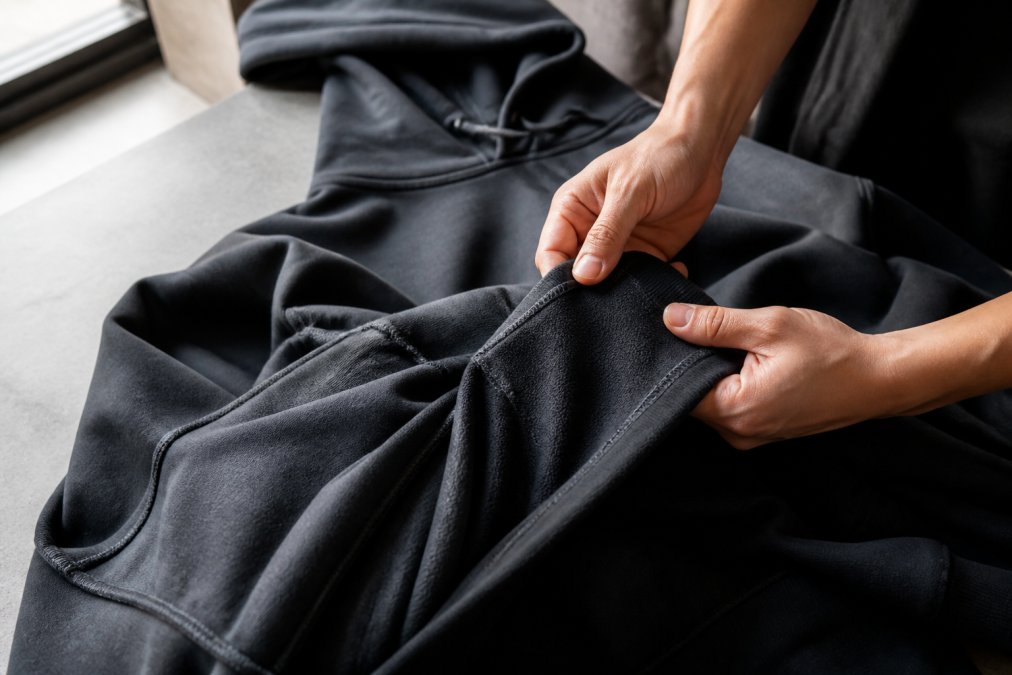
Hand-feel and drape assessment
Authentic cotton feels soft but has slight texture. It's smooth without being slippery. The hand-feel is consistent across the entire garment. Counterfeits feel either too stiff or too slippery.
Drape refers to how fabric hangs.
Stitch integrity and seam construction
Authentic streetwear features tight, even stitching. Seams are straight and consistent. Stitches are small and close together. Authentic pieces use reinforced seams at stress points like shoulders and underarms.
Checking for pilling, shrinkage, and colorfastness
Pilling occurs when loose fibres ball up on the fabric surface. Authentic heavyweight cotton resists pilling. Counterfeits pill aggressively after a few washes.
Counterfeit vs Authentic Fabric Texture: Spotting the Difference
Counterfeits fail the texture test immediately. Authentic and fake fabrics feel completely different in your hands.
Label Verification and Documentation
Labels tell you everything. Authentic streetwear brands provide complete information. Counterfeits skip details or provide false information.
Check for these elements:
- Fibre content listed as percentages (e.g., 100% cotton or 65% cotton / 35% polyester)
- GSM weight clearly stated
- Country of origin listed
- Brand name spelled correctly
- Care instructions provided
- Manufacturer details included
Frequently Asked Questions
How do I tell if a fabric is high quality?
Quality fabrics have consistent weave density, strong seams with even stitching, and appropriate weight for their type. Run your fingers across the surface, premium fabrics feel smooth without pilling. Check the GSM (grams per square metre): authentic streetwear typically uses 200GSM or higher for t-shirts and hoodies. Examine the label for fibre composition percentages and manufacturing details. Counterfeit pieces often have loose threads, uneven hems, and vague labelling that avoids specific fibre information.
What's the difference between synthetic and natural streetwear fibres?
Natural fibres like cotton and wool breathe well, feel softer initially, and develop character over time, but may shrink or pill. Synthetic fibres like polyester and nylon resist shrinkage, dry faster, and last longer under heavy wear, but trap heat and may feel plastic-like. Blends combine benefits: a 80/20 cotton-polyester mix offers durability with breathability. Authentic premium streetwear typically discloses exact percentages on the label. Use the burn test to verify: natural fibres smell like burning paper; synthetics smell chemical and melt into beads.
What's the difference between heavyweight and lightweight cotton?
Heavyweight cotton (250GSM+) feels substantial, resists shrinkage better, and lasts longer through repeated washing, ideal for hoodies and statement pieces. Lightweight cotton (150-180GSM) feels softer and breathes more easily, better for summer wear or layering. Check the GSM on the care label. Authentic streetwear brands like Cali Studios specify this detail: the US Seal T-shirt uses 200GSM organic ringspun combed cotton. Counterfeiters often omit GSM entirely or list inflated numbers.
What fabrics should I avoid when buying streetwear?
Avoid ultra-cheap polyester blends under 50% natural fibre content, they pill quickly and feel cheap. Stay away from fabrics with vague labelling that doesn't specify fibre percentages. Low-GSM cotton (under 150GSM) loses shape after a few washes. Avoid pieces with loose, uneven stitching or fraying hems, as these indicate poor construction. Be cautious of counterfeit blends that claim premium qualities but lack proper documentation. Always check care labels: if they're missing or poorly printed, the piece is likely counterfeit.
