




Last Updated: November 5, 2026
Quick Summary
Skateboarding pants beat jeans for mobility because they are cut with a higher rise, room through the thigh and knee, and a gusseted or articulated crotch that lets you crouch and push without the fabric fighting back. Jeans can skate well only when a relaxed cut and stretchy or loose fabric cooperate.
- A gusset or articulated crotch adds fabric where jeans usually strain during a crouch.
- Test fit with a deep crouch, wide stance, raised knee and a few long strides before buying.
- Stretch jeans close most of the gap only when paired with a relaxed cut, not a skinny pair.
- Keep baggy jeans at a regular length so the hem sits at or just above the shoe.
- Wash cold and hang dry to limit shrinkage that can tighten thigh and knee room.
Table of Contents
- Skateboarding Pants vs Jeans for Mobility: The Core Difference
- What Skate Pants Are Built to Do
- Where Ordinary Jeans Fall Short
- Mobility Tests That Actually Matter on a Board
- Stretch Jeans for Skateboarding: Do They Close the Gap?
- Baggy Jeans for Skating: Loose Fit Without the Snag
- Canvas vs Twill Skate Pants: Which Fabric Holds Up
- The Best Trousers for Skateboarding by Body Type and Fit
- Durability, Care and How Mobility Changes Over Time
- Building a Skate-Ready Wardrobe at Cali Studios
- Frequently Asked Questions
Skateboarding Pants vs Jeans for Mobility: The Core Difference
Skateboarding pants are cut for movement first: a higher rise, room through the thigh and knee, and a gusseted or articulated crotch that lets you crouch, push and flick without the fabric fighting back.
The core difference is not style but how much the fabric and pattern allow your legs to work. Jeans can skate well, but only when the cut and cloth cooperate.
Below, we break down the skateboarding pants vs jeans question by movement, fabric and body type.
What Skate Pants Are Built to Do
Skate pants are designed around a simple idea: your legs move in ways jeans were never patterned for. A skate trouser usually has a higher rise, a wider leg through the thigh, and extra room at the knee so deep bends do not pull the fabric tight across your joints.
Two construction details do most of the work:
- A gusset or articulated crotch, which adds fabric where jeans usually strain during a crouch.
- A higher rise, so the waistband stays put when you bend rather than sliding down your back.
The result is freedom of movement without the constant readjusting. That matters more than any logo.
Where Ordinary Jeans Fall Short
Ordinary jeans are cut for standing and walking, not for kickflips.
The real problem is not that denim cannot take abuse, but that most jeans are patterned for a different job, you feel restricted exactly when you need board control most.
Watch out: skating in a tight, low-rise jean can also wear the fabric thin fast at the knee and seat, because every crouch stretches the same few centimetres of cloth.
Mobility Tests That Actually Matter on a Board
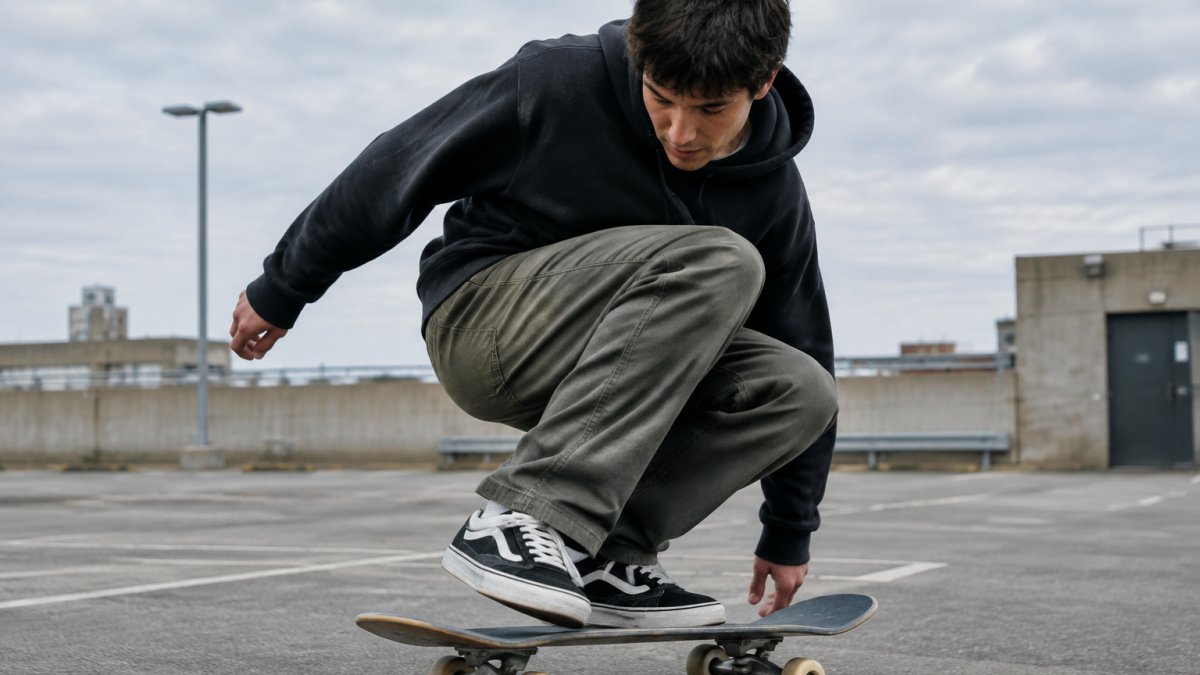
The mobility tests worth running copy real skating: a deep crouch, a wide stance, and a raised knee. If a pair passes those three before you buy, it will handle most tricks.
Deep Bends, Crouching and Kickflips
Try this in the fitting room or at home before you commit:
- The deep crouch. Squat as low as you can. The fabric should not pull hard across the knee or dig into the back of the thigh.
- The wide stance. Step your feet wide and bend. Check the crotch does not strain or ride up.
- The raised knee. Lift one knee toward your chest, as you would before a kickflip. The waistband should stay level.
- The push. Take a few long strides. The hem should not catch under your heel.
If any test fails, the fit is wrong for skating, however good the pair looks.
Stretch Jeans for Skateboarding: Do They Close the Gap?
Stretch jeans for skateboarding close most of the gap, but only when the stretch is paired with a relaxed cut.
The catch is that stretch alone does not fix a bad pattern.
Our Saint Denim Jeans are a relaxed fit in washed black denim, made from high-quality denim built to withstand everyday wear.

Best for: skaters who want denim looks with more give. Skip if: you want maximum stretch and a technical skate cut.
Baggy Jeans for Skating: Loose Fit Without the Snag
Baggy jeans for skating solve mobility by giving your legs room to move inside the fabric.
The trade-off is snag risk: too much length or a flared hem can catch under your heel or clip the board. The fix is a baggy fit with a regular length and a hem that sits at or just above the shoe.
- Do choose baggy through the thigh and knee.
- Do keep the length regular so the hem clears your shoe.
- Avoid oversized hems that drag and catch.
Get that balance right and baggy jeans skate as well as dedicated skate pants.
Canvas vs Twill Skate Pants: Which Fabric Holds Up
Canvas and twill both hold up well, but they fail differently.
For pure abrasion resistance, canvas wins. For comfort and range of motion, twill is the better everyday choice, and a cotton twill breaks in faster.
Our Saint Cargo Pants - Washed Olive are cut from cotton twill with a baggy fit and a tie drawcord at the ankle to adjust the fit.

Denim, Corduroy and Fabric Blends in the Mix
Denim is the toughest of the everyday fabrics and handles scratches and wear well, which is why skate jeans remain popular. Corduroy adds warmth and a softer hand but wears faster at the knee.
If you want to judge fabric quality before you buy, our guide to how to identify authentic streetwear fabrics walks through what to look for in the weave and weight.
| Fabric | Abrasion resistance | Movement | Best for |
|---|---|---|---|
| Canvas | High | Moderate | Falls, grip-tape scuffs |
| Twill | Moderate | High | Long sessions, everyday wear |
| Denim | High | Depends on cut | Skaters who want toughness |
| Corduroy | Low | Moderate | Cooler days, casual wear |
| Blends | Moderate | High | Stretch and comfort |
The Best Trousers for Skateboarding by Body Type and Fit
The best trousers for skateboarding match the cut to your build, not to a trend. Treat thigh room, rise and inseam as three separate decisions, then check the result against the movements you actually make on a board.
Start With Thigh Room, Not Waist Size
Thigh room is the first measurement that decides whether a pair skates well. When you stand, you should be able to pinch roughly two centimetres of fabric at the widest part of the thigh without the cloth pulling flat against the skin.
Skaters with muscular thighs should size for the thigh first and let a belt take up any slack at the waist.
Rise and Inseam: The Two Numbers That Decide Comfort
Rise is how far the waistband sits above the crotch seam. A higher rise keeps the waistband in place through deep bends and crouching, rather than sliding down your back mid-line.
Inseam controls whether a loose leg pools over your shoe. A hem at or just above the shoe clears the heel and the board; a hem that drags can catch under your heel on a push or clip the tail on a trick.
Match the Cut to Your Build
- Broad or muscular thighs: choose a relaxed or baggy cut with a gusseted or articulated crotch and a mid-to-high rise. Avoid slim and straight cuts, which pull tight across the knee and seat.
- Slim builds: a straight or relaxed leg works without excess volume. Keep the rise high enough that the waistband stays put when you bend.
- Long torso: prioritise rise over leg length; a higher waistband keeps the seat in place through crouches.
The Trade-Off Between Loose Fit and Functional Safety
Baggy fits are popular because they solve mobility by giving your legs room to move inside the fabric. The trade-off is that excess fabric can snag, obscure foot placement, or interfere with movement. The fix is not to abandon baggy fits but to keep the length regular and the hem at or just above the shoe, so the volume sits through the thigh and knee rather than pooling at the ankle.
A Quick Selection Checklist
- Pinch two centimetres of fabric at the thigh while standing.
- Squat fully: the fabric should not lock at the knee or dig into the back of the thigh.
- Lift one knee toward your chest: the waistband should stay level.
- Step wide and bend: the crotch should not strain or ride up.
- Take a few long strides: the hem should clear your heel.
If a pair passes all five, the fit is right for skating, however it looks on the hanger. Once you know your thigh room, rise and inseam, browse our full range of trousers to find a cut that matches your build.
Durability, Care and How Mobility Changes Over Time
Durability and care decide how a pair skates six months from now, not just on day one. The way fabric shrinks, softens and recovers is the biggest reason a pair that felt right in the shop starts to restrict movement later.
Why Fabric Changes After Purchase
Denim and canvas are woven cotton fabrics. When washed, the cotton fibres absorb water and swell, then contract as they dry. That shrinkage is most pronounced on the first wash, and a relaxed-fit pair can shrink into a slimmer fit if washed hot and tumble dried, undoing the thigh and knee room you bought it for.
The second mechanism is softening. Repeated washing and wear break down the stiffness in the weave, so a pair that starts stiff usually loosens into better mobility over the first few weeks.
Shrinkage, Recovery and the Wear Points That Matter
Stretch fabrics behave differently again. A small amount of elastane lets the fabric give at the knee and hip, but heavy stretch can bag out over time, the fabric stretches permanently at the knee and seat and stops recovering.
The wear points that affect mobility are the knee, the seat and the crotch seam. Every crouch stretches the same few centimetres of cloth at the knee, so that area thins first.
A Care Routine That Preserves Mobility
- Wash cold to limit shrinkage, especially on the first wash.
- Hang dry rather than tumble drying, which accelerates contraction and breaks down fibres.
- Turn jeans inside out to protect the surface from abrasion in the machine.
Watch out: a hot first wash on a relaxed-fit pair can shrink the thigh and knee room enough to change how it skates, so check the care label before the first wash rather than after.
How to Judge Durability Before You Buy
Fabric weight and weave are the best predictors of how a pair will hold up. A tighter weave resists abrasion better than a loose one, and a heavier cotton takes longer to thin at the knee. If comfort and pocket utility matter as much as durability, our guide to comfortable streetwear joggers with deep pockets covers how to choose a pair that holds up to daily wear.
Building a Skate-Ready Wardrobe at Cali Studios
Building a skate-ready wardrobe comes down to picking a few pairs that pass the crouch, stance and raised-knee tests, then rotating them so no single pair takes all the wear.
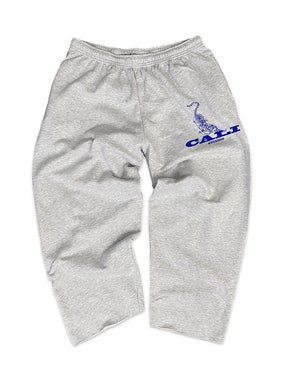
At Cali Studios, our relaxed-fit denim, cotton twill cargos and 400GSM cotton joggers offer a relaxed fit and comfortable fabric for everyday wear.
Get started with Cali Studios and build a rotation that moves as well as you do.
Frequently Asked Questions
Are skateboarding pants more flexible than jeans?
Skateboarding pants usually are, because they are cut with extra thigh and knee room and often use a fabric blend with some give. Jeans can work, especially relaxed-fit pairs, but rigid heavyweight denim restricts deep bends and crouching. The deciding factors are leg room, rise and whether the fabric has any stretch. A relaxed-fit jean with a higher rise gets close to skate pants; a slim, non-stretch pair does not.
Are baggy jeans good for skateboarding?
Baggy jeans for skating work well when the waist stays put and the hem does not drag under your feet. Loose denim gives freedom of movement through the thighs and knees, which helps with crouching and kickflips. Check the rise and use a belt so the waistband does not slide down mid-trick. Very long, wide hems can catch on the board, so a regular length or a cuffed ankle is safer.
Do you need stretchy trousers to skateboard?
No, but stretch fabric makes deep bends and repeated crouching more comfortable. Non-stretch denim and canvas can be fine if the cut is relaxed enough through the thigh and knee. Stretch jeans for skateboarding are a middle ground: they look like ordinary denim but move more easily. If you skate most days, a fabric blend with some give reduces the pull you feel across the knees on landing.
Are canvas or twill trousers better for skateboarding?
Both work, and the choice comes down to weight and finish. Canvas is denser and resists abrasion from grip tape and falls, but it is stiffer and takes longer to break in. Twill is lighter and softer from the start, with more give at the knee. For everyday skating and wear, twill is the easier pick; for heavy wear and repeated falls, canvas lasts longer but feels rigid at first.
What fit of trousers gives skaters the most mobility?
A relaxed or baggy fit with a higher rise gives the most range of motion, because it leaves room at the hip and knee when you bend. Slim fits restrict deep crouching unless the fabric has stretch. Look for a gusset or reinforced seams at the crotch, and check that you can squat fully without the waistband pulling down. Fit matters more than fabric here: a loose non-stretch pair beats a tight stretchy one.
Ready to stop guessing and start skating in comfort? Pick a pair that passes the mobility tests, then add the next when the first earns its keep.

