




Table of Contents
- Techwear vs Streetwear: The Quick Comparison Table
- What Is Techwear? More Than Just Dark Colours
- What Is Streetwear? The Culture Behind the Comfort
- Technical Fabrics and Construction: Where the Money Goes
- Essential Streetwear Wardrobe Pieces That Bridge Both Styles
- How to Style Techwear for Beginners Without Looking Like a Costume
- Sustainability, Price and What You Actually Get
- Conclusion
- Frequently Asked Questions
Last Updated: September 13, 2026
Techwear vs Streetwear: The Quick Comparison Table
Techwear and streetwear overlap more than most people realise. The difference between techwear and streetwear comes down to purpose: techwear prioritises function through technical fabrics and utilitarian design, while streetwear centres on cultural expression, comfort, and graphic identity. At Cali Studios, we see this confusion constantly from customers building a wardrobe that works for both.
Put simply: techwear is engineered, streetwear is expressed.
| Feature | Techwear | Streetwear |
|---|---|---|
| Primary focus | Function and weatherproofing | Culture and self-expression |
| Fabrics | Technical fabrics, seam-sealed | Cotton, fleece, jersey |
| Fit | Ergonomic design, tapered | Oversized fit, relaxed |
| Colour palette | Black, grey, muted tones | Bold graphics, varied colours |
| Key detail | Utility pockets, modular layers | Logos, prints, branding |
| Price point | Higher (performance materials) | Mid-range to premium |
What Is Techwear? More Than Just Dark Colours
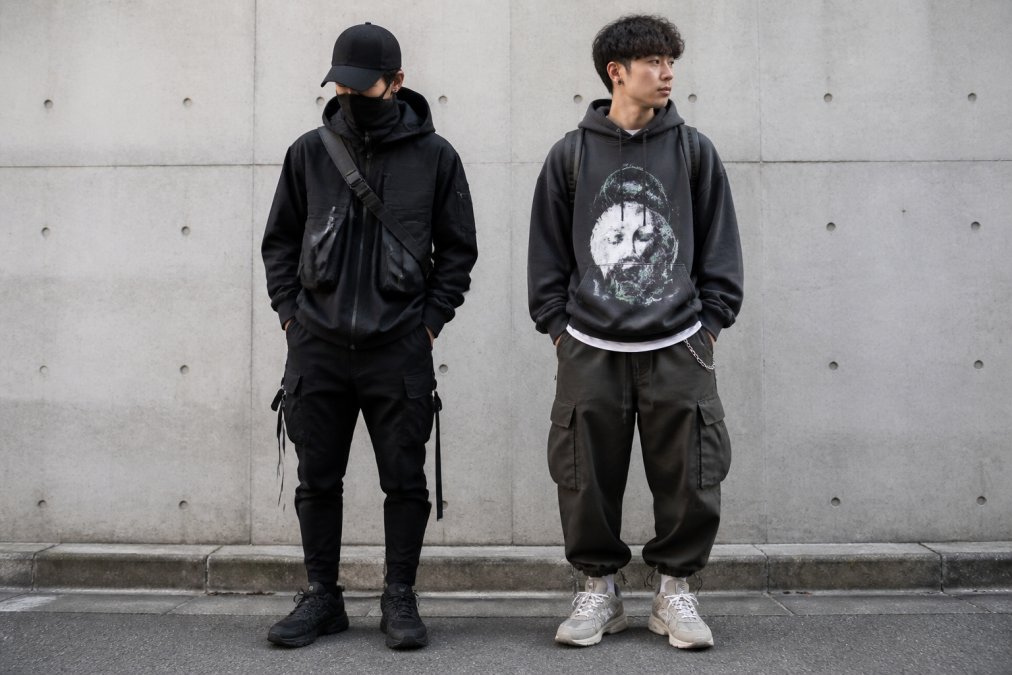
Techwear is a functional clothing style built around high-performance materials, weatherproofing, and utilitarian design. It borrows from tactical gear, outdoor performance apparel, and avant-garde fashion to create clothing that looks futuristic and performs in real conditions.
The aesthetic leans dark (often called darkwear), but reducing techwear to "black clothes with straps" misses the point. The real markers are construction techniques: seam-sealed jackets, moisture-wicking linings, water-resistant coatings, and functional hardware like magnetic closures or adjustable toggles.
Brands design around a layering system: a base layer manages sweat, a mid layer insulates, and a shell handles rain and wind. Every pocket has a purpose.
Where it falls short: genuine technical fabrics cost money, and some pieces prioritise looks over actual performance. A jacket with fake utility pockets is cosplay, not techwear.
What Is Streetwear? The Culture Behind the Comfort
Streetwear is a casual clothing style rooted in skate, surf, hip-hop, and urban subcultures, defined by comfort, graphic identity, and community. It grew from people making their own rules about what to wear, then became a global market.
The core pieces are familiar: hoodies, joggers, graphic tees, caps, and trainers. Oversized fit and relaxed silhouettes dominate because the clothing was designed for movement and everyday wear, not bad weather.
What separates real streetwear from generic casual clothing is the cultural layer: drops, limited runs, and brand storytelling. So does durability, because skaters put their clothes through punishment.
The honest limitation: plenty of streetwear is aesthetic with no substance. Thin cotton, weak stitching, and prints that crack after a few washes are common. That is exactly the gap Cali Studios tries to close, with comfortable fabrics and fits that hold up to daily wear.
Technical Fabrics and Construction: Where the Money Goes
The price gap comes down almost entirely to materials and construction. Techwear uses technical fabrics such as ripstop nylon, bonded softshell, and membrane laminates, which cost more because they are engineered, not woven.
Streetwear, by contrast, is usually built from cotton, fleece, and polyester blends. That is not a weakness. Heavyweight cotton fleece is warm, breathable, and easy to care for, which is why it dominates the scene.
Here is the practical trade-off:
- Weatherproofing: Techwear wins. Water-resistant shells and seam-sealed construction handle rain properly.
- Breathability: Depends on the piece. Good technical fabrics manage moisture better, but cheap coated jackets trap sweat.
- Durability: Both can last years if the construction is sound. Look at stitching, not just fabric.
- Comfort: Streetwear generally wins for all-day wear. Techwear can feel stiff until it breaks in.
- Versatility: Streetwear fits more situations without looking out of place.
A common mistake is paying techwear prices for a jacket that only looks technical. Check whether the fabric beads water and whether pockets are real or decorative.
Essential Streetwear Wardrobe Pieces That Bridge Both Styles
If you want pieces that work in both worlds, start with items that already borrow from both. These essential streetwear wardrobe pieces give you streetwear's comfort and culture with techwear's utility and structure.
Cargo pants are the clearest example. They carry utility pockets, a baggy fit, and a drawcord ankle that lets you adjust the silhouette. Our Saint Cargo Pants in Washed Olive (£30.00) are a good starting point: cotton twill, cargo pockets, and a relaxed cut that sits comfortably in either camp.

Track pants do similar work. The La Santo Track Pants (£25.00) use an elastic waistband and adjustable ankle toggles, functional hardware in the techwear sense, cut for everyday streetwear wear. The AC Track Pants (£25.00) add mesh lining and ankle zips, lifted straight from performance apparel.


For a lower entry point, the Tiger Track Pants (£20.00) pair a drawstring waistband with ankle zips and white piping, giving you that technical look without the technical price.
| Piece | Price | Why It Bridges Both |
|---|---|---|
| Saint Cargo Pants | £30.00 | Utility pockets, baggy fit |
| La Santo Track Pants | £25.00 | Adjustable toggles, elastic waist |
| AC Track Pants | £25.00 | Mesh lining, ankle zips |
| Tiger Track Pants | £20.00 | Ankle zips, piping detail |
How to Style Techwear for Beginners Without Looking Like a Costume
The fastest way to look like you are wearing a costume is to go full tactical on day one. Learning how to style techwear for beginners is about restraint: pick one technical piece, then keep everything else simple. One technical element per outfit reads as intentional; three or more reads as fancy dress.
Start with a single statement item, such as a cargo pant or shell jacket, and pair it with plain basics. A black hoodie, a neutral tee, and clean trainers will do more than a vest with twelve pockets. The technical piece should be the only thing anyone notices.
Three beginner formulas that work
- The one-piece rule: One technical garment (shell jacket, cargo pant, or technical jogger) plus plain cotton basics. Example: a seam-sealed shell over a heavyweight hoodie and straight-leg jeans.
- The tonal build: Keep everything in one colour family (black, charcoal, olive) so the technical details read as texture rather than costume. This is the safest entry point.
- The hybrid swap: Replace one streetwear staple with its technical equivalent. Swap a cotton hoodie for a bonded softshell hoodie, or swap standard joggers for track pants with ankle zips. You keep the silhouette you already wear.
Keep the palette tight: black, grey, olive, and charcoal sit naturally in both styles. Avoid mixing neon accents with heavy utility detailing.
Silhouette matters as much as the pieces. Techwear tapers toward the ankle; streetwear stays loose. Choose one direction per outfit, or balance one oversized element with one tapered element so the look does not read as shapeless.
Hardware and detail discipline
Count the functional details you are wearing. Straps, buckles, toggles, and cargo pockets are each a visual signal; two or three across a whole outfit is usually enough. If your trousers already have cargo pockets and ankle zips, your jacket does not need a chest rig.
What to avoid
- Full tactical rigs for everyday wear. They photograph well but feel heavy and draw attention for the wrong reasons.
- Mixing multiple technical fabrics with different sheens. Matte with matte is easier to pull off than matte with glossy.
- Buying technical pieces in summer weights. Most technical shells are designed for layering, so wearing them over a t-shirt in warm weather traps heat.
The thing nobody tells you about techwear styling: it photographs better than it wears for a full day. Build your first outfits around pieces you would actually leave the house in.
Sustainability, Price and What You Actually Get
Most guides skip this part, and it is where the two styles genuinely diverge. Sustainability is harder to verify in techwear because technical fabrics are often synthetic and difficult to recycle. Streetwear has its own problem: fast-fashion copies flood the market and fall apart quickly.
The practical answer is price-to-performance ratio. With streetwear, you are usually paying for fabric weight, fit, and brand identity. With techwear, you are paying for material research and construction, which is why a technical shell can cost several times more than a hoodie made from the same weight of fabric.
Where the money actually goes in techwear
- Fabric engineering: Membrane laminates such as those used in waterproof breathable shells require controlled manufacturing and quality testing. A bonded softshell is not simply a thicker cotton jacket.
- Seam sealing: Every seam on a waterproof garment must be taped or sealed, which is a slow, labour-intensive process. This alone can add a significant share of the garment cost.
- Hardware: Magnetic closures, adjustable toggles, and water-resistant zips cost more than standard buttons and zips, and they fail more often if poorly made.
- Pattern and fit: Ergonomic design and articulated sleeves require more pattern pieces and more fabric waste, both of which raise the unit cost.
Where the money goes in streetwear
- Fabric weight: Heavyweight cotton fleece (often 400gsm and above) costs more than standard jersey, and it is the main reason a premium hoodie feels different from a cheap one.
- Fit and grading: Getting an oversized fit to drape correctly across sizes requires more pattern work than a standard cut.
- Brand and storytelling: Drops, limited runs, and collaborations carry a marketing cost that is built into the retail price.
The honest trade-off
A £20 pair of track pants and a £200 technical shell are not competing on the same terms. The track pants need to be comfortable, durable, and fit well; the shell needs to keep you dry. Judge each on its own brief.
Sustainability: what to actually look for
- Recycled content: Some technical fabrics now use recycled nylon or recycled polyester. Look for the fibre content on the care label rather than a vague 'eco' claim.
- Repairability: A jacket with replaceable zips and repairable seams will outlast one that is glued together. This matters more than the fibre itself for real-world lifespan.
- Bluesign or equivalent certification: Some mills certify their chemical and water use. If the brand does not name the mill or the certification, treat sustainability claims with caution.
- Care and washing: Technical fabrics often need specific washing (no fabric softener, low heat) to keep their coatings working. If you will not follow the care label, the performance will degrade regardless of price.
For most wardrobes, a mix works best: buy streetwear for daily rotation and comfort, and add one or two technical pieces for weather and function. That keeps the cost sensible without sacrificing either benefit.
Guidance on textile fibre labelling and care claims
Conclusion
The difference between techwear and streetwear comes down to intent: one is engineered for performance, the other built for culture and comfort. Most people do not need to pick a side. They need pieces that fit well, last, and work across both.
That is where Cali Studios comes in. We build contemporary men's streetwear with comfortable fabrics, available in oversized and regular fits, designed for people who actually live in their clothes. Start with the Saint Cargo Pants or a pair of track pants, and build from there.
Frequently Asked Questions
What qualifies as streetwear?
Streetwear covers casual clothing rooted in skate, hip-hop and urban subcultures. Think hoodies, graphic tees, joggers and relaxed cargo pants in comfortable fabrics. It prioritises self-expression, comfort and community over technical performance. Cali Studios' Saint Cargo Pants (£30) and La Santo Track Pants (£25) are solid examples: baggy or regular fits, soft fabrics and a look that works on campus or at the skatepark without trying too hard.
What are the key functional features of techwear?
Techwear focuses on performance: water-resistant shells, breathable membranes, seam-sealed construction, moisture-wicking linings and adjustable hardware like ankle zips, toggles and utility pockets. The goal is a layering system that handles wind, rain and temperature shifts while keeping movement easy. You will find versions of these details on streetwear pieces too, such as the adjustable ankle zips on Cali Studios' Tiger Track Pants (£20), which borrow function without the technical price tag.
Can you mix techwear and streetwear styles?
Yes, and it is one of the easiest ways to build a modern wardrobe. Start with a streetwear base like a hoodie or track pants, then add one technical piece: a water-resistant shell, a crossbody utility bag or a pair of tapered cargo pants. Keep the colour palette tight (black, grey, olive) so the fabrics do the talking. Cali Studios' Saint Cargo Pants in washed olive work well here because the utilitarian pockets nod to techwear while the baggy fit stays true to streetwear comfort.
Why is techwear so expensive?
Technical fabrics cost more to produce and source. Water-resistant membranes, seam-sealing and ergonomic patterning add manufacturing steps that basic cotton jersey does not need. Brands also invest in testing for breathability and durability. That said, you do not need to spend hundreds to get the look. Cali Studios' AC Track Pants (£25) use mesh lining and adjustable ankle zips, giving you functional hardware at a streetwear price.
Is techwear still popular in 2026?
Techwear has settled into a steady niche rather than a fading trend. Its influence shows up across mainstream streetwear in the form of cargo pockets, adjustable toggles, water-resistant finishes and dark, minimalist colourways. The gorpcore crossover keeps outdoor functionality relevant in urban fashion. For everyday wear, you can take the useful parts, like a baggy cargo silhouette or zip ankles, and skip the full technical layering system if that feels too much.
Choosing between technical performance and everyday comfort does not have to be a compromise. Cali Studios offers statement pieces built for street subcultures, with comfortable fabrics and fits that suit both oversized and regular preferences. Get started with Cali Studios and build a wardrobe that works as hard as you do.
