




Last Updated: November 19, 2026
Quick Summary
Yes, bomber jackets are still worth buying if you choose the right style, fit and fabric. A bomber works over a hoodie or a plain tee, sits between a shirt and a parka in warmth, and suits casual outfits across most seasons.
- Choose between MA-1, flight jacket and varsity styles based on how you dress.
- Measure chest, shoulder, sleeve and body length before checking a brand's size chart.
- The cuff should end at the wrist bone, and the hem should sit at or just below the natural waist.
- Size up one step if you plan to layer a hoodie or knit underneath.
- Follow the care label, since nylon, leather and suede each need different cleaning.
Table of Contents
- Why the Bomber Jacket Still Earns Its Place in a Streetwear Wardrobe
- Bomber Jacket Styles Compared: MA-1, Flight Jackets and Varsity Designs
- How Should a Bomber Jacket Fit? A Practical Sizing and Measurement Guide
- Materials and Construction: Leather, Suede, Nylon and Synthetic Options
- How to Style a Bomber Jacket for Every Occasion and Season
- Care, Storage and Repair to Keep Your Bomber Looking Sharp
- Choosing Your Next Bomber Jacket at Cali Studios
- Frequently Asked Questions
Bomber jackets have outlasted most streetwear trends, and the question many British shoppers now ask is whether they are still worth buying. The short answer is yes, provided you choose the right style, fit and fabric. The bomber is one of the few outer layers that works equally well over a hoodie on a skate session and over a plain tee on a night out. This guide walks through the options, how to size one properly, what the materials mean for daily wear, and how to look after it.
Why the Bomber Jacket Still Earns Its Place in a Streetwear Wardrobe
A bomber jacket is a short, fitted-at-the-hem jacket with a zip front, ribbed cuffs and waistband, and usually a sleeve or chest pocket. Its appeal is simple: it adds structure to a casual outfit without feeling formal. Pair one with joggers or relaxed denim and you have a finished look in seconds.
The style has stayed relevant because it sits between categories. It is warmer than a shirt, lighter than a parka, and less committed than a coat. For a wardrobe built around hoodies and oversized fits, a bomber gives the silhouette a clean edge.
Bomber Jacket Styles Compared: MA-1, Flight Jackets and Varsity Designs
Most bombers fall into three families. Knowing the difference helps you buy the one that matches how you dress.
MA-1 style. The MA-1 is the original military-derived design, typically in nylon with an orange lining and a stand-up collar.
Flight jackets. Leather and suede flight jackets have a more classic, aviator-inspired look, often with a shearling or fleece collar. They age well and suit smarter-casual outfits, though they are heavier and need more care.
Varsity designs. Varsity-style bombers add contrast trim, lettering and sometimes wool or knit panels. They lean sporty and work well with graphic tees and sneakers.
Pros and cons of each style
- MA-1: Pro: versatile, lightweight, easy to layer. Con: nylon can feel less warm in cold, damp weather.
- Flight jacket (leather or suede): Pro: durable, develops character over time. Con: higher price, needs conditioning and protection from rain.
- Varsity: Pro: bold, sporty and easy to style with streetwear. Con: the trim and lettering can date quickly if you buy into a short-lived trend.
How Should a Bomber Jacket Fit? A Practical Sizing and Measurement Guide
Fit is where most bomber purchases go wrong, because the style is short by design and the ribbed hem exaggerates any error in length. A bomber should look intentional: either close and clean through the body, or deliberately oversized with a dropped shoulder. Anything in between reads as the wrong size.
Measure yourself before you look at a size chart
Use a soft tape and take four figures. If you are unsure how to get the chest reading right, follow our step-by-step method for measuring chest size. Chest: around the fullest part, tape level under the arms and flat across the back. Shoulder: from the base of the neck to the natural shoulder point, where the arm begins to curve down. Sleeve: from that shoulder point to the wrist bone, arm slightly bent.
Write those down and compare them to the brand's garment measurements, not to your usual size. For a deeper walkthrough, see our men's oversized clothing sizing guide. A medium in one label can measure 2-4 cm wider across the chest than a medium in another, which is enough to change how a bomber layers.
What good fit looks like at each point
- Shoulder seam: on a regular fit it sits at or just inside your natural shoulder point. On an oversized fit it drops 2-4 cm past it, but no further or the sleeve twists.
- Chest and body: you should be able to fit a thin hoodie underneath without the zip pulling or the front panels gaping. If the zip waves when closed, the jacket is too tight across the chest.
- Sleeve length: the cuff should end at the wrist bone so the ribbed cuff sits on the wrist, not over the hand. Sleeves that reach the knuckles will bunch and look sloppy.
- Hem: the ribbed waistband should sit at or just below the natural waist, above the hip bone. A hem that drops to mid-hip turns a bomber into a short coat and loses the silhouette.
Sizing for layering and body type
If you plan to wear a hoodie or a mid-weight knit underneath, size up one step and check the chest measurement against the layers you actually own. If you wear the bomber over a t-shirt only, stay with your usual size for a close line.
Watch out: trying a bomber on over a thin shirt in a warm shop tells you very little, bring the hoodie or knit you intend to layer and test the fit with it on.
Materials and Construction: Leather, Suede, Nylon and Synthetic Options
Nylon is the most common shell fabric for bombers. It is light, water-resistant and simple to clean, which makes it the practical choice for everyday wear. Synthetic blends offer a similar feel at a lower price point, though they can trap heat when worn for long periods.
Leather is durable and gets better with age, but it is heavier, less forgiving in the rain and more demanding to maintain. Suede looks softer and more understated, though it marks easily and needs a suede protector.
The main shell fabrics differ in weight, weather resistance and upkeep, as summarised below.
| Fabric | Key trait | Note |
|---|---|---|
| Nylon | Light, water-resistant | Most common and simple to clean |
| Synthetic blend | Similar feel, lower price | Can trap heat in long wear |
| Leather | Durable, ages well | Heavier and needs conditioning |
| Suede | Soft, understated | Marks easily, needs protector |
How to Style a Bomber Jacket for Every Occasion and Season
A bomber works as a layer in most seasons. In spring and autumn, wear one over a plain hoodie or long-sleeve tee with straight-leg jeans. In colder months, layer it over a knit or a thermal and pair it with boots.
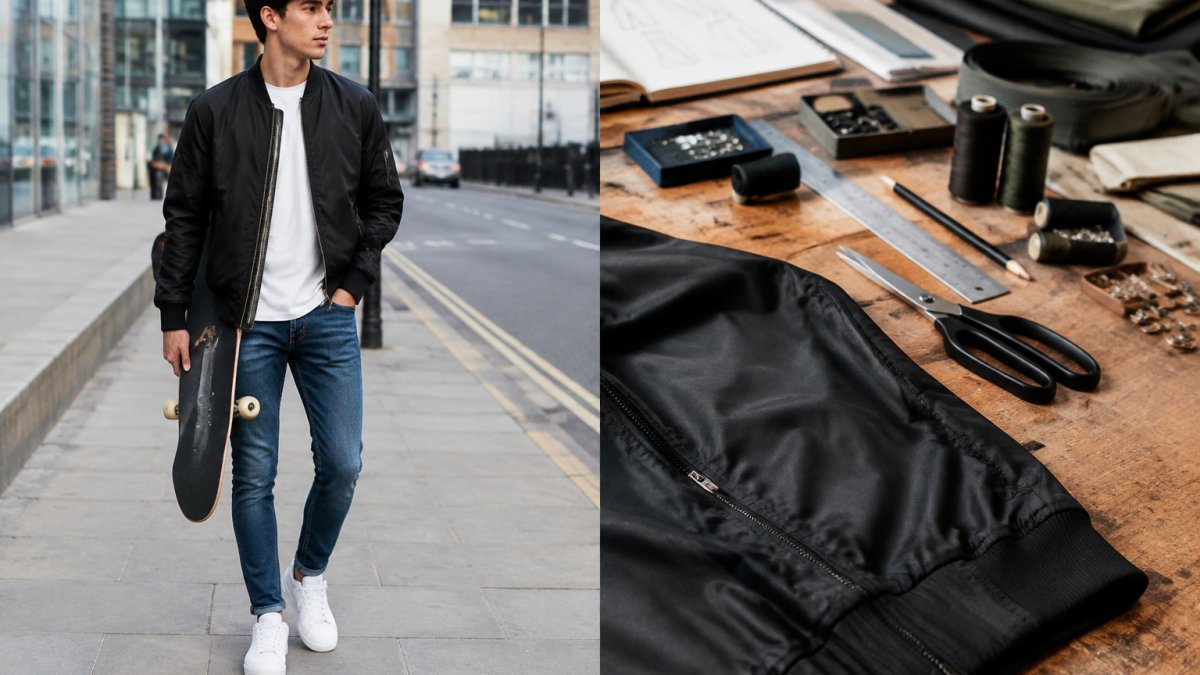
For a casual occasion, combine the bomber with joggers, a graphic tee and clean trainers. For a night out, swap the joggers for dark slim trousers and keep the jacket fully zipped or half-open. Black and navy bombers are the most flexible for mixing with other pieces, while khaki and green suit an earthier, more layered palette.
Bomber jacket outfit ideas by occasion
- Weekend or campus: Oversized bomber, graphic tee, relaxed jeans, white trainers.
- Skate session: MA-1 in nylon, hoodie underneath, loose joggers, flat-soled shoes.
- Night out: Black leather or suede bomber, fitted black tee, slim trousers, boots.
- Cooler weather: Varsity bomber over a knit, straight-leg jeans, chunky boots.
Care, Storage and Repair to Keep Your Bomber Looking Sharp
A bomber takes more abuse than most outer layers, it is worn open, stuffed into bags and leaned against walls, so care is mostly about preventing small problems from becoming replacements. The method depends entirely on the shell fabric, so check the care label first and treat it as the authority over any general advice.
Nylon and synthetic shells
Most nylon and polyester bombers can be machine washed on a cool, gentle cycle at around 30°C, zipped up and turned inside out, ideally in a laundry bag to protect the zip teeth and ribbed trims. For more on washing oversized streetwear clothes, see our dedicated guide. Use a mild detergent and skip fabric softener, which coats the fibres and reduces water resistance. Air dry on a wide hanger away from radiators and direct sun; heat can warp the shell and dull the finish.
Leather
Wipe leather with a barely damp cloth and dry it naturally, never over a radiator, which dries the hide and causes cracking. Apply a leather conditioner suited to the finish two or three times a season, working it in thinly and buffing off the excess. Keep leather out of prolonged rain; if it does get wet, let it dry at room temperature and condition afterwards. Avoid washing leather unless the label explicitly permits it.
Suede
Brush suede gently with a soft suede brush to lift the nap, and use a protector spray before the first wear and again after cleaning. Blot spills immediately rather than rubbing, and let mud dry before brushing it off. Suede marks easily at cuffs and pockets, so treat those areas first. Never machine wash suede.
Storage
Store any bomber on a wide, shaped hanger so the shoulders keep their line, and leave a little space either side so the shell is not compressed. Keep jackets out of direct sunlight, which fades colour, and away from damp. For seasonal storage, clean before putting away, marks set over months, and use a breathable cotton garment bag rather than a sealed plastic one, which traps moisture.
Repairs worth doing early
A sticking zip can often be revived with a pencil lead run along the teeth or a specialist zip lubricant; a slider that has opened up can be squeezed gently with pliers. Loose lining seams, dropped hem stitching and worn cuff ribbing are straightforward for a local tailor and usually cost far less than a replacement jacket. Replacing a broken zip pull before the slider fails saves the whole zip.
Watch out: waterproofing sprays and leather conditioners should be tested on a hidden patch first, because some finishes discolour or darken unevenly.
Choosing Your Next Bomber Jacket at Cali Studios
A bomber jacket is worth buying when you want an outer layer that works across casual outfits, seasons and occasions. Decide on the style first, then check fit against your measurements, and choose a fabric that suits how often you will wear it and in what weather. Cali Studios offers contemporary streetwear with oversized and regular fits and comfortable fabrics. Explore our range to find a bomber that fits your frame and your wardrobe.
Frequently Asked Questions
What should you wear with a bomber jacket?
A bomber jacket pairs well with fitted or straight-leg jeans, chinos and joggers, and works with a plain tee, a hoodie or a knit underneath. Keep the rest of the outfit simple so the jacket remains the statement piece. Dark trousers suit black, navy and khaki jackets, while lighter trousers balance a darker jacket. Chunky trainers or classic low-top sneakers finish a casual look, and smarter shoes such as suede boots work for a more considered outfit.
How should a bomber jacket fit?
A bomber should sit at the chest without pulling across the buttons or zip, and the shoulder seams should land at your natural shoulder point. Sleeves should end at the wrist bone so the cuff sits neatly without covering your hand. For a regular fit, leave room for a hoodie underneath. Oversized styles are cut to sit longer and wider, so check the garment measurements in centimetres against your own chest and arm length before ordering.
What is the difference between a bomber jacket and a flight jacket?
A bomber jacket is the broader category, usually with a ribbed collar, cuffs and hem and a zip front. A flight jacket is a historically specific style tied to military aviation, often with a shearling or fleece collar and more utilitarian detailing. The MA-1 is a bomber-style jacket with a nylon shell and orange lining, drawn from US military flight wear. Many modern bombers take inspiration from flight jackets, so the terms overlap in shops.
How do you care for a bomber jacket?
Check the care label first. Most nylon and synthetic bombers can be spot cleaned or washed on a gentle cycle in cool water, then air dried away from direct heat. Leather and suede need specialist cleaning and conditioning. Store the jacket on a wide hanger rather than folded, and keep leather away from damp areas to prevent cracking. Small repairs such as loose ribbing or a stuck zip are usually quick to fix at a local tailor.

