




Last Updated: October 24, 2026
Quick Summary
How to start a streetwear brand in the in the UK begins by defining your niche and target audience, then building a strong brand identity with a memorable name and consistent visual style. Next, design your first collection of five to eight core pieces, choose a production model, set realistic pricing based on landed costs, and register your business legally with Companies House while understanding UK consumer rights and textile labelling requirements.
- Start with a specific niche like skaters or students rather than targeting everyone who likes hoodies
- Register as a sole trader or private limited company with Companies House and understand VAT registration at £90,000 turnover
- Price hoodies between £40-£70 and t-shirts between £20-£40 after calculating landed costs of £8-£30 per garment plus decoration and packaging
- Launch with a small first drop of five to eight core pieces to test demand before scaling inventory
- Build community through consistent social media posting, micro-influencer collaborations, and authentic engagement with your audience
Table of Contents
- Define Your Niche and Target Audience
- Build Your Brand Identity and Develop a Streetwear Brand Name
- Design Your First Collection and Original Graphics
- Choose Your Production Model and How to Find Clothing Manufacturers
- Set Your Pricing and Understand Unit Economics
- Create a Streetwear Brand Business Plan and Launch Strategy
- Execute Streetwear Marketing Ideas and Build Your Community
- Launch Your First Product Drop and Monitor Performance
- Frequently Asked Questions
Define Your Niche and Target Audience
Learning how to start a streetwear brand in the in the UK means picking your lane first. The market is crowded.
Your niche is specific. Don't aim for "everyone who likes hoodies." Are you targeting skaters, university students, or people who want oversized comfort wear?
Research your audience directly: spend time on their platforms and watch what they buy, complain about, and post. Look at what existing brands do right and where they fall short.
Ask yourself these questions:
- Who are these people beyond age and location?
- What problem does your streetwear solve for them?
- What price range makes sense for their budget?
- Where do they shop and discover new brands?
- What do they value: comfort, exclusivity, sustainability, authenticity?
The more specific your answers, the easier every decision becomes. A brand making durable pieces for skaters is completely different from one targeting fashion-conscious students after affordable statement pieces.
Build Your Brand Identity and Develop a Streetwear Brand Name
Start with your brand story. Why are you making this, and what do you believe about streetwear that's different?
Your streetwear brand name needs to be memorable, easy to spell, and available as a domain and on social media.
Some names work because they're direct, others because they're mysterious or playful. The best names feel authentic to what you're making.
Define your visual identity early:
- Colour palette (2-3 main colours)
- Typography style (bold, minimal, graffiti-inspired?)
- Logo design or mark
- Overall aesthetic (clean, raw, vintage, modern?)
Keep your visual identity consistent across your website, product tags, social media, and packaging.
You can also explore why independent streetwear brands succeed to understand what makes your brand stand out in the market.
Design Your First Collection and Original Graphics
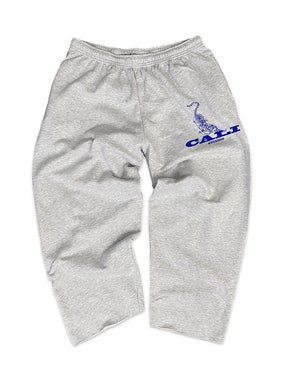
Your first collection doesn't need to be huge: five to eight core pieces is enough. Hoodies, t-shirts, joggers, and cargo pants are streetwear staples for a reason, they work.
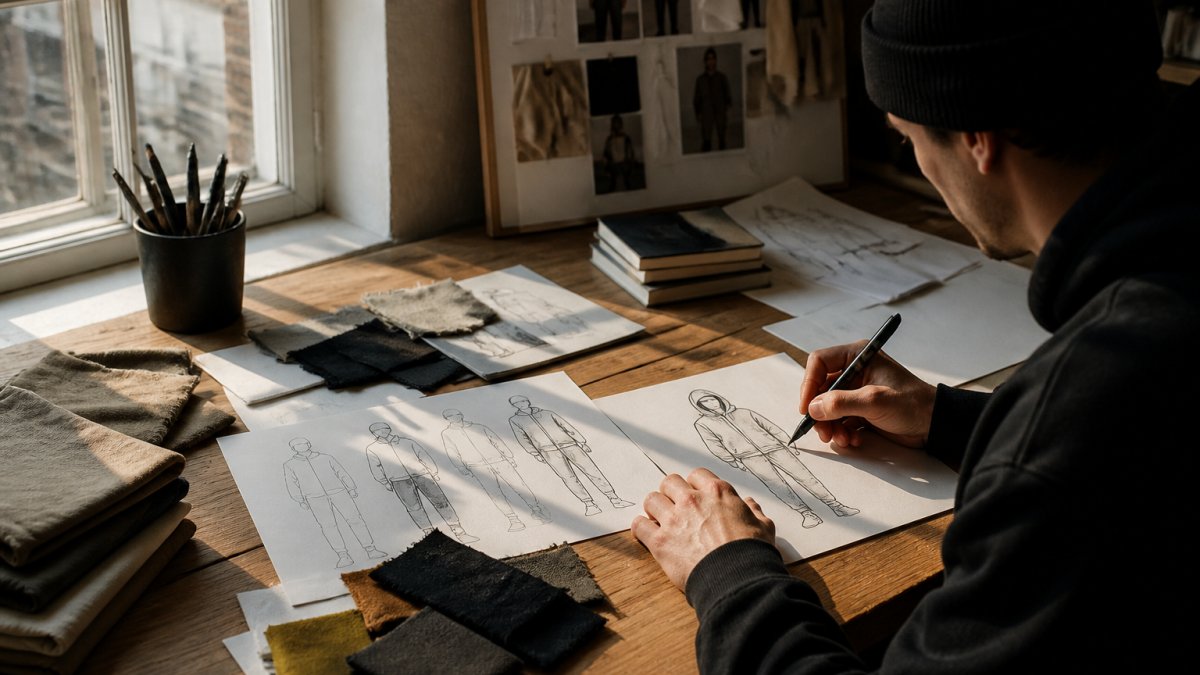
Design with your niche in mind. Skaters need pieces that function for that lifestyle; students care more about comfort and affordability than complex graphics.
Graphics are where personality shows up. Whether minimal branding, bold prints, or embroidery, make sure they reflect your brand identity. Cheap-looking graphics hurt your credibility, so invest in good design.
Learn more about plain vs graphic streetwear choices and authentic streetwear fabrics to make informed design decisions for your collection.
Consider these design elements:
- Keep graphics clean and purposeful
- Test designs on actual garments before committing to production
- Avoid trends that will look dated in six months
- Make sure sizing and fit match your target audience's body types
Choose Your Production Model and How to Find Clothing Manufacturers
You have three main routes: print-on-demand, blanks with custom finishing, or custom manufacturing. Each has trade-offs.
Print-on-demand means no inventory: you pay per piece after someone orders. The downside is higher per-unit costs, lower margins, and looser quality control.
Blanks means buying plain hoodies or t-shirts and adding your own graphics or embroidery.
Custom manufacturing means designing the entire garment from scratch. This is the most expensive upfront but gives you complete control.
Finding a clothing manufacturer in the UK or Europe takes research.
Check references. Ask other brands who they work with.
Key things to evaluate:
- Minimum order quantity (can you afford it?)
- Lead time (how long until you get your order?)
- Quality consistency (do samples match production?)
- Communication (are they responsive?)
- Price per unit at your expected volume
Set Your Pricing and Understand Unit Economics
Pricing is where many new brands fail: too low and the business can't sustain itself, too high and nothing sells.
Start with landed cost per unit. This is everything it takes to get one garment into your hands, ready to sell:
- Blank garment or manufacturing cost (for a custom hoodie from a UK or European supplier, expect roughly £18-£30 per unit at 50-100 units; blanks with your own print can be £8-£15 before decoration)
- Decoration: screen print, embroidery, or DTG (typically £3-£8 per garment depending on colours and placement)
- Woven labels, neck labels, and hang tags (£0.50-£1.50 per unit)
- Packaging: mailer, tissue, sticker (£0.30-£0.80 per order)
- Inbound shipping from supplier to you (varies; sea freight from overseas is cheaper per unit but slower, UK domestic is faster but higher per unit)
- Payment processing fees (around 1.5-2.5% plus a fixed fee per transaction for most UK providers)
- Platform fees (Shopify plans start around £25-£300 per month depending on tier; marketplaces take a commission)
Add these up for your true cost per unit, then multiply by at least 2.5 to 3 to leave room for marketing, returns, and profit.
Most streetwear brands price hoodies between £40-£70 and t-shirts between £20-£40. Cali Studios hoodies like the Tiger Hoodie - Black at £50 and the US Seal T-shirt at £40 sit in this range, offering quality fabrics and distinctive designs that justify the price point.


Factor in shipping and returns. UK domestic shipping for a hoodie often costs £3-£5.
Calculate break-even. If your landed cost per hoodie is £25 and you sell at £50, your gross margin is £25 before shipping, fees, and marketing.
Your profit margin matters. After inventory, shipping, platform fees, and marketing, you need enough left to reinvest and make money.
Here's what you can expect to pay for each component of your landed cost per unit.
| Cost Component | Typical Range | Notes |
|---|---|---|
| Blank garment or custom hoodie | £8-£30 | Depends on production model and volume |
| Decoration (print, embroidery, DTG) | £3-£8 | Varies by colours and placement |
| Labels and hang tags | £0.50-£1.50 | Woven, neck labels, and branding |
| Packaging (mailer, tissue, sticker) | £0.30-£0.80 | Per order, not per unit |
| UK domestic shipping to customer | £3-£5 | Hoodie example; varies by weight |
| Payment processing fees | 1.5-2.5% plus fixed fee | Most UK providers |
| Shopify platform fee | £25-£300 | Monthly, depending on tier |
Create a Streetwear Brand Business Plan and Launch Strategy
Understanding how to start a streetwear brand in the in the UK means your business plan doesn't need to be fancy, just realistic and legally grounded.
Choose a business structure. Most new streetwear brands start as a sole trader or a private limited company.
Understand consumer rights. Under the Consumer Rights Act 2015, goods must be as described, of satisfactory quality, and fit for purpose.
With the legal foundation in place, write your plan:
- Your niche and target audience
- Your brand identity and story
- Your first collection (what pieces, what graphics)
- Your production model and manufacturer
- Your pricing and unit economics
- Your sales channels (your own website, social media, marketplaces?)
- Your marketing strategy (how will people find you?)
- Your first-year financial projections (realistic, not optimistic)
Your launch strategy is different from your ongoing business: you need to build awareness quickly. That usually means:
- Building a following on Instagram and TikTok before you launch
- Creating content that shows the design process, behind-the-scenes, why you started
- Reaching out to micro-influencers in your niche (5K-50K followers who genuinely like streetwear)
- Getting early feedback from your target audience
- Planning a launch event or drop that feels special
Don't launch with a massive inventory. Start small. Prove demand. Then scale. Many new brands overestimate how much they'll sell and end up with dead stock.
Execute Streetwear Marketing Ideas and Build Your Community
Marketing a new streetwear brand means showing up where your audience is. For most streetwear, that's social media.
Post consistently. Show your design process, the fabrics you're using, the people wearing your pieces. Don't just sell, tell stories.
Engage with your community. Reply to comments. Follow other brands and creators in your space. Repost customer photos. Build relationships, not just followers.
Consider these streetwear marketing ideas:
- Collaborate with micro-influencers who fit your brand
- Create limited-edition drops that feel exclusive
- Use user-generated content from customers
- Host giveaways or early access for your most engaged followers
- Post behind-the-scenes content from production
- Share customer testimonials and styling tips
Community is everything for streetwear brands. People buy from brands they feel connected to. Build that connection through authentic engagement, not just ads.
Email marketing matters too. Collect emails from day one and send updates about new drops, subscriber offers, and brand stories.
Launch Your First Product Drop and Monitor Performance
A product drop is how streetwear brands launch.
Your first drop should be small and focused. This keeps production manageable.
Before launch day:
- Test your website for speed and bugs
- Make sure payment processing works
- Have customer service ready (you'll get questions)
- Plan your social media posts and timing
- Tell your email list first (give them early access if possible)
On launch day, post across all channels at the same time. Make it easy for people to find your store.
After launch, track these metrics:
- How many pieces sold in the first 24 hours, first week, first month?
- What sold fastest and what's sitting?
- What's your conversion rate (visitors to buyers)?
- What feedback are customers giving?
- Which marketing channel drove the most traffic?
Use this data to improve your next drop. If hoodies outsold t-shirts, go heavier on hoodies next time.
Check out how a successful product drop is structured to see real examples of effective launches.
Monitor customer satisfaction closely. Respond to reviews and feedback. If something isn't working, fit, quality, shipping time, fix it quickly. Your reputation is everything when you're new.
Frequently Asked Questions
How much does it cost to start a streetwear brand in the UK?
Startup costs vary depending on your production model. Print-on-demand requires minimal investment (£500-£1,500 for design and setup), while custom manufacturing typically costs £3,000-£10,000+ for samples, tooling, and your first production run. Factor in business registration, domain, e-commerce platform, and initial marketing. Most UK streetwear founders budget £5,000-£15,000 for a proper launch with quality blanks and professional branding.
Should I use print-on-demand or custom manufacturing for my streetwear brand?
Print-on-demand suits new brands testing designs with zero inventory risk and lower startup costs. Custom manufacturing gives you control over fabric quality, fit, and branding, essential for competing in streetwear where fabric feel and garment construction matter. Most successful streetwear brands move to custom manufacturing after validating designs, as it allows better margins and product differentiation. Consider hybrid: test designs print-on-demand, then move bestsellers to custom production.
How do I find reliable clothing manufacturers for a streetwear brand?
Start with UK-based manufacturers to reduce lead times and shipping costs. Check directories like the British Textile Technology Group or attend industry trade shows. Request samples from multiple suppliers, evaluate fabric quality, fit consistency, and minimum order quantities. Ask for references from other brands they've worked with. Verify compliance with UK employment and environmental standards. Compare unit costs across 3-5 manufacturers before committing.
What's a realistic profit margin for streetwear?
Streetwear typically targets 50-70% gross margins. Calculate: if your unit cost is £10 and you sell at £30, that's a 67% margin before marketing, shipping, and overheads. Factor in 15-25% for marketing, 5-10% for fulfilment and returns, and 10-15% for operational costs. Many new brands aim for 40-50% net profit in year one while reinvesting in inventory and growth.
Building a streetwear brand in the UK is possible, but it requires clarity about your niche, authenticity in your brand story, and willingness to iterate based on what your customers actually want. The brands that succeed aren't always the ones with the biggest budgets, they're the ones that stay connected to their community and keep improving. Start small, stay focused, and build from there.

